Surfing in Nazaré: The Complete Guide to the World’s Biggest Waves

The key takeaway: Nazaré is not a “normal” surf destination. It’s a raw, powerful big-wave arena shaped by one of the deepest underwater canyons on Earth. For most surfers, Nazaré is a place to observe, respect, and learn not paddle out. Understanding this distinction is essential before even thinking about surfing here.
Why Nazaré Is Unlike Any Other Surf Spot in the World
Nazaré isn’t famous because it’s beautiful, trendy, or beginner-friendly. Nazaré is famous because it produces waves that challenge the very limits of what humans can surf.
When winter storms roll across the North Atlantic, something unique happens off the coast of this small Portuguese town. Swell energy that would normally dissipate or spread out is instead focused, amplified, and thrown directly onto a shallow beach. The result? Walls of water that can exceed 20, 25, even 30 meters.
This is not a place of playful peaks or forgiving takeoffs. Nazaré is chaotic, fast, and violent when it’s on. Waves shift unpredictably, currents are relentless, and the impact zone shows zero mercy. That’s exactly why the world’s best big-wave surfers come here and why most others should stay on the cliffs.
Surfing in Nazaré isn’t about chasing fun. It’s about understanding power, respecting danger, and knowing exactly where your limits lie. Whether you’re a surfer, a traveler, or simply wave-curious, Nazaré demands one thing above all else: humility.
Where Is Nazaré and Why Is It So Famous?
Nazaré is a small fishing town located on the central west coast of Portugal, about 120 km north of Lisbon. On the surface, it looks like a peaceful seaside destination: colorful boats on the sand, locals drying fish in the sun, cafés overlooking the Atlantic.
But just offshore lies one of the ocean’s most extreme geological features: the Nazaré Canyon.
This underwater canyon is over 220 km long and plunges to depths of nearly 5,000 meters, making it one of the deepest submarine canyons in Europe. It runs almost all the way to the beach, acting like a funnel that channels and concentrates incoming Atlantic swells.
Instead of waves losing energy as they approach land, Nazaré’s canyon keeps that energy packed tight. When the swell finally hits the shallow shelf near Praia do Norte, the wave stands up violently sometimes doubling in size within seconds.
This phenomenon is why Nazaré entered global surf culture. In 2011, big-wave surfer Garrett McNamara rode a wave estimated at over 23 meters here, putting the town on the map and triggering a new era of big-wave exploration.
Since then, Nazaré has become a winter pilgrimage site for elite surfers, tow teams, photographers, and ocean scientists alike. It’s not just a surf spot it’s a natural spectacle where science, courage, and chaos collide.
The Nazaré Canyon Explained: Why the Waves Get So Big
To understand Nazaré, you need to understand the canyon. This isn’t hype or myth it’s pure ocean physics.
The Nazaré Canyon is a massive underwater trench that starts far out in the Atlantic and runs almost directly into Praia do Norte. Unlike most surf spots where the seabed gradually rises, this canyon allows deep-water swells to travel at full power until the very last moment.
As the swell approaches land, two things happen at once:
- The canyon keeps wave energy concentrated, preventing it from dissipating early.
- The shallow shelf near shore forces the wave upward, causing a sudden and dramatic increase in height.
The result is a rare amplification effect. Waves don’t just break they detonate. A 30-foot swell offshore can suddenly stand up into a 60–100-foot wall of water within seconds.
Wind plays a crucial role too. Strong offshore winds common in winter help groom the wave face, holding it open just long enough for surfers to commit. But when conditions shift slightly, the wave collapses into an explosive whitewater monster with unmatched force.
This is why Nazaré waves look different from other big-wave locations like Jaws or Mavericks. They are steeper, thicker, faster, and far less predictable. There’s no long shoulder, no easy escape just raw power.
It’s also why Nazaré is primarily a tow-in surfing spot. The waves move too fast and break too violently to paddle into safely at full size. Jetskis aren’t optional here they’re survival tools.
In short: Nazaré isn’t big because the ocean is angry. It’s big because the ocean is perfectly engineered.

Nazaré Surfing Conditions: Best Season, Swell & Wind
Nazaré doesn’t work year-round and that’s a good thing. When it turns on, it really turns on.
Best time of year to surf Nazaré
The big-wave season in Nazaré runs from October to March. This is when powerful North Atlantic storms send long-period swells straight toward the Portuguese coast.
November and January are typically the most consistent months for extreme conditions, with wave faces regularly exceeding 50 feet. Outside of winter, Nazaré becomes a much calmer beach break, sometimes even surfable for intermediates on smaller days.
Swell direction & period
Nazaré works best with NW to WNW swells and a long period usually 15 seconds or more. The longer the period, the more energy the canyon can concentrate.
Short-period swells may still produce size, but the wave quality drops quickly. Long-period swells are what create those clean, terrifying walls you’ve seen in viral videos.
Wind conditions
Wind can make or break a Nazaré session.
- Offshore winds (E / NE) are ideal, holding the wave face open and improving visibility.
- Onshore winds turn the lineup into chaos, making waves nearly unrideable and extremely dangerous.
Strong offshore winds are common in winter due to high-pressure systems over mainland Europe. When swell and wind align, Nazaré delivers some of the most photogenic and deadly waves on Earth.
Tides & wave behavior
Unlike many beach breaks, tide plays a less predictable role at Nazaré. However, most big-wave sessions happen around mid to high tide, when the wave face tends to hold together slightly longer before detonating.
Even on “perfect” days, conditions can shift rapidly. That’s why professional teams rely on real-time forecasts, spotters, and jet ski coordination before committing.
At Nazaré, conditions aren’t just something you check they’re something you respect.
Can You Actually Surf Nazaré? A Reality Check
Short answer: yes, but probably not the way you imagine.
Nazaré isn’t a normal surf destination where you rent a board, paddle out, and wait your turn. On true big-wave days, this is one of the most dangerous surf spots on the planet, reserved for elite athletes with full safety teams.
Who really surfs big-wave Nazaré?
When Nazaré is firing at full scale, the lineup is limited to a small group of professional big-wave surfers. These are athletes trained in:
- Breath-hold and wipeout survival
- Tow-in surfing behind jet skis
- High-speed wave entry and exit
- Team-based rescue protocols
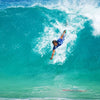
Surfers don’t paddle into 60–100 ft waves here. They are towed into position by jet skis, released at the right moment, and picked up immediately after the ride. Without this setup, survival chances drop dramatically.

What happens if you try to paddle out?
On massive days, paddling out is not just unrealistic it’s reckless. The waves move too fast, break too violently, and the whitewater alone can push surfers deep underwater for extended hold-downs.
This is why Nazaré has earned its reputation. It’s not about style points or Instagram clips. It’s about managing fear, physics, and risk.
But here’s the part people miss
Nazaré is not always gigantic.
On smaller winter days or during the off-season, the beach can offer manageable surf, especially away from Praia do Norte’s main impact zone. These conditions are still powerful, but far more approachable for strong intermediate and advanced surfers.
That said, even on “small” days, Nazaré demands respect. Currents are strong, wave behavior is unpredictable, and the ocean doesn’t forgive mistakes easily.
You don’t come to Nazaré to prove something. You come to understand your limits.
Whether you’re watching from the cliffs or surfing nearby breaks, Nazaré teaches humility. It reminds every surfer no matter their level that the ocean is always in control.
Watching Nazaré Waves: Where the Ocean Shows Its True Scale
You don’t need to surf Nazaré to feel it in your bones. In fact, watching the waves from land is often the most powerful experience.
When winter swells hit Nazaré, the ocean transforms into a moving wall of water, and the cliffs become front-row seats to one of nature’s most intimidating performances.
Praia do Norte: the main stage
Praia do Norte is where everything happens. This is the stretch of beach directly exposed to the underwater canyon that creates Nazaré’s legendary waves.
On big days, waves here don’t roll in politely. They detonate. The sound alone feels like thunder hitting the shoreline.
From the beach, the scale is already impressive. From above, it becomes surreal.
Forte de São Miguel Arcanjo: the iconic viewpoint
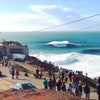
Perched on the cliff at the northern edge of Praia do Norte, the Forte de São Miguel Arcanjo is the most famous place to watch Nazaré fire.
This is where photographers, filmmakers, and wave chasers gather when conditions line up. From here, you can see:
- The full wave face from takeoff to impact
- Jet skis towing surfers into position
- The raw power of the canyon-driven swell
When waves are massive, you’ll feel the wind shift, the ground vibrate, and the crowd go silent just before a set unloads.

Safety and respect from the cliffs
Nazaré is spectacular, but it’s not a theme park.
Waves can send spray hundreds of meters inland, and rogue water surges can reach areas people assume are safe. Keep distance from cliff edges, especially during storms or extreme swell events.
Local authorities sometimes close access points during dangerous conditions. Respect closures. The ocean here doesn’t negotiate.
Best time of year to watch Nazaré waves
The prime season runs from October to March, when North Atlantic storms send long-period swells toward the Portuguese coast.
The biggest days usually happen with:
- Large northwest swell
- Strong offshore or light winds
- Low to mid tide
There’s no guarantee. Nazaré doesn’t perform on schedule. That unpredictability is part of the magic.
Watching Nazaré isn’t about chasing records or numbers.
It’s about standing still while something far bigger than you moves past. You don’t scroll here. You don’t talk much. You just watch, listen, and feel small in the best possible way.
Why Are Nazaré Waves So Big? The Canyon Effect Explained
Nazaré isn’t just lucky. Its waves aren’t the result of a single storm or a rare coincidence. They exist because of something invisible beneath the surface: the Nazaré Canyon.
This underwater structure is what turns powerful Atlantic swells into the biggest rideable waves on Earth.
The Nazaré Canyon: a natural wave amplifier
The Nazaré Canyon is one of the largest underwater canyons in Europe. It starts far out in the Atlantic Ocean and runs almost directly to the shoreline of Praia do Norte.
At its deepest point, the canyon drops to nearly 5,000 meters. For comparison, most continental shelves are relatively shallow, gradually slowing incoming swells. Nazaré does the opposite.
Instead of dispersing energy, the canyon channels and focuses it.
What actually happens to the waves?
When a large North Atlantic swell approaches Portugal, part of the wave travels over the normal continental shelf, while another part travels through the deep canyon.
Here’s where it gets wild.
- Waves over shallow ground slow down
- Waves in deep water maintain speed and energy
- The two wave systems collide near shore
The result is a stacking effect. Energy compresses, wave faces grow steeper, and the swell jacks up dramatically just before breaking.
Why Praia do Norte gets hit the hardest
The canyon lines up almost perfectly with Praia do Norte. This alignment means the beach receives the full force of the focused swell.
Combine that with:
- Deep-to-shallow transition close to shore
- Shifting sandbanks
- Strong seasonal winds
And you get waves that don’t just break they collapse with violence.
Why Nazaré waves are different from other big-wave spots
Places like Jaws (Hawaii) or Mavericks (California) rely on reef structures and swell angle. Nazaré is unique because its power comes from subsea topography on a massive scale.
That’s why Nazaré waves often look thicker, darker, and more unpredictable. The wave face can double in size within seconds. Lines bend. Takeoff zones shift.
This unpredictability is what makes Nazaré both legendary and feared.
Nazaré isn’t a wave you conquer. It’s a wave you witness.
The canyon reminds us that the ocean doesn’t need perfection it needs depth. And when conditions align, depth becomes power.
Nazaré Surf Season & Forecast: When the Giants Wake Up
Nazaré doesn’t work on a calendar. It works on storms, pressure systems, and deep Atlantic energy.
That said, there is a clear window when the odds shift and the ocean starts speaking louder.
The Nazaré big-wave season
The prime window runs from October to March. This is when powerful low-pressure systems roll across the North Atlantic, generating long-period swells aimed straight at the Portuguese coast.
The biggest days usually happen between November and February, when storm tracks align perfectly with the Nazaré Canyon.
Summer? Different story.
From May to September, Nazaré is calm by comparison. The canyon is still there, but the energy simply isn’t. Waves are smaller, more manageable, and far less dramatic.
What creates a true Nazaré swell?
Not every swell produces giants. Nazaré needs a very specific setup to come alive.
- Large northwest swell generated far offshore
- Long swell period (16–20+ seconds)
- Minimal wind or light offshore flow
- Low to mid tide to allow maximum face growth
When these elements align, the canyon does the rest.
Understanding Nazaré wave forecasts
Forecasts for Nazaré go beyond simple wave height numbers.
A 15-foot swell offshore can translate into 50+ foot faces at Praia do Norte. This disconnect is why Nazaré forecasts often look “wrong” to people unfamiliar with the canyon effect.
Key metrics to watch:
- Swell direction (NW is king)
- Swell period (the longer, the heavier)
- Wind speed and direction
- Storm intensity days before arrival
On true big-wave alerts, local authorities, rescue teams, and pro surfers prepare days in advance. This isn’t casual surf.
Nazaré waves today: what that usually means
Searches like “Nazaré waves today” often spike during major swells. Most days, though, Nazaré is quiet, windy, or simply resting.
That contrast is part of what makes it legendary. You don’t stumble into Nazaré at its peak. You wait. You watch. And when it happens, everyone knows.
Nazaré teaches patience.
The biggest moments don’t come daily. They come when the ocean decides. And when it does, there’s no notification loud enough to capture it you have to be there.
Nazaré vs Other Big-Wave Spots: Why It’s in a League of Its Own
Nazaré often gets mentioned in the same breath as Jaws, Mavericks, or Teahupo’o. But while they all sit in the big-wave hall of fame, they’re built very differently.
Same ocean. Very different energy.
Nazaré vs Jaws (Peʻahi, Hawaii)
Jaws is raw power with rhythm. Nazaré is chaos with consequences.
At Jaws, waves are massive but relatively predictable. The reef creates clean, repeatable lines. Surfers know where to sit, when to go, and how the wave will break.
Nazaré doesn’t offer that luxury.
The canyon amplifies swell unevenly, creating waves that can double up, fold, or break out of nowhere. Two waves in the same set can look completely different.
- Jaws: Clean faces, technical riding, heavy but readable
- Nazaré: Unpredictable peaks, shifting takeoffs, violent whitewater
Nazaré vs Mavericks (California)
Mavericks is cold, serious, and disciplined.
It breaks far from shore, demands long paddles or precise towing, and punishes mistakes with brutal hold-downs. But like Jaws, it follows a pattern once you understand it.
Nazaré adds a different layer of danger.
The proximity to shore means waves break closer, rebound off the cliffs, and collide with incoming sets. Rescue windows are shorter, and chaos multiplies fast.
- Mavericks: Heavy reef, strong currents, structured danger
- Nazaré: Shore-adjacent monsters, collision zones, visual overload
Nazaré vs Teahupo’o (Tahiti)
Teahupo’o isn’t about size. It’s about consequence.
While Nazaré’s waves are taller, Teahupo’o’s slab is thicker, faster, and breaks directly onto razor-sharp reef. One mistake there can end a career.
Nazaré’s danger comes from scale and turbulence. Teahupo’o’s danger comes from precision and impact.
- Teahupo’o: Shallow reef, perfect barrels, zero margin
- Nazaré: Deep water, towering faces, uncontrollable power
So why does Nazaré feel different?
Because it’s not just a wave. It’s a system.
The canyon, the cliffs, the wind funnels, the rebound all of it stacks unpredictability on top of size. Nazaré doesn’t reward consistency. It rewards awareness, humility, and timing.
Jaws is a test of skill. Mavericks is a test of commitment. Teahupo’o is a test of precision.
Nazaré? Nazaré is a test of respect.
You don’t conquer it. You survive it. And sometimes, if you’re lucky, you ride it.
Visiting Nazaré: When to Go, Where to Watch & How to Stay Safe
You don’t need to surf Nazaré to feel its power.
In fact, for most people, the true Nazaré experience happens on land standing on the cliffs, wind in your face, watching the Atlantic unload energy that feels almost unreal.
Best time to visit Nazaré
If your goal is to see the giants, winter is non-negotiable.
November to February offers the highest chance of massive swells. These are the months when storms track perfectly across the North Atlantic and line up with the canyon.
That said, big-wave days are rare. You might spend a week in Nazaré and see nothing special or arrive on the exact day everything detonates. That uncertainty is part of the magic.
If you want a calmer trip with surfable conditions, fewer crowds, and a more relaxed vibe, late spring and early autumn are ideal. Smaller waves, warmer weather, same dramatic coastline.
Where to watch the waves
There’s one spot that defines Nazaré.
Forte de São Miguel Arcanjo, the lighthouse perched above Praia do Norte, is ground zero. From here, you can see waves form, stand up, and detonate with full perspective.
On big days, expect:
- Hundreds of spectators lining the cliffs
- Strong winds and sea spray reaching land
- Emergency crews and jet skis on standby
Other viewpoints along the cliffs offer different angles and slightly more breathing room, but the lighthouse remains the heart of the action.
Safety: this is not a theme park
Nazaré is spectacular but it’s also dangerous.
Waves can surge unexpectedly, rogue whitewater can climb the cliffs, and rocks become slippery fast. Every winter, people underestimate the conditions and get hurt.
Basic rules:
- Keep distance from cliff edges
- Never turn your back to the ocean
- Ignore “just one more step closer” instincts
- Respect local authorities and safety barriers
If you’re entering the water anywhere near Praia do Norte, know that currents are strong even on smaller days. This is not a casual swim zone.
The town beyond the waves
Nazaré isn’t only about monsters.
It’s a working fishing town with deep traditions, colorful streets, and a slower rhythm when the ocean rests. Watching fishermen mend nets or locals gather at seaside cafés gives balance to the intensity offshore.
This contrast is what makes Nazaré special. Absolute chaos on the water. Everyday life on land.
The Suay Hype conclusion
Nazaré strips surfing down to its core truth: the ocean always decides.
Whether you’re chasing waves around the world or simply chasing perspective, standing in front of Nazaré’s giants recalibrates everything. It reminds you why humility matters. Why patience matters. Why respect matters.
You don’t leave Nazaré thinking you’re stronger than the ocean.
You leave knowing you never were and that’s exactly the point.