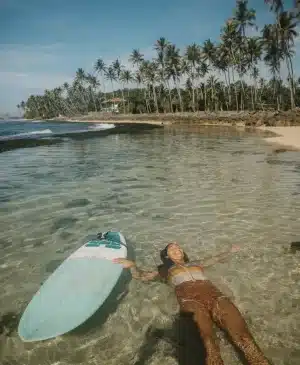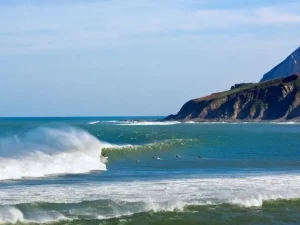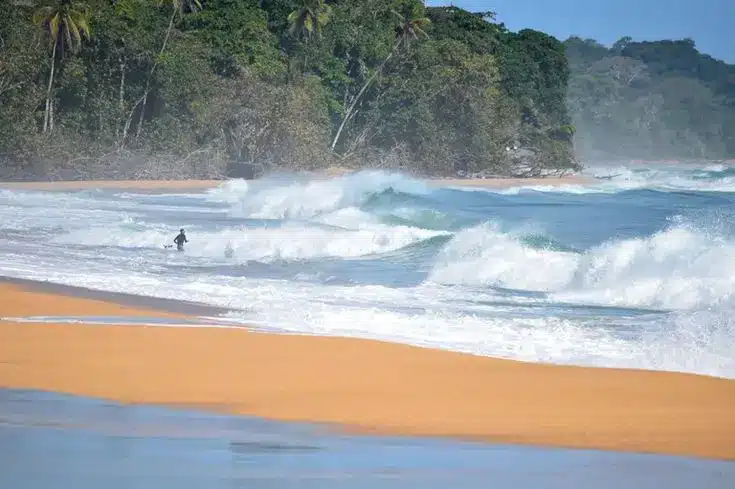

Standing on Santa Catalina’s volcanic rock point watching perfect right-handers peel for 200+ meters with only a handful of surfers in the lineup, I understood why Panama remains Central America’s best-kept surf secret. While Costa Rica soaks up the spotlight, this thin strip connecting two continents offers something no other destination can match—world-class waves on both Pacific and Caribbean coasts, breaking during opposite seasons. When the Pacific fires April-November with powerful Southern Hemisphere swells, the Caribbean rests. Then November-March, the Caribbean awakens with winter storms while the Pacific calms. The result? Year-round surf if you know where to go. Add Panama’s use of US dollars as official currency, visa-free entry up to 180 days for Americans, and lineups seeing a fraction of Costa Rica’s crowds, and you’ve got Central America’s smartest surf destination for 2026.
Worth Knowing
- ✓ Year-round surf via coast-hopping: Pacific (April-Nov) point breaks, Caribbean (Nov-Mar) reef breaks
- ✓ Santa Catalina’s 200m+ right-hand point rivals any Central American wave—fewer crowds than Costa Rica
- ✓ Uses US dollar as official currency (no exchange hassle); 180-day visa-free for US citizens
- ✓ Affordable: Board rentals $15-35/day, lessons $45-80, warm water (27-29°C) year-round requires no wetsuit
Quick Surf Guide to Panama
- Best season: Pacific (May-Sept) or Caribbean (Dec-Feb) depending on coast
- Best for beginners: Playa Venao, Estero Beach Santa Catalina, Old Man’s Bocas
- Best for intermediates: Playa Venao center, Carenero Point, El Palmar
- Best for advanced: Santa Catalina main point, Silverbacks, Punta Brava
- Main wave types: Pacific = point breaks + beach breaks; Caribbean = reef breaks
- Water temp: 27-29°C (80-84°F) year-round—boardshorts only, no wetsuit needed
- Crowds: Low to moderate; 50% fewer surfers than comparable Costa Rica breaks
- Budget level: $50-150/day (budget to mid-range) including accommodation, food, surf
- Currency: US Dollar official currency—no exchange needed
Why Surf in Panama?
Two-Coast Strategy = Year-Round Surf
After surfing both coasts multiple times, I can confirm Panama’s secret weapon is geography. The country bends like a lazy S between two oceans—Pacific facing southwest, Caribbean northeast. This creates opposite swell windows meaning you can literally surf year-round by coast-hopping. Pacific picks up consistent Southern Hemisphere swells during rainy season (April-November). Caribbean fires during northern winter storms (November-March). Something impossible in most surf destinations.
Costa Rica Waves Without Costa Rica Crowds
Santa Catalina’s right-hand point rivals anything in Central America—long, hollow, powerful waves peeling over volcanic rock for 200+ meters. After sessions here, I’ve shared the lineup with 15 surfers on good days versus 40+ at comparable Costa Rican breaks. Wave quality ranges from world-class point breaks and hollow reef breaks to forgiving beach breaks. Consistency is solid during peak seasons on each coast. The trade-off? Less developed infrastructure means more adventure, longer travel times to remote spots, but authentic experiences and 30-40% lower costs.
US Dollar Convenience
Panama uses US dollar as official currency (called “balboa”). After dealing with exchange rates elsewhere, this is a massive practical advantage—no currency fees, no confusion about pricing, ATMs dispense US dollars, credit cards work seamlessly. For US travelers especially, Panama feels remarkably straightforward.

Best Surf Spots in Panama
Pacific Coast (April-November Season)
Santa Catalina Main Point – Best for Advanced
Wave type: Perfect right-hand point over volcanic rock
Best swell: S-SW, 4-10 ft (1.2-3 m)
Best wind: Offshore mornings
Best tide: Mid to high tide (low tide extremely shallow/dangerous)
Best season: May-September
Skill level: Intermediate to advanced
Hazards: Rocky bottom, powerful waves, shallow at low tide
Crowds: Moderate during peak season; respectful local crew
Access: 200+ meter rides, hollow first section mellowing to workable wall; works 80% of time during swell season; Fluid Adventures offers rentals/lessons; rustic town (no ATM—bring cash)
Panama’s crown jewel and arguably best point break in Central America. After countless sessions here, I appreciate how Santa Catalina peels over volcanic rock for 200+ meters—hollow, powerful, consistent. Handles sizes waist-high to triple overhead, with outside section offering barrel opportunities on bigger days. Remained sleepy fishing village until 1970s, still maintains laid-back frontier surf town vibe despite growing popularity.
Nearby breaks: Estero Beach (town, sandy, beginner-friendly); Punta Brava (30 min walk, hollow left, twice as big); Punta Roca (boat/walk, hollow left over rock); San Pedrillo (20 min boat, beach break)
Playa Venao – Best for All Levels
Wave type: Classic beach break, crescent-shaped bay
Best swell: S-SW, 2-8 ft (0.6-2.5 m)
Best wind: Offshore mornings
Best tide: All tides work
Best season: May-September (peak)
Skill level: All levels—sides mellow, center powerful
Hazards: Minimal; sandy bottom
Crowds: Moderate; spreads across 1km bay
Access: Multiple surf schools (Shokogi, Club Venao, Safari Surf); rentals $15-30/day; lessons $50-80; Beach Break Surf Camp pizza legendary; vibrant town with nightlife
If Santa Catalina is Panama’s expert wave, Playa Venao is its best all-around beach. After teaching here, I appreciate how this crescent bay on Azuero Peninsula delivers consistent, user-friendly waves suitable for all levels. Peaks form along entire 1km bay—sides offer mellower waves ideal for beginners, center section picks up more swell delivering punchy, hollow waves for intermediates/advanced. Very high consistency—picks up more swell than almost anywhere on Pacific coast.
Playa Cambutal – Best for Intermediate
Wave type: Mix of beach break and rocky point
Best swell: S-SW, 3-8 ft (1-2.5 m)
Best wind: Offshore mornings
Best tide: Mid tide
Best season: May-September
Skill level: Intermediate to advanced
Hazards: Some rocks; powerful waves
Crowds: Low; less touristy than Venao
Access: North of Venao on Azuero Peninsula; quiet, authentic, stunning undeveloped setting
Located north of Venao, Cambutal offers mellower alternative with fewer crowds. After sessions here, I’ve found rocky coastline creates defined peaks. Works best during bigger swells. Perfect if you want to escape scene while accessing quality waves.
El Palmar – Best for Weekend Warriors
Wave type: Versatile beach break
Best swell: S-SW, 2-6 ft (0.6-2 m)
Best wind: Offshore mornings
Best tide: Mid to high tide
Best season: May-September
Skill level: All levels
Hazards: Minimal
Crowds: High weekends, empty weekdays
Access: 1-2 hours from Panama City; three distinct breaks (Frente Palmar, Punta Palmar, Hawaiisito)
Sits closer to Panama City making it popular weekend destination for capital-based surfers. After weekday sessions, I appreciate empty lineups. Three distinct breaks offer variety.
Caribbean Coast (November-March Season)
Bluff Beach (Playa Bluff) – Best for Intermediate to Advanced
Wave type: Powerful beach break, lefts and rights
Best swell: N-NW, 3-8 ft (1-2.5 m)
Best wind: Offshore trade winds
Best tide: All tides
Best season: December-February
Skill level: Intermediate to advanced
Hazards: Powerful, hollow waves; strong currents
Crowds: Low to moderate
Access: Northern tip Isla Colón; accessible by bike/taxi from Bocas Town
Located on Bocas del Toro archipelago, Bluff Beach offers powerful beach break. After sessions here, I recommend solid skills—can get heavy and hollow with strong currents.
Silverbacks – Best for Experts Only
Wave type: Heavy reef break right-hander
Best swell: N-NW, 6-20 ft (2-6 m)
Best wind: Variable
Best tide: Mid to high tide
Best season: December-February (major swells)
Skill level: EXPERTS ONLY
Hazards: Shallow reef, powerful, fast, hollow—comparable to Pipeline; has seriously injured surfers
Crowds: Low (only experts attempt)
Access: Off Isla Bastimentos, 25-minute boat ride; Kelly Slater and pros make pilgrimage here
The Caribbean’s heaviest wave. After observing from boat, I confirm Sunny Garcia (former world champion) called this “one of the heaviest waves” he’s surfed. Reef break can reach 15-20 feet. Strictly for experienced surfers—shallow reef, powerful, fast, hollow.
Carenero Point – Best for Intermediate to Advanced
Wave type: Long left-hand point break
Best swell: N-NW, 3-8 ft (1-2.5 m)
Best wind: Offshore
Best tide: All tides
Best season: December-February
Skill level: Intermediate to advanced
Hazards: Reef bottom
Crowds: Moderate
Access: Isla Carenero, 5-minute water taxi from Bocas Town; consistent, fun, workable wave
After multiple Bocas seasons, Carenero Point stands out for consistent quality. Long left on Isla Carenero handles good-sized swells. Can handle good-sized swells with fun, workable rides.
Old Man’s – Best for Beginners
Wave type: Mellow left point
Best swell: N-NW, 2-5 ft (0.6-1.5 m)
Best wind: Offshore
Best tide: All tides
Best season: December-February
Skill level: Beginner to intermediate
Hazards: Minimal; calm shores
Crowds: Low to moderate
Access: Isla Carenero; mellower than Carenero Point; great for learning point breaks
The go-to beginner spot in Bocas. After teaching first-timers here, I appreciate calm setting, mellow predictable waves, forgiving conditions. Perfect for building confidence.
When to Surf in Panama: Best Seasons & Conditions
Pacific Coast Season (April-November)
After multiple Pacific seasons, I confirm this coast comes alive during Panama’s rainy season when Southern Hemisphere winter storms send consistent swells north. Prime time for Santa Catalina, Playa Venao, Cambutal, entire southwestern coastline. Best months: May-September deliver most consistent waves; July-August can see biggest swells. Don’t let “rainy season” scare you—expect afternoon thunderstorms that clear quickly, offshore winds mornings, sunny mornings perfect for surf.
Critical: Pacific experiences dramatic tides (15-18 ft between high/low). Santa Catalina works best mid-high tide; low tide gets extremely shallow/dangerous over rocks. Always check local knowledge about optimal tide times.
Caribbean Coast Season (November-March)
When Pacific mellows, Caribbean awakens. After Bocas winters, I confirm winter storms in northern Atlantic send swells wrapping into Bocas del Toro. Best months: December-February most consistent; January typically sees largest, best-shaped waves. Weather drier than Pacific’s wet season, though still tropical with occasional rain. Caribbean’s tidal range minimal (only 2-3 ft) meaning you can surf at virtually any tide—huge flexibility advantage.
Year-Round Strategy (Coast-Hopping)
Smart Panama surf strategy for extended trips: April-May arrive Pacific coast (Santa Catalina/Venao); June-Sept peak Pacific season; October transition month; November-March relocate to Bocas del Toro for Caribbean season. Requires flexibility but delivers consistent waves year-round showcasing diverse surf culture.
Practical Tips for Surfing Panama
Costs (2026 Breakdown)
After years tracking expenses, Panama delivers excellent value—30-40% cheaper than Costa Rica:
Rentals: Budget boards $10-15/day; Quality soft tops/fish/longboards $20-30/day; Premium performance boards $30-35/day; Weekly rates 15-25% discount
Lessons: Group (2-4 people) $50-80 for 2-3 hours; Private $70-100 for 2 hours; 3-day packages $140-180; 5-day packages $200-250; Mono Loco Surf School Bocas: 1-day $50, 3-day $140, 5-day $225
Accommodation: Hostel dorms $10-20/night; Budget private room $25-40/night; Mid-range hotels $50-80/night; Upscale boutique $100-150/night
Food: Local sodas $4-8/meal; Mid-range restaurants $10-20/meal; Beer $1-3; Coffee $1-3
Transport: Buses $10-20 long journeys; Domestic flights (Panama City-Bocas) $100-150 round trip; Car rental $25-50/day economy, $60-100/day 4WD; Bocas water taxis $1-5 short hops
Essential Surf Gear for Panama
☐ Boardshorts (2-3 pairs—no wetsuit needed!)
☐ Rash guard with UV protection
☐ Reef-safe sunscreen SPF 50+
☐ Antibiotic ointment (for reef cuts)
☐ Surf watch for tide tracking (recommended models)
☐ Waterproof phone case/dry bag
☐ Wide-brimmed hat and sunglasses
☐ First aid kit (band-aids, gauze, pain relievers)
☐ US dollars cash (remote areas no ATMs)
Getting There & Around
Main Gateway: Tocumen International Airport (PTY) Panama City. Copa Airlines hub with excellent connections throughout Americas.
Entry (2026): US citizens: 180 days visa-free (among longest in Central America). Need valid passport (3+ months validity), return/onward ticket, proof of funds ($500 minimum).
Domestic Flights: Air Panama operates to Bocas (BOC) and David (DAV, closest to Santa Catalina). Panama City to Bocas: 1 hour flight vs 12+ hours bus/boat.
Ground Transport: Buses cheap ($10-20) but slow/uncomfortable; Private shuttles $40-80 more comfortable; Car rental recommended for exploring (roads good on main routes, rough approaching remote surf towns); Panama City to Santa Catalina: 5-6 hours drive
Bocas Boats: Water taxis constantly zip between islands ($1-5 shared); Private boat hire for surf breaks $40-80 half-day
Safety Considerations
☐ Rip currents: Pacific beach breaks can develop strong rips; swim parallel to shore to escape
☐ Crocodiles: American crocodiles inhabit Pacific river mouths (avoid surfing near rivers at dawn/dusk); actual incidents at surf spots extremely rare
☐ Pacific tides: 15-18 ft range creates critical surf windows; download tide app; ask locals optimal times
☐ Sun exposure: Tropical sun intense; reef-safe SPF 50+ and reapply frequently
☐ Medical facilities: Limited in remote areas; bring first aid kit; consider travel insurance with evacuation
Surf Culture & Etiquette
After years surfing Panama lineups, I’ve found culture remains friendly and welcoming. At spots like Santa Catalina where core local crew exists, show respect—don’t snake waves, don’t paddle around people, be generous sharing. Learn basic Spanish: “Buenos días”, “¿Cómo están las olas?”, “Gracias”, “Lo siento”. Environmental consciousness: pack out trash, use reef-safe sunscreen, support sustainable local businesses. Panama generally maintains safe, welcoming lineups—violence/threats extremely rare.
Beyond Surfing in Panama
After flat days, I explore world-class alternatives: Coiba National Park from Santa Catalina (UNESCO site, whale sharks seasonal, day tours $80-120); Panama Canal (Miraflores Locks visitor center, genuinely fascinating); Panama City (Casco Viejo colonial old town, Biomuseo Frank Gehry design); Bocas island hopping (snorkeling, diving, Red Frog Beach poison dart frogs); rainforest wildlife (sloths, monkeys, toucans); sportfishing Pacific coast.
Frequently Asked Questions
Can I surf both coasts in one trip?
Yes, but requires at least 10-14 days and planning. After coast-hopping multiple times, I recommend: 5-7 days one coast, travel day, 5-7 days other coast. Pacific to Caribbean: fly Panama City to Bocas (1 hour) or drive (11-14 hours total). Works best transition months (October-November) when both coasts have waves, though not peak consistency.
Are there really crocodiles near surf spots?
Yes, American crocodiles inhabit Pacific coast river mouths/estuaries. However, after years surfing here, actual incidents at established surf breaks are extremely rare. Crocodiles avoid areas with human activity. Main risk: surfing near river mouths at dawn/dusk when crocs most active. At Santa Catalina, Playa Venao, and other established breaks, crocodile encounters virtually unheard of. Always ask locals if any activity in area.
Is Panama safer than other Central American countries?
Yes, Panama is generally one of safest countries in Central America, comparable to Costa Rica. After extensive travel here, government maintains political stability, violent crime against tourists rare. Standard precautions apply: don’t leave valuables on beach, lock accommodations, be aware Panama City after dark. Surf towns particularly safe with friendly locals. Main safety concerns are waves themselves (reef cuts, currents) rather than crime.
Do I need to speak Spanish?
Not essential, especially tourist areas (Bocas, Venao, surf camps) where English common. However, after improving my Spanish here, I confirm learning basics greatly enhances experience. Download translation app, learn key phrases. Remote areas like Santa Catalina Spanish helps but isn’t required—surf etiquette translates universally. Most surf schools have bilingual instructors.
Can I use US dollars everywhere?
Yes! Panama officially uses US dollar (called “balboa”). After dealing with currency exchange elsewhere, this is massive advantage—no exchange, no confusing rates, no leftover foreign money. ATMs dispense US dollars, credit cards work normally, prices quoted in dollars. Even small local shops accept US dollars. Bring cash or use cards—both work seamlessly.
What’s better for beginners: Pacific or Caribbean?
Pacific coast, specifically Playa Venao. After teaching countless beginners, reasons: (1) Venao has multiple schools specializing in beginners with patient instructors, (2) crescent bay creates protected corners with smaller waves, (3) sandy bottom throughout, (4) very consistent even when small. Estero Beach Santa Catalina also excellent. Caribbean’s Bocas has beginner options (Old Man’s) but most spots break over coral reef—less forgiving for learning. True beginners: start Pacific.
Panama won’t give you manicured surf resort experience of Costa Rica or Bali’s exotic culture. After multiple seasons here, I can confirm what it will give you is increasingly rare—quality, uncrowded waves in destination that still feels like discovery. If you value empty lineups over resort amenities, get excited about boat access waves and jungle approaches, appreciate authentic local culture, Panama should be top of your list. Santa Catalina rivals any Central American point break. Playa Venao offers one of most consistent, user-friendly beach breaks anywhere. Bocas del Toro? Tropical island paradise with incredible surf when winter swells arrive. Come with reasonable expectations about infrastructure, but come with open mind and adventure spirit—Panama will reward you with memorable sessions, genuine cultural experiences, and satisfaction of surfing place that still feels like your own discovery. Visit now, before it becomes next overcrowded destination, and experience Central American surfing at its most authentic and uncrowded.