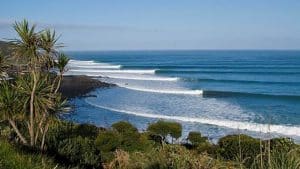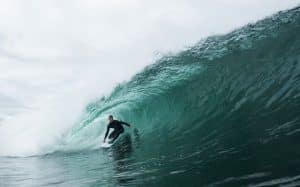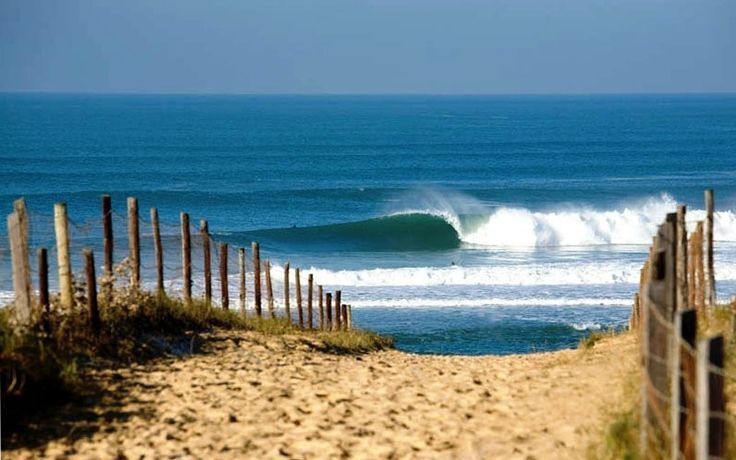

Standing on the beach at Hossegor watching La Gravière throw perfect barrels while the WSL Championship Tour unfolded, I finally understood why France earns its reputation as Europe’s surf capital. Its Atlantic coastline faces straight into North Atlantic storm tracks, and the deep Gouf de Capbreton canyon off Hossegor funnels that energy onto shifting sandbars to create some of the most powerful beach-break barrels in Europe. But France is far more than Hossegor: gentle learner beaches in the Landes, a stylish Basque coast that birthed European surfing in 1957, and the wild, cold, uncrowded points of Brittany. Here’s the whole coast, region by region, plus when to go and what to pack.
Quick surf guide to France
- Best season: September to October (intermediate to advanced), June to August (beginners)
- Best for beginners: Moliets, Hendaye, Mimizan, Guidel
- Best for advanced: Hossegor La Gravière, Parlementia, La Torche, Quiberon
- Main wave types: powerful beach breaks, jetty breaks, big-wave reefs and rocky points
- Water temp: 10 to 22°C, so a wetsuit year-round (Brittany 2 to 3°C colder)
- Airports: Bordeaux and Biarritz (southwest), Brest and Nantes (Brittany)
- Budget: €40 to 60 a day (budget) to €200+ (premium)
Where to surf in France
France’s surf splits into three zones: the concentrated Landes beach breaks, the Basque coast in the far southwest, and wild Brittany up north. Tap a marker to preview a spot, then click its name to jump straight to it below.
The Silver Coast and Landes (Nouvelle-Aquitaine)
France’s most concentrated surf zone: a 100 km run of sandy beach breaks from Lacanau to Capbreton, home to over 60 surf beaches and the WSL barrels of Hossegor.
Lacanau
Sixty kilometres north of Hossegor, Lacanau offers similar beach-break characteristics with slightly less swell consistency but fewer crowds and a more relaxed vibe. Plage Nord has a quality right-hand, point-like setup. Beginners should stay central; intermediates can explore the north and south sections.
Mimizan-Plage
Mimizan‘s 10km beach is one of France’s best beginner-to-intermediate zones. The relaxed atmosphere draws families and surf campers looking to progress without the pressure of the marquee spots, and the pine forest behind the dunes helps groom the wind.
Moliets-Plage
Consistent, gentle waves that are ideal for learning, with a sandy bottom throughout and few hazards. The mellow, camp-driven atmosphere makes it classic first-timer territory in summer. See my full guide to surfing in Moliets.
Seignosse (Les Bourdaines, Les Estagnots, Le Penon)
Just north of Hossegor, Seignosse offers slightly more forgiving waves while keeping the quality high. Les Estagnots serves fast left-handers, Le Penon the longest rides, and Les Bourdaines world-class A-frame peaks. The spread of takeoff zones thins the crowd effectively.
Hossegor (La Gravière and La Nord)
Europe’s barrel capital. The Gouf de Capbreton canyon funnels swell straight onto shallow sandbars, creating thick, hollow waves that break dangerously close to shore, so La Gravière rivals Hawaii when it fires and hosts WSL Championship Tour events each autumn. When it gets too big, neighbouring La Nord breaks in deeper water and offers a channel and slightly more workable walls for strong intermediates. Beginners should avoid both. Full Hossegor guide.
The French Basque Country (Pyrénées-Atlantiques)
Atlantic power meets a distinct culture, from the elegant longboard waves of Biarritz to the big-wave reefs of Guéthary. The coast continues over the border: see our guide to the Spanish Basque Country.
Anglet
Anglet packs France’s highest concentration of quality breaks into 4.5km of jetty-lined sand. Les Cavaliers delivers the most consistent, powerful waves, while VVF offers wedging lefts popular with bodyboarders. The choice of beaches means there’s usually a peak working on a given swell and wind.
Biarritz (Côte des Basques)
Biarritz launched European surf culture in 1957 and remains a stylish destination that mixes Belle Époque architecture with wave riding. Côte des Basques is a classic long, gentle longboard wave, though it’s completely tide-dependent (it disappears at high tide) and gets very busy in July and August, so surf early. See my full guide to surfing in Biarritz and the Anglet beaches.
Parlementia (Guéthary)
France’s premier big-wave break, a powerful right over sand-covered rock that tow crews ride well overhead. A 20 minute paddle and a ledgey takeoff make it a no-go for intermediates, experts only, no exceptions.
Hendaye
The most sheltered waves in the Basque Country, with a protected bay that keeps the size manageable and a long beach dotted with beginner-focused surf schools. Ideal for first-timers and families, and Spain is a five minute walk away.
Brittany (Finistère and Morbihan)
Wild, rugged and cold, Brittany rewards surfers willing to trade warmth for uncrowded, powerful waves and dramatic scenery. Bring thicker rubber than you think.
La Torche
La Torche picks up virtually every North Atlantic swell, so there are waves year-round. September to November is the sweet spot for consistency without full winter cold. The main peak at the point delivers powerful lefts and rights, while the bays to the north offer less crowded, gentler alternatives.
Baie des Trépassés
Flanked by dramatic headlands at Brittany’s western tip, Baie des Trépassés is powerful and beautifully wild. Check it carefully: over 6 to 8 ft it closes out with dangerous rips, and the water (9 to 12°C year-round) demands full winter gear even in summer.
Presqu’île de Crozon (La Palue, Lostmarc’h)
The Crozon peninsula’s exposed beaches face the full North Atlantic. Lostmarc’h delivers long rides with barrel sections when it aligns, and La Palue offers more protected waves. A brilliant pick for adventurous intermediates chasing uncrowded Brittany gems, but bring full winter rubber: the water rarely tops 15°C.
Guidel-Plages
Protected bays keep the swell a foot or two smaller than La Torche, which makes Guidel Brittany’s premier beginner zone. Several beaches spread the crowd and let you progress from white water to green waves, with Plage du Fort Bloqué the most consistent.
Quiberon (Côte Sauvage)
Quiberon’s Côte Sauvage (Wild Coast) delivers powerful waves along a rugged, rocky shore. Port Blanc and Port Rhu hold quality reef waves when the swell is pumping, and the peninsula’s south-facing orientation means it catches different swells than north-facing Brittany, a useful backup when everything else is wrong-angled.
When to surf in France
Big and powerful (Dec to Feb)
Smaller and mellow (Mar to Aug)
September and October are France at its best: powerful but manageable swells (4 to 8 ft), consistent offshore winds from the east, water still warm from summer (18 to 20°C), and far fewer people than July and August. The WSL events at Hossegor usually land late September to early October. November stays firing and quiet. Summer (June to August) brings the smallest, warmest, most beginner-friendly waves but also the biggest crowds, while winter (December to February) is for experts chasing 6 to 15 ft swells in 5/4 rubber. Spring is the quiet shoulder, with good intermediate waves and 30 to 50% cheaper accommodation than peak summer.
Surf camps and schools in France
France invented the European surf camp, and the Landes is its heartland. Compare surf camps in France. Star Surf Camps at Moliets runs premium glamping in the pine forests with ISA-certified coaching, Hossegor has everything from budget hostels to upscale lodges with direct access to La Gravière, and the Basque schools in Biarritz (Hastea, Rip Curl Surf School) run year-round. Expect roughly €40 to 50 for a group lesson and €70 to 90 for a private, with week-long camps offering far better value than daily lessons.
Compare surf camps in France on BookSurfCamps
What to pack for France
France needs a wetsuit every season. A 3/2mm covers summer and early autumn, a 4/3mm (plus boots) suits spring and late autumn, and winter calls for a 5/4mm with boots and hood. Brittany runs 2 to 3°C colder than the southwest year-round. Beyond rubber:
- A surf watch to track the tides, since many spots here are tide-sensitive
- Learning here? See our best beginner surfboards, and size up with a surfboard size chart or volume calculator
- Reef-safe SPF, a leash to match your board, and a changing robe for cold car-park changes
Getting there and around
For the southwest, fly into Bordeaux (for Lacanau, Hossegor and the Landes) or Biarritz (for the Basque Country); the surf towns sit one to two hours from the airports, so a rental car is essential to chase conditions between breaks. Brittany is reached via Brest or Nantes. The Landes and Basque coasts make an easy road trip, with Bordeaux and its vineyards an hour inland from Lacanau if you want a rest day off the water.
Frequently asked questions
Is France good for surfing?
Yes, it’s among Europe’s premier destinations, with consistent year-round waves and world-class infrastructure. The Atlantic coast delivers everything from gentle beginner waves to heavy expert barrels, and over 160 surf schools mean excellent facilities and a strong community.
When is the best time to surf in France?
September and October offer optimal conditions: consistent 4 to 8 ft swells, offshore winds, warm water (18 to 20°C) and fewer crowds than summer. Spring suits intermediates with good waves and light crowds, summer (June to August) is best for beginners, and winter delivers powerful waves for experts in cold water.
What is the surf capital of France?
Hossegor is France’s undisputed surf capital, hosting WSL Championship Tour events and producing world-renowned barrels at La Gravière, thanks to the Gouf de Capbreton canyon just offshore. Biarritz holds the historical crown as European surfing’s birthplace in 1957.
Can beginners surf in France?
Absolutely. France has excellent beginner infrastructure, with 160+ licensed surf schools, gentle summer waves (2 to 4 ft), sandy bottoms and warm water (18 to 22°C). Moliets, Hendaye, Mimizan and Lacanau are all great for first-timers, and June to August offers the best learning conditions.
Do you need a wetsuit to surf in France?
Yes, year-round. Summer needs a 3/2mm for 18 to 22°C water, spring and autumn a 3/2mm to 4/3mm for 14 to 18°C, and winter a 5/4mm with boots and hood for 10 to 13°C. Brittany runs 2 to 3°C colder than the southwest.
How crowded are French surf spots?
Summer (June to August) brings heavy crowds to the famous spots, with 100+ surfers at Côte des Basques on peak weekends. September and October are moderate, and winter and spring are quiet. Surf early morning, or head to lesser-known beaches and Brittany, to escape the crush.
Is there surf in the French Mediterranean?
Yes, but very inconsistently. The Med generates short-lived windswells during mistral and tramontane episodes (roughly November to March) around Marseille, the Gulf of Lion and northwest Corsica. Treat it as a bonus when conditions align rather than a reliable surf trip.
Can I surf France year-round?
Yes. The Atlantic coast receives consistent swell most of the year. Summer brings the smallest waves but the warmest water, autumn the best all-round conditions, winter the biggest swells for experts, and spring good intermediate waves with lighter crowds.
France delivers some of Europe’s most memorable sessions, from perfect autumn barrels at La Gravière to uncrowded winter bombs in Brittany, wrapped in world-class food and wine. Learn at Moliets, progress at Lacanau, or charge Parlementia, then pick your season, pack the right wetsuit, and book September early. See our guide to the best surf destinations in the world. See you in the line-up.