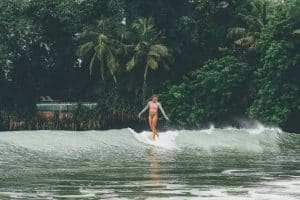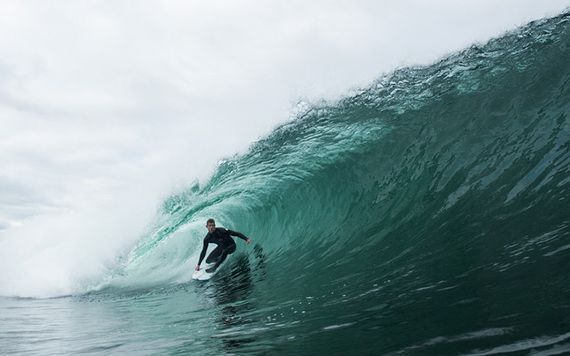

Ireland doesn’t fit the surf-brochure image of sun-bleached hair and boardshorts: think grey skies, 10°C water and thick rubber. But sitting right in the firing line of North Atlantic storms, this wild coast delivers some of Europe’s most powerful, consistent and uncrowded waves, from gentle beginner beaches to a world-class big-wave slab at Mullaghmore. The continental shelf drops away fast, so swells arrive with full punch, framed by cliffs, ruined castles and green mountains. Pack a good wetsuit, embrace the moody weather, and you’ll score waves you won’t forget, followed by a Guinness by a turf fire. Here’s the coast, county by county. Ireland is one of our best surf destinations in the world.
Quick surf guide to Ireland
- Best season: September to October (solid swells, warmest water, fewer crowds)
- Best for beginners: Tullan Strand, Rossnowlagh, Strandhill, Lahinch, Inch
- Best for advanced: The Peak (Bundoran), Easkey, Mullaghmore, Aileen’s
- Main wave types: beach breaks, reef and point breaks, world-class big-wave slabs
- Water temp: 8 to 16°C, a 3/2mm in summer up to a 6/5mm with boots, gloves and hood in winter
- Airports: Dublin, Knock (Ireland West) and Shannon
- Budget: €45 to 200 a day depending on comfort
Where to surf in Ireland
Irish surf runs down the Wild Atlantic Way, from Donegal in the northwest through Sligo, Clare, Mayo and Kerry. Tap a marker to preview a spot, then click its name to jump to it below.
County Donegal: Ireland’s surf capital
Bundoran and its surrounds pack exceptional wave quality and full infrastructure into one corner of the northwest, from first-timer beaches to a championship reef.
The Peak (Bundoran)
Ireland’s most famous wave: a fast, hollow left over shallow reef that hosts the national championships and demands real skill when it’s firing. The local crew know it intimately and expect high ability from visitors, so this isn’t the place to test your limits. More in our full Bundoran guide.
Tullan Strand
Bundoran’s beginner alternative to The Peak: gentle, waist-high waves over sand, with a horseshoe shape that creates sections for different levels and the Dartry Mountains as a backdrop. Several surf schools run lessons here.
Rossnowlagh
Rossnowlagh is a beautiful horseshoe beach just north of Bundoran with consistent, groomed waves beneath towering cliffs. The gradual depth increase and clean faces make it excellent for progression, and the orientation offers some shelter from the wind.
County Sligo: big-wave territory
Just south of Donegal, Sligo mixes friendly beach breaks with reefs and one of the most serious big waves on the planet.
Strandhill
A popular beach-break town with year-round waves and excellent infrastructure, anchored by the National Surf Centre. Fun, consistent peaks break with Knocknarea Mountain as the backdrop, and it’s one of the most beginner-friendly setups in the country.
Easkey
A classic reef village with a wave on each side: the left is the friendlier introduction to reef surfing, producing rideable walls that teach reef dynamics without extreme shallow hazard, while the right is heavier and for the experienced. The post-surf warm-up at McGowan’s is a tradition.
Mullaghmore Head
One of the world’s most dangerous waves, a slab breaking over shallow reef that produces 40 to 60 ft monsters requiring jet-ski tow-in and elite skills. Conor Maguire rode Ireland’s biggest-ever wave here at around 60 ft in 2020. For the very best only, the consequences of a mistake are severe. See my full guide to surfing Mullaghmore and the surfable breaks nearby.
County Clare: Lahinch and the Cliffs
Accessible surf towns beside Ireland’s most spectacular coastline, where a friendly beach break sits minutes from a big-wave reef under the Cliffs of Moher.
Lahinch
One of Ireland’s most popular surf towns, with decades of heritage and full infrastructure. The main beach offers reliable waves for all levels, from mellow learner peaks to punchier days, and being 5km from the Cliffs of Moher makes it perfect for mixing surf with sightseeing.
Aileen’s
A rare, spectacular wave that breaks directly beneath the Cliffs of Moher, one of surfing’s most dramatic settings. When it aligns, Aileen’s produces fast, hollow barrels up to 40 ft, reached by jet ski and strictly for expert big-wave surfers.
Mayo and Kerry: remote and scenic
The far west and southwest reward exploration with empty lineups, long sandy beaches and dramatic island and mountain scenery.
Keel Beach (Achill Island)
Achill Island’s main break, a long beach that handles varying sizes and offers options for every level, all wrapped in dramatic mountain and cliff scenery. Consistent year-round and rarely crowded, with the friendly Pure Magic Lodge on hand.
Inch Beach (Kerry)
A 3km blue-flag beach reaching into Dingle Bay, ringed by mountains. Different sections offer varying challenge, and the mix of reliable surf and stunning scenery near Dingle town makes it the pick of the southwest for learners and improvers.
When to surf in Ireland
Big and heavy (Nov to Feb)
Smaller and mellow (Mar to Aug)
September and October are the sweet spot: solid, organised Atlantic swells, water still warm from summer (13 to 15°C, often warmer than the air), improving conditions and thinning crowds. You’ll surf comfortably in a 3/2mm or 4/3mm. Winter (November to February) unleashes the biggest, heaviest swells that light up Mullaghmore and Aileen’s, but with 8 to 11°C water, short daylight and brutal weather, it’s for the committed and experienced only. Spring is a fine progression window for intermediates, and summer (2 to 4 ft, 14 to 16°C) is gentle and ideal for beginners, if occasionally flat.
Surf schools, camps and where to stay
Base yourself in a surf town and you won’t need a car: Bundoran, Strandhill and Lahinch all have quality breaks, schools and services within walking distance. Expect roughly €30 to 50 for a group lesson and €10 to 15 a day for wetsuit rental (usually included in lessons). For exploring the wider coast and chasing conditions, a rental car (€30 to 70 a day) unlocks Ireland’s full potential along the Wild Atlantic Way.
Compare surf camps in Ireland on BookSurfCamps
What to pack for Ireland
This is cold-water surfing, so thermal protection is everything: a 3/2mm in summer, a 4/3mm to 5/4mm plus boots (and gloves) in spring and autumn, and a 5/4mm or 6/5mm with 5 to 7mm boots, 5mm gloves and a hood in winter. The hood matters most, keeping your head warm prevents heat loss. Quality counts, so invest in a well-fitting suit from a trusted surf brand rather than a cheap one that flushes. The rest:
- A surf watch for tides, plus a changing robe and a flask of hot water for after
- Learning? See our best beginner surfboards and check your board size or volume
- Fancy more cold-water Atlantic surf? Brittany, in our France guide, has a similar feel
Getting there and around
Fly into Dublin (3.5 hours from Bundoran), Knock/Ireland West (closest to Sligo and Mayo) or Shannon (best for Clare and Kerry). A rental car and the Wild Atlantic Way are the classic combination: a typical loop runs Dublin to Bundoran, down to Sligo, across to Achill, then Lahinch and Inch, covering Ireland’s prime surf in 7 to 14 days.
Frequently asked questions
Is Ireland good for beginner surfers?
Yes, especially in summer when the waves mellow and water warms to 14 to 16°C. Strandhill, Tullan Strand, Rossnowlagh, Lahinch and Inch all offer gentle beach breaks with established surf schools. The cold water needs a proper wetsuit, usually included in lessons.
What’s the water temperature in Ireland?
It ranges from 8 to 11°C in winter to 14 to 16°C in summer, so a wetsuit is needed year-round: a 3/2mm in summer, a 4/3mm to 5/4mm in spring and autumn, and a 5/4mm to 6/5mm with boots, gloves and hood in winter. This is definitively cold-water surfing.
When is the best time to surf in Ireland?
September and October offer the best overall package: solid swells, the warmest water of the year, improving weather and fewer crowds. Winter brings the biggest waves for experts, and summer is best for beginners with smaller waves and the warmest water.
Where is Ireland’s surf capital?
Bundoran, in County Donegal. It has The Peak (Ireland’s most famous wave), numerous other breaks, multiple surf schools, shops and accommodation, and it hosts the Irish national championships. See our Bundoran guide for the full picture.
Do I need a car to surf in Ireland?
Not if you base yourself in a surf town like Bundoran, Strandhill or Lahinch, where breaks and services are within walking distance. But for chasing conditions and exploring remote spots along the Wild Atlantic Way, a rental car unlocks Ireland’s full potential.
How much does surfing in Ireland cost?
Budget around €45 to 65 a day (hostels, self-catering, board rental), €80 to 120 for private rooms or B&Bs and pub meals, or €150 to 200 for lodges and hotels. Group lessons run €30 to 50, board rental €15 to 25 a day, and wetsuit rental €10 to 15 a day.
Ireland asks more of you than most surf destinations: thick rubber, cold hands, moody skies and short winter days. Give it that, and it returns powerful, uncrowded Atlantic waves for every level, framed by some of Europe’s most dramatic coastline, and the finest post-surf pub culture anywhere. Target September, base yourself in Bundoran or Lahinch, pack a warm hood, and go. See you in the line-up.