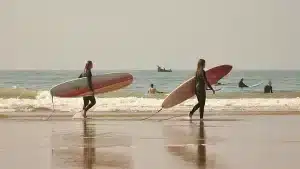
Ask a hundred surfers for their top three surf destinations and Costa Rica comes up again and again, alongside Bali and Portugal. This small slice of Central America has it all: two coastlines, warm water year-round, waves for every level, and a pura vida culture that makes it one of the easiest world-class surf trips on the planet. The Pacific side is the star, with famous towns like Tamarindo, Nosara and Santa Teresa, beginner beaches by the dozen, the epic left at Pavones and the boat missions to Witch’s Rock and Ollie’s Point; the Caribbean adds a short, ferocious reef season at Salsa Brava. It sits high on our guide to the world’s best places to surf. Here’s Costa Rica, region by region, plus when to go and what to pack.
Which Costa Rica break is yours?
Three quick questions to match you with a Costa Rican wave, from warm beginner beaches to remote point-break missions.
Quick surf guide to Costa Rica
- Best season: the Pacific has waves all year, biggest in the green season (May to October); the dry season (December to April) is smaller, cleaner and high season
- Best for beginners: Tamarindo, Nosara, Jaco, Santa Teresa
- Best for advanced: Pavones, Playa Hermosa, Salsa Brava, Playa Negra
- Water temp: 26 to 29°C on both coasts, no wetsuit needed all year
- Gateways: Liberia (LIR) for the Nicoya coast, San Jose (SJO) for Central, South Pacific and the Caribbean
- Budget: $50 to $100 a day, pricier than its Central American neighbours
Where to surf in Costa Rica
Costa Rica splits into five surf regions, four on the Pacific and one on the Caribbean. We’ve laid them out from the northwest down the Pacific and over to the Caribbean. Tap a marker to preview a spot, then click its name to jump straight to it below.
Guanacaste and North Nicoya
The dry, wind-blessed northwest is Costa Rica’s most famous surf zone and the heart of its scene: the buzzing town of Tamarindo, the wellness-and-waves haven of Nosara, empty reefs and beaches, and the legendary boat missions to Witch’s Rock and Ollie’s Point. Fly into Liberia and start here.
Witch’s Rock
Roca Bruja, immortalised in The Endless Summer II, is a fast, hollow beach break that peels beneath a lone monolith in the wild Santa Rosa National Park, empty wind-whipped mountains behind. It’s a boat mission (about an hour from Tamarindo) and the offshore Papagayo winds groom it to perfection. A bucket-list Costa Rican wave, best for confident surfers. See my full guide to surfing at Witch’s Rock and Ollie’s Point.
Ollie’s Point
A pirate’s-cove right-hand point that can run for over 300 metres, Ollie’s is the other half of the classic Guanacaste boat trip, tucked into a remote bay north of Tamarindo and named after Oliver North. When it’s on it’s a dream, long, walling and offshore, though in high season you might share it with a dozen boats. Worth every minute of the ride.
Tamarindo
The most famous surf town in Costa Rica, Tamarindo is a friendly, forgiving beach break that works for all levels, especially in the morning before the wind, with a river-mouth wave and nearby points for when you improve. It’s busy and touristy, with surf schools everywhere, but few places make learning easier. The classic Costa Rica starting point. See my full break-by-break guide to surfing in Tamarindo.
Playa Negra
A fast, hollow right-hand reef that breaks over rock south of Tamarindo (and had its own Endless Summer II moment), Playa Negra is one of the best barrels in Guanacaste. It’s shallow, punchy and unforgiving, rewarding good surfers with clean tubes and punishing the rest. Bring booties and respect the reef.
Avellanas
A beautiful, less-crowded beach just south of Tamarindo, Avellanas (of Little Hawaii fame) offers a mix of sandy beach-break peaks and a couple of reefs, a step up from the town waves for improvers. Backed by jungle and a famous beach bar, it’s a mellow, scenic alternative to the Tamarindo crowds.
Nosara
Nosara’s Playa Guiones is one of the most consistent and beginner-friendly waves in the country, a 7 km arc of sand that’s surfable more than 300 days a year, with space to spread out and peaks for every level. Wrapped in a green, low-key, wellness-focused town, it’s a dreamy place to learn or log hours. Pura vida at its finest. See my full guide to surfing in Nosara.
The Nicoya Peninsula
The wild tail of the Nicoya Peninsula holds Costa Rica’s coolest surf town, Santa Teresa, and its mellower neighbour Mal Pais: consistent, punchy beach breaks that almost never go flat, wrapped in jungle, yoga studios and sunset bars.
Santa Teresa
The crown jewel of Costa Rica’s surf towns, Santa Teresa is a long run of swell-sucking sand that spreads the crowd across multiple peaks and is almost never flat, with mellow beginner sections in the north and punchier, reef-influenced waves towards Mal Pais. Add chilled bars, sunset cafes and a Canggu-like buzz and it’s a premier upper-beginner and intermediate spot. Best around low tide. See my full guide to surfing in Santa Teresa.
Mal Pais
Just south of Santa Teresa, Mal Pais trades sandy beach peaks for punchier reef and point breaks that draw the more experienced when they want extra bite. Quieter and more rugged than its famous neighbour, it’s a short hop away for a change of wave. A good step up when Santa Teresa is small.
The Central Pacific
A short drive from San Jose, the Central Pacific pairs the beginner-friendly bay of Jaco with two heavyweights: the World Surfing Reserve of Playa Hermosa and one of the planet’s great longboard lefts at Boca Barranca.
Jaco
The closest surf town to San Jose, Jaco is a lively, developed beach break with mellow, forgiving whitewater and a big surf-school scene, making it a handy first stop or weekend spot. It’s not the best wave on the coast, and the nightlife is louder than the surf, but it’s easy, consistent and a fine place to learn. Bigger swells bring more punch. See my full break-by-break guide to surfing in Jaco.
Playa Hermosa
Costa Rica’s national surf stadium and a World Surfing Reserve, Playa Hermosa (de Jaco) is a powerful, board-breaking beach break that throws heavy, hollow peaks along miles of sand, especially on a green-season south. It’s a proper step up from Jaco, with serious power and rips, and even crocs and stingrays to be aware of. For confident surfers only. See my full guide to surfing Playa Hermosa.
Boca Barranca
One of the world’s great longboard lefts, Boca Barranca peels off a river mouth deep in the Gulf of Nicoya into a long, slow, workable wall that just keeps going, whether you bring a nine-foot log or a fish. It needs a big SW swell to fire, and the water quality can be iffy near the river, but on its day the ride is enormous. A longboarder’s pilgrimage.
The South Pacific
The lush, remote south is where Costa Rica’s surf gets heavier and emptier, from the powerful beach breaks of Dominical to the rights of Matapalo and, right down by the Panama border, one of the longest left points on Earth: Pavones.
Dominical
A raw, powerful beach break in the jungle-backed south, Dominical throws heavy, hollow peaks that pack real punch, especially on a green-season swell. It’s a favourite of stronger surfers and a laid-back, backpacker-ish town, with waterfalls and rainforest all around. Rips and power mean it’s better for confident surfers; beginners head to the mellower nearby Dominicalito.
Pavones
One of the longest left-hand point breaks on the planet: on a big southern-hemisphere swell, Pavones links section after section for minutes and hundreds of metres, a goofy-footer’s dream tucked into the remote Golfo Dulce near the Panama border. It’s fickle, needing serious swell, and a long haul to reach, but when it turns on, few waves on Earth compare. Worth the mission. See my full guide to surfing Pavones.
Matapalo
At the tip of the wild Osa Peninsula, Cabo Matapalo offers a set of long right-hand points that peel over rock and reef in one of the most biodiverse corners of the planet, all howler monkeys and rainforest. Quieter and more rugged than the northern spots, it’s a rewarding intermediate wave for those who make it this far south. Remote and beautiful. See my full guide to surfing Matapalo.
The Caribbean coast
On the other side of the country, the Caribbean coast around Puerto Viejo runs to a different rhythm, warm, Afro-Caribbean and reggae-tinged, with a short but ferocious winter reef season headlined by the fearsome Salsa Brava.
Salsa Brava
Costa Rica’s heaviest wave, Salsa Brava is a thick, powerful right-hand reef barrel that unloads over shallow, sharp coral in front of Puerto Viejo when Caribbean winter swells arrive. It’s the country’s Pipeline, spectacular, consequential and strictly for experts. Everyone else watches from the beach with a coconut.
Cocles
Just down the coast from Salsa Brava, Playa Cocles is the Caribbean’s main beach break, a punchy, fun sand-bottom wave that’s far more approachable than its reef neighbour and the go-to for most surfers around Puerto Viejo. It has rips and packs a punch on size, but on a clean winter day it’s a treat. Bring good vibes and reggae.
When to surf in Costa Rica
Shoulder
Dry season (smaller, cleaner, high season)
On the Pacific coast there are two seasons. The green (rainy) season from May to November is the main swell season: SW groundswells from the Southern Hemisphere march up the whole coast and light up everything from Witch’s Rock to Pavones, with the biggest, most powerful surf, roughly double the dry-season size, best for intermediate and advanced surfers. Mornings are usually cleanest before the afternoon rain.
The dry season, December to April, brings sunny days, offshore Papagayo winds and smaller, cleaner waves, which is why it’s the tourist high season and the best time for beginners around Tamarindo, Nosara and Santa Teresa. The Caribbean runs on the opposite clock: Salsa Brava and the Puerto Viejo reefs fire on north swells roughly from December to March, so there’s quality surf somewhere in the country all year round.
What are the best surf camps in Costa Rica?
Costa Rica has one of the deepest surf-camp scenes on earth, concentrated in the beginner-friendly Pacific towns. Tamarindo and Nosara in Guanacaste are the classic learn-to-surf hubs (many camps include Liberia airport transfers), while Santa Teresa on the Nicoya Peninsula has arguably the finest array of surf camps and eco-hotels in the country, blending surf with yoga and wellness. Jaco is the easy option near San Jose, and dedicated boat trips run to Witch’s Rock and Ollie’s Point. Learn on the mellow beaches, then join guided trips to the points and reefs as you improve. For a deeper look, see our full guide to the best surf camps in Costa Rica.
Compare surf camps in Costa Rica on BookSurfCamps
What to pack for Costa Rica
Warm water and strong tropical sun make this a boardshorts trip, with a few extras for the reefs and the road. Your Costa Rica packing checklist:
- No wetsuit needed, the water is warm all year: boardshorts, a bikini or a rash vest do the job (save the wetsuit for colder trips)
- Reef booties for the rock and coral spots (Playa Negra, Salsa Brava, Mal Pais), plus a small first-aid kit
- Reef-safe SPF (the turtles thank you) and a surf hat for the strong tropical sun
- A surf watch to track the tides, which shape most of these beach breaks
- The right board: a longboard for the mellow beaches and Boca Barranca, a shortboard or step-up for the reefs and points; see our best beginner surfboards and check your board volume
- A set of fins and a spare, plus a leash you trust for the powerful spots
- Your best outfit from your favourite surf brand: see our best surf clothing brands
- A travel board bag, light rain gear for the green season, and a 4×4 if you plan to road-trip the coast
Getting to Costa Rica
There are two main airports. Liberia (LIR) in the northwest is the gateway to the Nicoya coast, closest to Tamarindo, Nosara and Santa Teresa, while San Jose (SJO), the capital, is better for the Central and South Pacific (Jaco, Dominical, Pavones) and the Caribbean. Roads have improved a lot but many surf spots still want a 4×4, and reaching Santa Teresa involves a ferry across the Gulf of Nicoya or a longer drive around. If you book a surf camp, transfers are usually included and you may not need a car at all. Pavones sits right by the border with Panama, another warm-water Pacific option, and up the coast lies Mexico for a bigger Latin American surf trip. To the north, Nicaragua and El Salvador round out a classic Central American run.
Frequently asked questions
When is the best time to surf in Costa Rica?
The Pacific coast has waves all year, but the biggest, most consistent surf comes in the green (rainy) season from May to October, when SW swells fire. The dry season (December to April) brings smaller, cleaner waves, offshore Papagayo winds and the tourist high season. The Caribbean (Salsa Brava) is the opposite: it works best December to March.
Is Costa Rica good for beginners?
Yes, it’s one of the best in the world. Tamarindo, Nosara (Guiones), Jaco and Santa Teresa are warm, sandy, forgiving beach breaks with a huge surf-camp and school scene. Just avoid the heavy reefs (Salsa Brava, Playa Negra) and powerful beach breaks (Playa Hermosa, Dominical) until you’re ready.
Where should I go for my first Costa Rica surf trip?
The northern Nicoya coast is the classic beginner base: fly into Liberia and pick Tamarindo or Nosara, both packed with surf schools and consistent waves. Santa Teresa and Jaco are also excellent. For a road trip, the Pacific coast strings spots together from north to south.
Do I need a wetsuit in Costa Rica?
No. The water is warm all year, 26 to 29 degrees Celsius on both coasts, so boardshorts or a bikini and a rash vest are all you need. It’s one of surfing’s great boardshorts destinations.
How good is Pavones?
World-class. Pavones, in the far south near the Panama border, is one of the longest left-hand point breaks on the planet: on a big south swell you can ride for minutes and hundreds of metres. It’s fickle and remote, needing serious swell and a long journey, but on its day it’s the stuff of dreams. For intermediates and up.
Is Costa Rica safe and easy to travel?
Very, by regional standards: it’s stable, welcoming and set up for tourism, with a strong pura vida culture. Roads can be rough and some spots need 4x4s, boats or river crossings, and the beach breaks have rips, so respect the ocean. It’s pricier than its neighbours, but easy and rewarding.
Costa Rica is a surf paradise with two coasts and warm water year-round: beginner beaches at Tamarindo and Nosara, the epic left at Pavones, the boat missions to Witch’s Rock and Ollie’s, and the barrels of Salsa Brava. Pack boardshorts, chase the season, embrace pura vida, and Costa Rica will feel like the easiest world-class surf trip you’ll ever take. See you in the line-up.