Tamarindo is where a huge number of people catch their first-ever wave, and for good reason. This lively, developed town on Guanacaste’s Nicoya coast has the best surf infrastructure in Costa Rica: a forgiving beach break right in front of town, a school on every corner, warm water, and a whole cluster of other breaks within walking distance for when you improve. Yes, it is busy, and locals half-jokingly call it Tamagringo, but few places on earth make learning to surf this easy and this fun. This is the classic starting point on our guide to surfing in Costa Rica. Here’s every break I’d send you to, when to score them, and how to set up your trip.
Quick surf guide to Tamarindo
- Best season: green season (May to November) for bigger swell; dry season (December to April) for smaller, cleaner, beginner waves
- Best for beginners: Playa Tamarindo, Playa Langosta
- Best for advanced: El Estero, Playa Grande
- Wave type: sand-bottom beach breaks plus a rivermouth and a few reef wedges
- Water temp: 26 to 28°C, boardshorts and a rashguard, no wetsuit
- Crowds: the busiest lineup in Costa Rica, quieter north and south
- Getting there: Liberia (LIR), about 1 to 1.5 hours
- Budget: $60 to $120 a day, mid-range for Costa Rica
Where to surf in Tamarindo
I’ve laid the zone out from powerful Playa Grande across the estuary in the north, through the town beach and its rivermouth, down to quieter Langosta in the south. Tap a marker to preview a break, then click its name to jump to my full rundown below.
North across the estuary
On the far side of the Tamarindo estuary sits the zone’s most powerful wave, a long protected beach that only the boats and the committed reach.
Playa Grande
Just across the estuary to the north, Playa Grande is a longer, more powerful beach break that picks up more swell than the town beach and stays far less crowded. It is a protected leatherback turtle reserve, which keeps development away and the peaks empty, and it rewards intermediates and up with punchy A-frames on a solid south swell. Do not be tempted to wade or swim across the estuary to reach it, there are crocodiles, so drive around or take a boat.
Town and the rivermouth
Right in front of Tamarindo are the two waves that define it: a fast rivermouth for the experienced and a forgiving beach break for everyone learning.
El Estero
The wave at the mouth of the estuary is the best in town when it is working: a fast, shifting sandbar right that can barrel for fifty meters or more on the right tide. It relies on the sand the river deposits, so it changes shape constantly, and it is a step up in speed and power from the beach break. As with Playa Grande, keep well clear of the river channel itself, where crocodiles live. One for surfers who can already handle a fast, hollow wave.
Playa Tamarindo
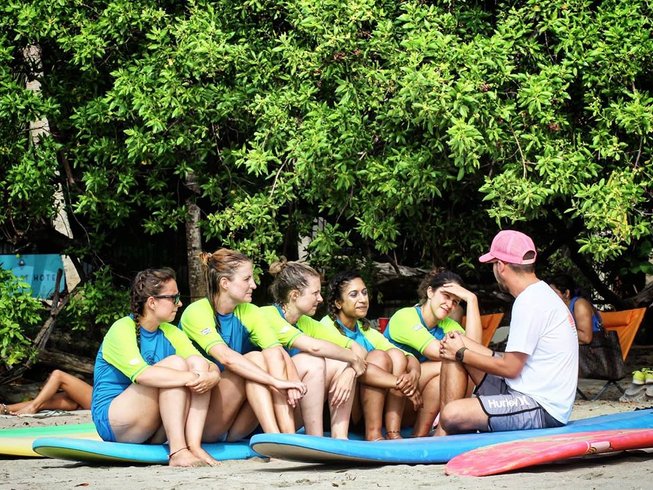
The main town beach is the reason Tamarindo is a learn-to-surf mecca: a gentle, forgiving beach break with a sandy bottom and soft, rolling peaks, right in front of the cafes and surf schools. It is the busiest lineup in the country, so it can feel like a crowded swimming pool of foamies, but it is a genuinely lovely place to stand up for the first time. Surf in the morning before the wind, mind the learners around you, and enjoy it.
South of town
A short walk or drive south, Langosta trades the town crowds for a quieter, rockier beach and a fun reef peak.
Playa Langosta
Just south of town, Langosta is where I go when the main beach is too crowded. It has a gentle sandy end near the Capitan Suizo hotel for improvers and a reef A-frame called Sapo that works around low tide for the more confident. It is rockier and less versatile than the town beach, but the vibe is calmer and you can usually find your own peak. A nice change of pace ten minutes from the middle of town.
When to surf in Tamarindo
Dry season (smaller, cleaner, best for beginners)
Wettest (October to November)
Tamarindo has waves all year, so your season depends on what you want. The green season, roughly May to November, is when the southern swell fires most consistently, bringing the biggest and most powerful surf and the best days for the rivermouth and Playa Grande. The trade-off is afternoon rain, mostly later in the season, so surf the mornings. July to September is the sweet spot for size.
The dry season, December to April, brings smaller, cleaner waves, sunshine and reliable offshore mornings, which makes it the ideal window for beginners and lessons on the town beach. It is also the busy tourist high season. One quirk to know: from roughly December to February, cold upwelling winds can chill the water and the air, so a thin top is worth packing even in the tropics.
Surf camps, schools and where to stay in Tamarindo
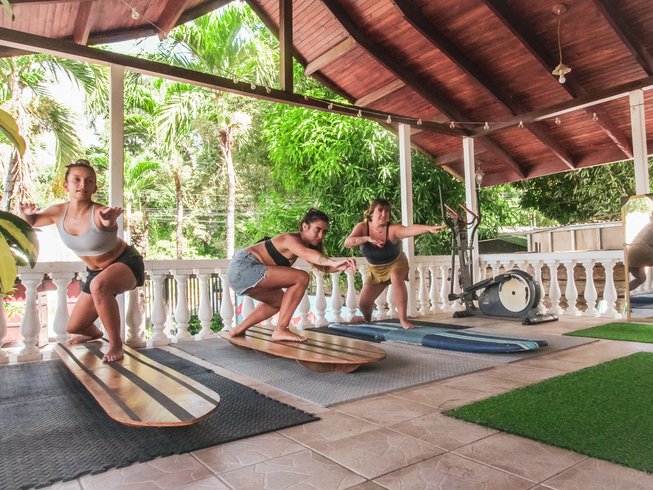
Tamarindo is the surf-camp capital of Costa Rica, and for a first trip that is exactly what you want: a lesson on the sand in the morning, board rental everywhere, and a lively town to relax in afterwards. Stay central to be walking distance from the main beach and the schools, or base yourself in quieter Playa Langosta if you want to trade a little convenience for calm. Learn on the town beach, then let a guide take you to the rivermouth or across to Playa Grande as you progress, which is the right way to work through this zone. For my full rundown of where to base and book, see our guide to the best surf camps in Tamarindo.
Compare surf camps in Tamarindo on BookSurfCamps
What to pack for Tamarindo
Warm water and strong sun make this a boardshorts trip. My Tamarindo checklist:
- Boardshorts and a rashguard, no wetsuit needed in 26 to 28 degree water, plus a thin top for the cool upwelling weeks in December to February
- Reef-safe SPF and a surf hat for the strong tropical sun
- The right board: a soft-top or longboard to learn on the beach, a shortboard for the rivermouth; see our best beginner surfboards and check your board volume
- A surf watch for the tides and a spare leash
Getting to Tamarindo
Tamarindo is about an hour to an hour and a half by road from Liberia airport (LIR), which makes it one of the easiest quality surf zones in Costa Rica to reach; San Jose (SJO) is a longer four to five hour drive. Shared shuttles and private transfers from Liberia are cheap and easy, and honestly you do not need a car in Tamarindo itself, since the main breaks are walkable in town. A rental, ideally a four-by-four, is worth it only if you plan to road-trip the coast or escape the crowds at spots like Avellanas and Playa Negra to the south. If you are building a wider trip, pair this with surfing in Costa Rica, and note that the legendary boat trip to Witch’s Rock and Ollie’s Point runs from here.
Frequently asked questions
Is Tamarindo good for beginner surfers?
Yes, it is the number one place to learn to surf in Costa Rica. The main town beach is a gentle, sandy, forgiving beach break with a school on every corner, and Playa Langosta is a good quieter option. Save the rivermouth and Playa Grande for once you can confidently ride a green wave.
When is the best time to surf in Tamarindo?
For bigger, more consistent swell, the green season from May to November, peaking July to September. For smaller, cleaner waves, sunshine and the best beginner conditions, the dry season from December to April. There are rideable waves every month of the year.
What is the best surf spot in Tamarindo?
For learning, the town beach; for quality, the El Estero rivermouth serves fast rights for experienced surfers, and powerful Playa Grande across the estuary picks up the most swell. Playa Langosta is the friendly middle ground with both a beach break and a reef.
Do I need a wetsuit to surf in Tamarindo?
No. The water is a warm 26 to 28 degrees Celsius, so boardshorts and a rashguard are all you need. The only exception is the cold upwelling weeks between December and February, when a thin neoprene top can make dawn sessions more comfortable.
How crowded is surfing in Tamarindo?
It is the busiest lineup in Costa Rica, especially the town beach, which is packed with surf schools. The upside is that the crowd thins quickly if you move: head across to Playa Grande, out to the rivermouth, or south to Langosta and Avellanas for more room.
Are there crocodiles where you surf in Tamarindo?
Crocodiles live in the Tamarindo estuary and river channel, not out in the surf lineup, but you should never wade or swim across the estuary to reach Playa Grande. Drive around or take a boat, and keep clear of the river mouth, and you will be perfectly safe out on the peaks.
Tamarindo is easy to be sniffy about, but it earns its place: warm water, forgiving waves, a school on every corner, and a whole zone of breaks to grow into once you find your feet. Learn on the town beach, respect the estuary and its crocodiles, chase the rivermouth and Playa Grande as you improve, and enjoy the pura vida. See you in the lineup.