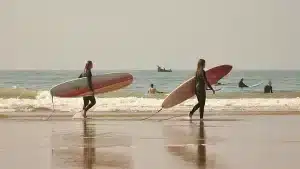
Mexico is one of the great surf nations, and one of the most varied on Earth. Its Pacific coast runs for thousands of miles from the arid points of Baja, just over the California border, all the way down to the humid, swell-magnet beaches of Oaxaca, and packs in every kind of wave along the way: the lethal barrels of Zicatela, the perfect points of Barra de la Cruz and Scorpion Bay, and endless mellow longboard beaches for beginners. Add warm water on the mainland, cheap living and some of the best food on the planet, and it’s hard to beat for value. It sits high on our guide to the world’s best places to surf. Here’s Mexico, region by region, plus when to go and what to pack.
Which wave in Mexico is for you?
Three quick questions to match you with a Mexican break, from mellow longboard towns to heavy Pacific barrels.
Quick surf guide to Mexico
- Best season: summer (April to October) for strong S swells on the mainland and Oaxaca; winter suits the northern Baja points
- Best for beginners: Sayulita and La Lancha (Nayarit), La Punta and Carrizalillo (Oaxaca), Saladita
- Best for advanced: Puerto Escondido, Pascuales, Barra de la Cruz, Scorpion Bay
- Water temp: 24 to 30°C on the mainland (boardshorts); cooler in northern Baja (a springsuit or 3/2)
- Gateways: Puerto Escondido (PXM), Puerto Vallarta (PVR), Los Cabos (SJD), Zihuatanejo (ZIH)
- Budget: $30 to $70 a day, excellent value
Where to surf in Mexico
Mexico is vast, so we’ve broken it down region by region, north to south, and our advice is to pick one region per trip rather than trying to see it all. Tap a marker to preview a spot, then click its name to jump straight to it below.
Baja California
Right over the California border, Baja is a rite-of-passage road trip for SoCal surfers: arid, rocky coast, classic right-hand points that wrap the winter NW swell, and, way down south, warm-water points and the party town of Los Cabos.
San Miguel
The classic first stop south of the border: a cobblestone right point near Ensenada that peels much like the setups in SoCal, which is exactly why generations of Californians have made the pilgrimage. It works best on a winter NW swell, the water is cool and the crowd familiar. A friendly, accessible introduction to Baja surf.
Scorpion Bay
San Juanico, better known as Scorpion Bay, is the stuff of Baja legend: a series of linked right-hand points that, on a good summer south, join into one of the longest rides in the country. It’s a mission down dusty tracks to reach, which keeps it gloriously uncrowded. Warm, peeling and worth every pothole.
Los Cabos
At the tip of the peninsula, the Los Cabos area (Costa Azul, Zippers, The Rock, Old Man’s) lights up when big southern-hemisphere swells push into the mouth of the Sea of Cortez in summer, with a wave for most levels and warm, clear water. It doubles as a resort holiday town, so it’s the easy option if you’re travelling with non-surfers.
Riviera Nayarit
The stretch of coast north of Puerto Vallarta is Mexico’s learn-to-surf heartland: warm water, forgiving sandy waves, boho surf towns and easy logistics. The friendliest place to start in the country.
Sayulita
The beginner capital of Mexico: a colourful boho town wrapped around a bay of slow, rolling, sandy-bottom waves with no reef to worry about and a surf school on every corner. It’s busy and no longer a secret, but nowhere makes learning easier or more fun. One of the best longboard waves in the country when it’s on. See my full guide to surfing in Sayulita.
La Lancha
Out on the Punta Mita headland, La Lancha is a lovely, forgiving A-frame that peels along a sandy bottom after a short walk through the jungle. Longer and slightly more shapely than Sayulita’s town waves, it’s the natural step up for improving surfers, and a beautiful spot to spend a warm morning. Best early before the wind.
San Pancho
Sayulita’s quieter, more stylish neighbour, San Pancho (San Francisco) has a punchier beach break that closes out when it’s small but offers fun, hollow peaks on the right swell and tide. A step up in power from the beginner bays, with a mellow town and far fewer crowds. Worth checking when Sayulita is packed. See my full guide to surfing in San Pancho.
Michoacan and the central coast
The wild, empty middle of the country is where Mexico gets serious: heavy barrels, long left points and river-mouth waves with barely a soul about. Remote, powerful and not for beginners, this is adventure surf. Never surf the remote breaks alone.
Pascuales
One of Mexico’s heaviest waves: a thick, sand-bottom barrel on the Colima coast that draws off deep water and detonates with real power, a Zicatela-style beachie for serious tube-riders. It handles size and rewards commitment, but the beatings are severe and the spot remote. Strictly for experienced barrel surfers, ideally with a guide.
Rio Nexpa
A long, cobblestone left point at the mouth of the Nexpa river, peeling fast, walling sections down the beach when a good south lines up. It’s a rustic, palapa-and-hammock surf outpost with a committed core of travellers, and one of the best lefts on the coast. Powerful and consequential on size, so pick your day.
La Ticla
A mellow, consistent left that breaks off a river-mouth sandbar on community-run land in Michoacan, La Ticla is a laid-back, camp-on-the-beach kind of spot with fewer tourists and a good, workable wave. Quieter and friendlier than the heavy breaks nearby, it’s a fine intermediate hideaway. Respect the local community and their rules.
Guerrero
Around Zihuatanejo, Guerrero mixes one of Mexico’s dreamiest longboard waves with quiet, quality points that are still flying under the radar. Warm, uncrowded and on the up.
Saladita
A soft, slow, impossibly long left point that’s become a longboarding and learn-to-surf mecca: waist-to-head-high walls that just keep going, perfect for logging and cross-stepping. It’s a chilled, palapa-lined spot with a big longboard scene, and one of the easiest quality waves in the country to enjoy. Bring a big board.
Troncones
A quiet, quality town a short drive from the Zihuatanejo airport, with punchy beach-break wedges, a fun point and a mushier longboard wave along a big, swell-hungry shoreline. It packs more power than it looks and isn’t really a beginner spot, but it stays refreshingly uncrowded. One of the best intermediate waves in Mexico, and tipped to grow.
Oaxaca
The crown of Mexican surf: a swell-magnet coast that holds the infamous Zicatela, the mellow lefts and coves that surround it, and, to the east around Salina Cruz, some of the best right-hand points anywhere. Warm water, huge summer souths, and a culinary and cultural powerhouse behind the beach.
Puerto Escondido
The Mexican Pipeline: Playa Zicatela is widely rated the best and heaviest beach break in the world, a thick, top-to-bottom barrel that unloads onto near-dry sand and grows to giant sizes on a big summer south. It has caused serious injuries and deaths, and it’s strictly for experienced tube-riders. Everyone else surfs the friendlier waves nearby and watches Zicatela from the sand. See my full guide to surfing in Puerto Escondido.
Carrizalillo
A pretty, protected little cove right in Puerto Escondido, Carrizalillo is where beginners and improvers surf while Zicatela rages a few minutes away. The swell arrives softened and manageable, there are surf schools on the sand, and the horseshoe bay is a lovely spot to spend the day. The safe, friendly face of PE.
La Punta
At the southern end of Zicatela, La Punta is the mellow counterpoint to the Mexican Pipeline: a long, slow, sand-bottom left that peels for ages and suits improving surfers and longboarders, wrapped in a buzzing, bohemian barrio of hostels, cafes and yoga. The perfect place to log hours and soak up the Puerto Escondido scene without the beating.
Barra de la Cruz
The wave that stole the show at a famous 2006 contest: a fast, sand-and-rock right point that runs down the beach into long, barreling sections when the summer south is on. It’s on community-run land with a small entry fee, which keeps it well managed and less crowded than its quality deserves. One of the best rights in the country, and a bucket-list Oaxaca wave.
Salina Cruz
The Salina Cruz region hides a string of world-class right-hand points and sand-bottom barrels along a remote, wind-blessed coast that sees a fraction of Puerto Escondido’s crowds. Access is via dusty tracks on private and community land, so almost everyone surfs it with a local guide who sorts permissions and transport. Empty perfection for those who make the effort.
When to surf in Mexico
Shoulder
Winter (smaller mainland; NW swells for Baja)
Summer (roughly April to October) is the engine of Mexican surf: strong south and south-west groundswells from the Southern Hemisphere march up the Pacific coast and light up the mainland and Oaxaca, from Puerto Escondido and Barra de la Cruz to Scorpion Bay and Saladita. June to October is also hurricane season, which delivers the biggest swells of all, occasionally with stormy weather attached.
Winter (November to March) is smaller and more beginner-friendly on the mainland, with warm water and sunny days, but it’s when the northern Baja points come into their own on NW groundswell, much like California just across the border. Pick your region to your season: summer for the mainland and the south, winter for Baja Norte.
What are the best surf camps in Mexico?
Mexico is one of the world’s great surf-camp countries, and where you go depends on your level. Sayulita in Nayarit is the beginner hub, packed with schools and progression camps, while Puerto Escondido is the intermediate-and-up base in Oaxaca (camps there surf the friendly coves and points rather than Zicatela itself). Los Cabos pairs lessons with a resort holiday, and the remote points around Salina Cruz are best surfed with a local guide who sorts access and transport. Learn in Nayarit, then chase points and barrels in Oaxaca.
Compare surf camps in Mexico on BookSurfCamps
What to pack for Mexico
The mainland Pacific is warm all year, so it’s mostly boardshorts and a rashie; only northern Baja needs rubber. Your Mexico packing checklist:
- Boardshorts and a rashie for the warm mainland; a springsuit or 3/2 wetsuit for cooler northern Baja, especially in winter
- Reef-safe SPF and a surf hat for the strong sun, plus booties for the cobblestone points
- A surf watch to track the tides and swells
- The right board: a longboard for the points, or a step-up for the heavy beach breaks; see our best beginner surfboards and check your board volume
- A set of fins and a spare, plus a leash you trust for the powerful spots
- Your best outfit from your favourite surf brand: see our best surf clothing brands
- A travel board bag, and cash in pesos for the community entry fees at points like Barra de la Cruz
Getting to Mexico
Most surfers fly in and connect: the key gateways are Puerto Escondido (PXM) for Oaxaca, Puerto Vallarta (PVR) for the Riviera Nayarit, Los Cabos (SJD) for Baja Sur, and Zihuatanejo/Ixtapa (ZIH) for Guerrero, while northern Baja is reached overland from San Diego and Tijuana. Mexico is huge and the roads are slow, so pick one region per trip rather than driving the whole coast, and take normal travel-safety precautions: research your specific area, avoid driving at night, and consider a local surf guide for remote breaks. Just across the northern border sits surfing in California, the other half of our North American coverage.
Frequently asked questions
When is the best time to surf in Mexico?
Summer, April to October, is prime: strong south swells from the Southern Hemisphere light up the mainland Pacific and Oaxaca (Puerto Escondido, Barra de la Cruz), and June to October is hurricane season for the biggest waves. Winter is smaller and more beginner-friendly on the mainland but switches on the northern Baja points, which prefer NW groundswell.
Is Mexico good for beginners?
Yes. Sayulita and La Lancha in Nayarit, La Punta and Carrizalillo in Puerto Escondido, and Saladita in Guerrero are all forgiving, sandy or longboard-friendly waves with surf schools. Steer well clear of heavy spots like Zicatela and Pascuales until you’re experienced.
Where should I go for my first surf trip to Mexico?
Pick one region rather than trying to see it all. Nayarit (fly into Puerto Vallarta) is best for beginners and an easy scene, while Oaxaca (fly into Puerto Escondido) offers more variety, from La Punta’s mellow left to world-class points. Both have excellent surf camps.
Do I need a wetsuit in Mexico?
Mostly no. The mainland Pacific and Oaxaca are warm, 24 to 30 degrees Celsius, so boardshorts and a rashie do the job. Northern Baja is cooler, especially in winter, where a springsuit or 3/2 is worth packing.
Is it safe to surf in Mexico?
The surfing itself ranges from mellow to genuinely dangerous, so match the spot to your level. On travel safety, research the specific region before you go, avoid driving at night, keep valuables out of sight, and consider a local surf guide for remote breaks. Millions travel and surf Mexico safely every year, but conditions vary by area.
How heavy is Puerto Escondido?
Very. Zicatela, the Mexican Pipeline, is one of the heaviest beach breaks in the world: a thick barrel that breaks onto near-dry sand and has caused serious injuries and deaths. It’s for experienced barrel-riders only. Beginners in Puerto Escondido surf the sheltered coves like Carrizalillo and the mellow left at La Punta instead.
Few countries offer Mexico’s range: the lethal barrels of Zicatela, the perfect points of Barra de la Cruz and Scorpion Bay, warm water, cheap living and some of the best food on the planet, all along a single Pacific coastline. Pick a region, time the summer swells, respect the heavy spots and the locals, and Mexico will spoil you. See you in the line-up.