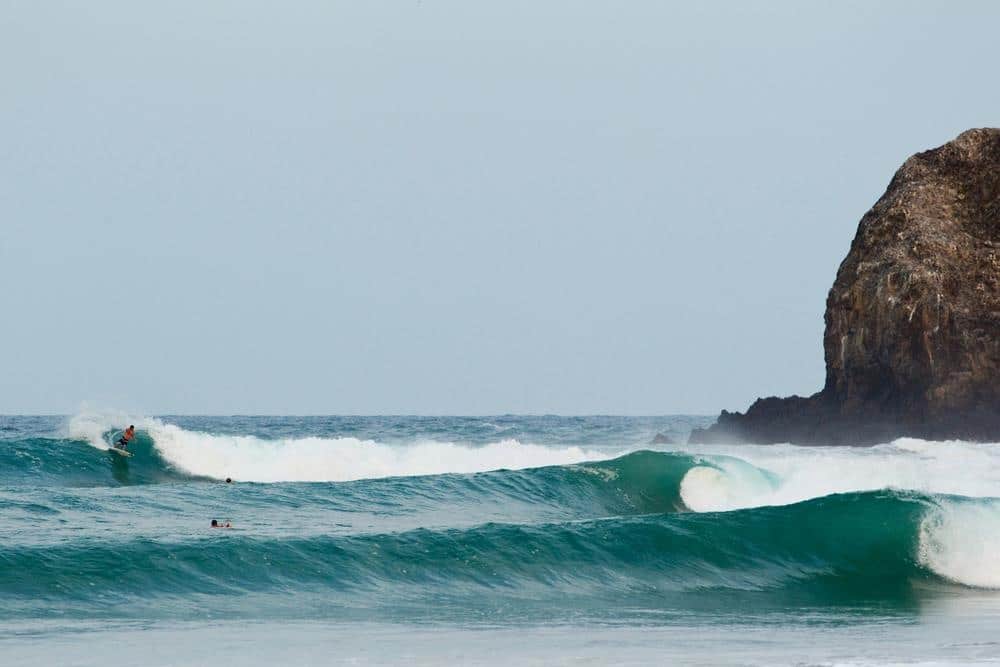
Some waves you drive to, and some you have to earn with a boat and an early alarm. Witch’s Rock is firmly the second kind. Tucked inside Santa Rosa National Park on Costa Rica’s wild northern Pacific coast, it is a pair of world-class waves you reach only by boat: the punchy sand-bottom peaks of Witch’s Rock itself, named for the black volcanic monolith standing offshore, and the long, peeling right at Ollie’s Point up near the Nicaraguan border. Both were burned into surf memory by Endless Summer II, and a dawn boat trip out here is still one of the great days you can have on a surfboard in Central America. This is one of the most iconic missions on our guide to surfing in Costa Rica. Here’s what you’ll find, when to score it, and how to set the trip up.
Quick surf guide to Witch’s Rock
- Best season: dry season (November to April) for clean, offshore Papagayo winds; green season (May to August) for bigger swell
- Best for improvers: Ollie’s Point, a long and forgiving right
- Best for the confident: Witch’s Rock, punchy A-frame peaks
- Wave type: a sand-bottom beach break and a right-hand point, both reached by boat
- Water temp: 26 to 30°C, boardshorts and a rashguard, no wetsuit
- Crowds: quieter than Tamarindo, but charter boats cluster at dawn
- Getting there: Liberia (LIR), then a boat charter from Tamarindo or Playas del Coco
- Budget: $90 to $160 a day, plus the boat charter
Where to surf at Witch’s Rock
This is a two-wave zone, and a boat trip usually links both in a single day: Witch’s Rock at Playa Naranjo, and Ollie’s Point about ten kilometers north at Potrero Grande. Tap a marker to preview a break, then click its name to jump to my full rundown below.
Witch’s Rock (Playa Naranjo)
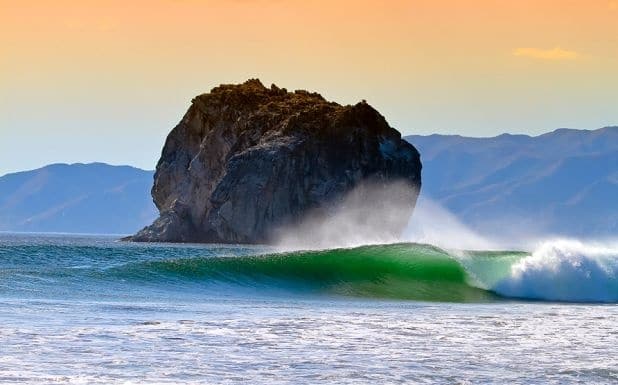
Witch’s Rock breaks along Playa Naranjo, a long sweep of sand watched over by the black volcanic tower that gives the wave its name. It is a fast, punchy beach break that throws up hollow A-frame peaks, and it rewards being on the first boat of the day, before the offshore wind swings and the other charters arrive. Confident intermediates can get plenty on a clean head-high morning, but it has real power when the swell is up. One firm rule: stay well clear of the river mouth and estuary, where crocodiles live.
Ollie’s Point (Potrero Grande)
Ten kilometers north, tucked into the bay at Potrero Grande, Ollie’s Point is the friendlier of the two: a long, walling right that peels off a rocky point and reels down the line with quick inside sections. It is forgiving enough that most surfers who can already ride a wave will have the time of their lives here, which is exactly why the single take-off zone gets busy when the day-boats roll in. Get there early or on an overnight charter, sit patient, and pick off the long ones. The name, by the way, is a nod to Oliver North and the point’s Contra-era history, not a local.
When to surf Witch’s Rock
Green season (bigger SW swell)
Wettest (harder access)
The dry season, roughly November to April, is when this zone is at its cleanest and most reliable. The Papagayo winds blow offshore almost every morning, grooming both breaks into glassy perfection, and the boat rides are smooth and sunny. Swells are smaller than in the green season but consistent enough, and it is the ideal window for a mixed-ability crew to score both waves in comfort. It is also the busy season, so be the first boat out.
The green season, May to October, flips the deal: bigger, more powerful SW groundswells and far fewer people, at the cost of afternoon onshore winds, rain and rougher access. May to August is the sweet spot for size, with magic dawn sessions before the weather turns. September and October are the wettest months, when the swell can be biggest but the land and rivers make everything harder. Whatever the month, dawn is the answer here.
Surf camps, schools and where to stay for Witch’s Rock
There is nowhere to stay at Witch’s Rock itself, so you base yourself in Tamarindo and run the trip from there. It is the region’s main surf hub, packed with schools, board rentals, nightlife and, crucially, the widest choice of Witch’s Rock and Ollie’s Point boat charters. Learn or find your feet on Tamarindo’s forgiving beach break first, then step up to the boat trip once you can confidently ride a wave, which is honestly the right order for this zone. For my full rundown of where to base and book, see our guide to the best surf camps in Tamarindo. Playas del Coco is a quieter, closer launch if you want the earliest possible start.
Compare surf camps in Costa Rica on BookSurfCamps
What to pack for Witch’s Rock
Warm water and a full day in the sun on an open boat are what to plan for. My Witch’s Rock checklist:
- Boardshorts and a rashguard: the water sits at 26 to 30 degrees, so leave the wetsuit at home and pack a long-sleeve UV top instead
- Serious sun cover for the boat: reef-safe SPF and a surf hat, because you’ll be exposed for hours
- The right board: a shortboard or step-up for the punchier days at Witch’s Rock, and a good leash since you’re a long way from the beach
- A surf watch for the tides, plenty of water, and dry bags for phones and cash on the boat
Getting to Witch’s Rock
You fly into Liberia (LIR), about an hour from the launch towns, then reach the waves by boat. Most surfers charter from Tamarindo, a one to two hour cruise up the coast, or from Playas del Coco and Ocotal, which are closer at around 45 minutes and good for the earliest start. There is a rugged four-by-four route into Santa Rosa National Park with river crossings and a jungle walk, but it is hard going and only really an option in the dry season, so almost everyone goes by sea. You’ll pay a national park entry fee of around fifteen dollars, and the park is open for surfing through the morning until early afternoon. If you’re building a wider trip, pair this with surfing in Costa Rica.
Frequently asked questions
Is Witch’s Rock good for beginner surfers?
Not really. Both Witch’s Rock and Ollie’s Point suit intermediate and advanced surfers, though Ollie’s long, forgiving right is friendly to any confident surfer. Complete beginners should learn on Tamarindo’s beach break first and save the boat trip until they can ride a green wave on their own.
When is the best time to surf Witch’s Rock?
The dry season, November to April, is cleanest, with offshore Papagayo winds grooming both breaks nearly every morning. The green season, May to October, brings bigger, more powerful swells and fewer crowds but rougher access and afternoon onshores. Dawn is best in any month.
How do you get to surf Witch’s Rock?
By boat. Most surfers charter from Tamarindo (a one to two hour trip) or from Playas del Coco (around 45 minutes), usually combining Witch’s Rock and Ollie’s Point in a single day with a national park fee of about fifteen dollars. There is a hard four-by-four land route, but the sea is far easier.
Do I need a wetsuit to surf Witch’s Rock?
No. The water is a warm 26 to 30 degrees year-round, so boardshorts and a rashguard are all you need. Bring a long-sleeve UV top and plenty of reef-safe sunscreen for the hours you’ll spend exposed on the boat.
Is surfing Witch’s Rock crowded?
It is quieter than Tamarindo, but charter boats gather at Witch’s Rock at dawn and around Ollie’s single take-off in the afternoon, especially in the busy dry season. Being on the first boat of the day is the single best way to beat the pack.
Are there crocodiles where you surf at Witch’s Rock?
Crocodiles and caimans live in the Naranjo river mouth and estuary behind the beach, not in the lineup itself, but you should keep well clear of the river channel and never surf near it. Treat the estuary with respect and you’ll be fine out on the peaks.
Witch’s Rock is a proper adventure, the kind of surf day you plan a trip around: a boat, a sunrise, a black rock standing in the swell, and two of the best waves in Costa Rica breaking with hardly anyone else out. Earn it at Tamarindo first, go on the dawn boat, keep clear of the estuary, and drink it all in. See you in the lineup.