Bondi is the first wave a lot of people ever catch, and I get why: a golden crescent of sand a 30-minute bus ride from the middle of Sydney, a surf school on every corner, and a beach break that almost always has something rideable. I have surfed a lot of quieter, better waves in Australia, but few beaches make me smile like a clean summer morning at Bondi with the Icebergs pool steaming below the cliff. It is also the launch pad for a whole string of Eastern Beaches breaks you can reach on foot or a short bus, some mellow, some genuinely heavy. This is one of the most iconic stops on our guide to surfing in Australia. Here’s every break I’d send you to, when to score them, and how to set up your trip.
Quick surf guide to Bondi
- Best season: summer (December to March) for clean NW winds, settled sandbanks and warm water; winter (June to August) for bigger, heavier SE swells
- Best for beginners: North Bondi, South Bondi
- Best for advanced: Maccas Reef, Tamarama, Maroubra
- Wave type: mostly beach breaks, plus a couple of reefs and a right point on their day
- Water temp: 16 to 25°C, a 3/2 most of the year and boardshorts or a springsuit at the height of summer
- Crowds: the busiest surf in Australia, especially at Bondi itself; quieter as you move south
- Getting there: Sydney (SYD), 30 to 40 minutes by bus or car
- Budget: 150 to 300 AUD a day, Sydney is not a cheap city
Where to surf in Bondi
I have laid out the Eastern Beaches from north to south, starting with Bondi’s own two ends, then following the coastal walk down through Tamarama and Bronte to Coogee, and finishing at heavier Maroubra a little further on. Tap a marker to preview a break, then click its name to jump to my full rundown below.
Bondi Beach itself
Bondi is really two waves in one: a sheltered northern corner for learners and a punchier southern end for everyone else. Where you paddle out matters more here than at almost any beach I know.
North Bondi
North Bondi is where I first stood up on a board, and it is still where I send every nervous beginner. The northern end, tucked under Ben Buckler Point, is where I put anyone on their first waves. The point blocks a chunk of the raw swell, so the peaks here are smaller and softer, and on a lot of summer days it is barely knee to waist high, which is exactly what you want when you are learning to stand up. This is where the surf schools cluster, so it is crowded with foamies, but the vibe is friendly and the water is shallow and sandy. Stay between the flags, mind the learners around you, and it is a lovely place to start.
South Bondi
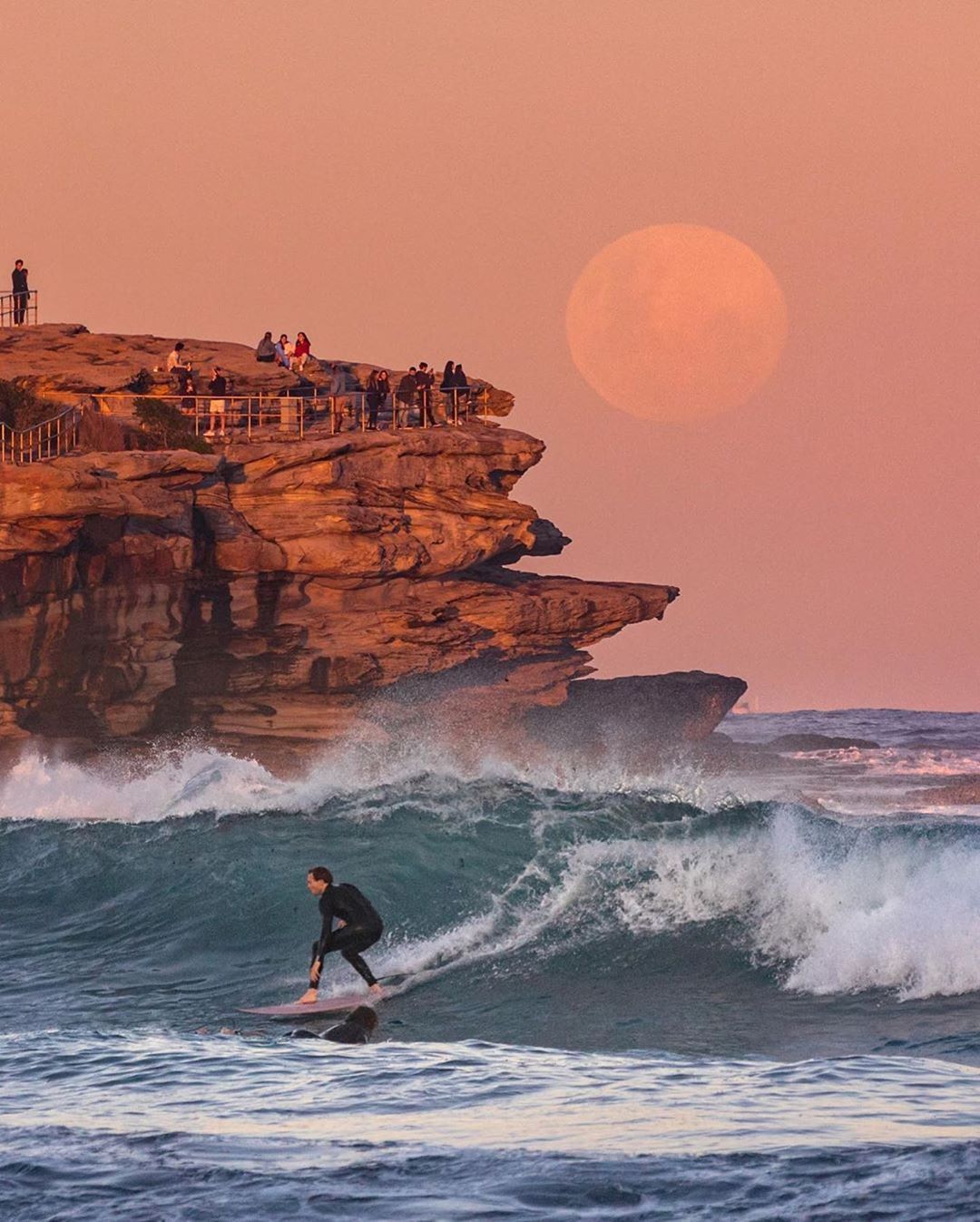
The southern end, down by the Icebergs pool, catches the swell head on and turns into a proper beach break when the sandbanks cooperate. On a good year I have had fast, punchy little peaks off the south corner that break right toward the rocks; on a bad year the same spot closes out. That is Bondi in a nutshell, it lives and dies by the banks that form after the winter storms. When it is on it gets busy and a bit competitive, so pick your peak, be patient, and do not drop in.
The coastal walk: Tamarama and Bronte
Follow the famous Bondi to Bronte path south and you hit two smaller beaches that pick up more swell than Bondi, plus a serious reef that only wakes up when it is big.
Tamarama
Locals call it “Glamarama” for the crowd on the sand, but the water is a different story. This little cove is more exposed than Bondi and notorious for strong rips, so it records more rescues than just about any beach around here. The waves are shifty and punchy, and I only surf it when I am fit and paddling well. If you are not a strong swimmer, admire this one from the coastal path and keep walking.
Maccas Reef
Sitting off the outside of Tamarama, Maccas only comes to life on the bigger swells that wash straight through the smaller beaches. When it does, it holds real size and pulls a small crew of strong local surfers. This is not a wave to sample on a whim, the paddle, the currents and the consequences are all a step up. I list it because it is part of the Bondi picture, but I would only paddle out here with local knowledge and a lot of water time behind me.
Bronte
Bronte needs a solid SE winter swell to get going, and when it does it serves up a fun, semi-hollow right off the southern rocks that begs to be turned on. There is also the “Bronte Express”, a rip that will carry you back out if you use it right, which the locals do. The crew here rips and can be territorial, so this is one for confident intermediates and up who are happy to sit, watch, and earn a wave rather than paddle straight to the peak.
Coogee and Maroubra
A little further south the beaches get less postcard and more punch. These are the ones I point stronger surfers toward when Bondi is a zoo.
Coogee
Coogee is fairly sheltered, so it is often smaller than its neighbors, but it is famous for a punishing shore break that has folded up plenty of unsuspecting swimmers. On a strong SE winter swell a right can fire off the rocks at the southern end, shifty take-off and a steep middle, and it is a hard-going wave rather than a fun one. There can be a bit of an edge in the lineup here, so I keep my head down, take my turn, and do not go looking for eye contact.
Maroubra
Maroubra is the serious surfer’s beach in this part of Sydney: a long, open, exposed stretch that soaks up swell and throws proper powerful peaks with the odd bank and gutter that barrel. It is far more of a surfer’s beach than a backpacker’s, with a well-known, tight-knit local crew, so I turn up humble, spread away from the pack, and let the regulars have the best banks. When Bondi is small and crowded, this is where I would rather be.
When to surf in Bondi
Shoulder
Winter (biggest, heaviest SE swell, coldest)
Bondi is one of the few surf towns where I would send a first-timer in summer rather than winter. From December to March the sandbanks have settled after the winter storms, the water is at its warmest at 22 to 25 degrees, and best of all the northwesterly sea breeze blows offshore here, grooming the beach clean on the mornings when Manly and the northern beaches are a mess. That combination of consistency, warmth and forgiving size is exactly what Bondi does best, and it is why the backpacker learn-to-surf scene runs hottest through the Aussie summer.
Winter, roughly June to August, flips the character. Big SE groundswells march up the coast, the reefs and the heavier beach breaks at Tamarama, Bronte, Coogee and Maroubra come alive, and the water drops toward 16 to 18 degrees. That is the window for stronger surfers chasing size, but expect fewer of those clean, gentle days that make Bondi so beginner-friendly. Autumn and spring sit in between: often the sneaky-good, less-crowded times if you can read a forecast.
Surf camps, schools and where to stay in Bondi
Bondi runs on surf schools rather than dedicated surf camps, and honestly that suits a first trip perfectly: you can book a group or private lesson right on the sand at North Bondi, walk out of your hostel and into the water, and be standing up by the afternoon. If you want to be close to the surf and the nightlife, stay in Bondi itself; if you would rather trade the crowds for punchier waves, base yourself down toward Bronte or Coogee and bus in. Board and wetsuit rental is everywhere along Campbell Parade, so you do not need to travel with a quiver, and a rented mid-length plus an hour with a good instructor is the smart way to start. For camps further afield across the country, see our guide to surfing in Australia.
Compare surf camps in Australia on BookSurfCamps
What to pack for Bondi
Bondi is a sandy beach break, so you can travel light. The two things to plan for are the changeable water temperature and the fierce Australian sun. My Bondi checklist:
- A wetsuit: a 3/2 covers most of the year, boardshorts or a springsuit at the peak of summer, and a 4/3 on the coldest winter mornings
- Serious sun protection: reef-safe SPF, a surf hat and a rashie, because the sun here bites even on cloudy days
- The right board: a longboard or mid-length for learning at North Bondi, a shortboard for the punchier southern peaks; see our best beginner surfboards and check your board volume
- A surf watch for the tides and a spare leash, since a busy lineup is no place to be swimming after your board
Getting to Bondi
Bondi is one of the easiest surf trips on earth to reach: it is about 30 to 40 minutes from Sydney airport (SYD) and roughly the same from the city center. The classic way in is to take the train to Bondi Junction and jump on the 333 or 380 bus down to the beach, and you honestly do not need a car unless you plan to chase swell around the wider Sydney coast. Everything on this page, from North Bondi to Bronte, links up along the Bondi to Bronte coastal walk, one of the best strolls in the city, and Coogee and Maroubra are a short bus ride further south. If you want a bigger, cleaner wave on a flat Bondi day, the northern beaches around Manly are an hour away, and if you are planning a longer trip, pair this with surfing in Australia.
Bondi will never be a secret, and it will never be the best wave in Australia, but it is one of the most fun and welcoming places to paddle out that I know. Learn to stand up on the soft peaks at North Bondi, feel out the punchier banks down south, then follow the coastal walk to Tamarama, Bronte, Coogee and Maroubra as your surfing grows. Bring a good wetsuit, pack plenty of sunscreen, respect the locals once you head south, and enjoy the ride. See you in the lineup.
Frequently asked questions
Is Bondi good for beginner surfers?
Yes, it is one of the best places in Australia to learn to surf. The northern end of Bondi is sheltered by Ben Buckler Point, so the waves are small and forgiving, and there is a surf school on nearly every corner. Start at North Bondi between the flags and leave the punchier south end and the reefs until you have more experience.
When is the best time to surf in Bondi?
Summer, from December to March, is the sweet spot for most surfers: the sandbanks are settled, the water is warm at 22 to 25 degrees, and the northwesterly breeze blows offshore and cleans up the wave. Winter (June to August) brings the biggest, heaviest SE swells for stronger surfers, but colder water and fewer gentle days.
What is the best surf spot in Bondi?
For learning and everyday fun, Bondi Beach itself is the pick, with the mellow north end and punchier south end. If you want more power and fewer crowds, walk or bus south: Bronte offers a semi-hollow right on a good winter swell, and Maroubra is the standout for confident surfers chasing a proper beach break.
Do I need a wetsuit to surf in Bondi?
Most of the year, yes. Water ranges from about 16 degrees in winter to 25 in summer, so a 3/2 wetsuit covers you for spring, autumn and cool summer mornings, while boardshorts or a springsuit are fine at the height of summer. On the coldest winter days a 4/3 is more comfortable.
How crowded is surfing at Bondi?
Very. Bondi is the busiest surf beach in Australia, packed with learners and surf schools, especially in summer. There is not much localism at Bondi itself, but the quieter breaks south of it, like Bronte, Coogee and Maroubra, have strong local crews, so surf those with patience and respect.
Can you surf in Bondi year-round?
Yes. Bondi faces the dominant swell and is one of the most consistent beaches in Sydney, so there is almost always a wave. Summer delivers cleaner, gentler, warmer surf that suits beginners, while winter brings bigger, more powerful swells for experienced surfers across the Eastern Beaches.