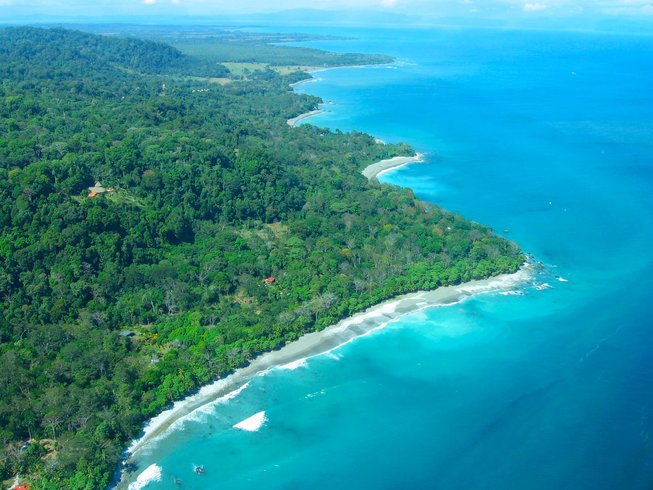
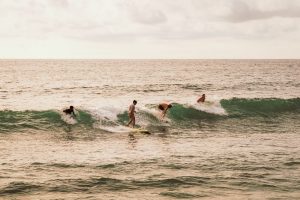
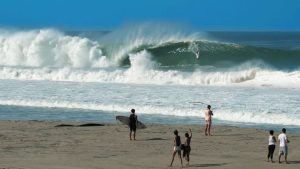
Some surf trips are about the wave, and some are about the whole adventure of getting there. Matapalo is firmly the second kind. Tucked at the wild southern tip of the Osa Peninsula, where the Corcovado rainforest tumbles down to the sea, it is a cluster of long right-hand points that peel over rock while scarlet macaws fly overhead and howler monkeys roar from the trees. Think of it as Pavones in reverse, rights instead of lefts, in one of the most remote and biodiverse corners of Costa Rica. There is no real town, just eco-lodges hidden in the jungle and near-empty lineups. This is a proper off-the-map stop on our guide to surfing in Costa Rica. Here’s what breaks, when to go, and how to reach it.
Quick surf guide to Matapalo
- Best season: green season (May to November) for the SW swells that light up the points; peaks May to August
- Best for improvers: Pan Dulce, a long, mellow right on smaller days
- Best for advanced: Matapalo Point, Backwash
- Wave type: right-hand points over rock and cobblestone reef
- Water temp: 26 to 31°C, boardshorts and reef booties, no wetsuit
- Crowds: very light, near-empty most of the time
- Getting there: Puerto Jimenez (PJM) by small plane, then rough road to Cabo Matapalo
- Budget: $80 to $200 a day, mostly meals-included eco-lodges
Where to surf at Matapalo
Three right-hand points sit within a few hundred meters of each other on the same headland at Cabo Matapalo. Tap a marker to preview a break, then click its name to jump to my full rundown below.
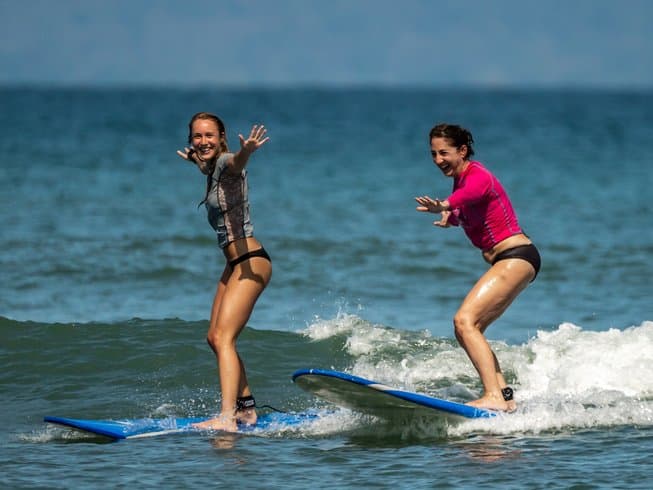
Pan Dulce
Pan Dulce, or sweet bread, is the friendliest of the three: a long, mellow right that peels over a cobblestone and sand-covered reef, giving rides of well over a hundred meters on the right swell. It is longboard heaven and the one wave here an improver can enjoy on a smaller day, with the outer peak getting more serious as the swell builds. The catch is a rock-shelf entry, so pack booties and time your paddle-out. On a glassy dawn it is pure magic.
Backwash
Backwash is the punchy one, a shorter, hollower right that has been called a skatepark for the way it lets you race and pump through a quick inside barrel. It is usually the busiest of the three points, which at Matapalo still means a handful of surfers, and it wants a solid southwest swell to fire. Watch the shallow reef and the current, especially over about head-high, and treat it as an intermediate-to-advanced wave rather than somewhere to learn.
Matapalo Point
The furthest out and most consistent of the three, Matapalo Point, sometimes nicknamed King Kong, is the prize: a long, wrapping right with a steep, punchy take-off that can reel for three hundred meters and more when a big south swell lines up. It is the most powerful wave on the headland and draws whatever small crowd is around when it fires, so sit patient and watch for sneaker sets and the sharp rock shoal at the end of the ride. A genuine reward for making the journey down here.
When to surf Matapalo
Dry season (smaller, glassy longboard days)
Wettest (October to November)
Matapalo lives and dies by the Southern Hemisphere swell, so the green season, roughly May to November, is prime. This is when regular south and southwest groundswells wrap into the points and turn them on, with May to August the most reliable window for clean, consistent surf. Get out early: the wind is offshore in the mornings and glasses everything off before the afternoon breeze and rain arrive.
The dry season, December to April, is the quiet, small time here, with glassy longboard days at Pan Dulce but far less power for the outer points. It is also easier to reach, since the green-season rains turn the dirt roads to mud and swell the river crossings. September and October are the wettest months of all, so most surfers aim for the earlier green season, when the swell and the access line up best.
Surf lodges and where to stay at Matapalo
There is no town at Cabo Matapalo, so where you stay is where you surf from: a scatter of eco-lodges and jungle retreats tucked into the rainforest, most with meals included, ocean views and monkeys for an alarm clock. Puerto Jimenez, about an hour away, has more services if you want a cheaper base and a day mission to the points. This is not a place for a first surf lesson, so come already able to surf a reef point, and consider a local guide or a boat to make the most of the tides and the walk-in access. For where to base and book across the country, see our guide to the best surf camps in Costa Rica.
Compare surf camps in Costa Rica on BookSurfCamps
What to pack for Matapalo
Warm water, sharp rock and deep remoteness are what to plan for. My Matapalo checklist:
- Boardshorts and a rashguard, no wetsuit in 26 to 31 degree water, plus reef booties for the rock-shelf entries
- Everything you might need, because there are no shops: spare leashes, fins, ding repair and a small first-aid kit
- Reef-safe SPF, a surf hat and strong insect repellent for the jungle
- A surf watch for the tides, which really matter over the reef, and the right board for a punchy point; check your board volume
Getting to Matapalo
Matapalo is genuinely remote. The easiest way in is a short flight on a small plane from San Jose (SJO) to Puerto Jimenez (PJM), then roughly 45 minutes to an hour on rough dirt roads down to Cabo Matapalo, where a four-by-four is strongly advised. You can also fly or drive to Golfito and take a boat across the Golfo Dulce, or make the long six-to-eight hour drive from San Jose. Because of the walk-in access to some of the points and the tides, many surfers use a local guide or a boat. If you are planning a wider trip, pair this with surfing in Costa Rica, and note that the long left at Pavones is just across the gulf.
Frequently asked questions
Is Matapalo good for beginner surfers?
Not really. Matapalo’s waves are right-hand points that break over rock, so they suit intermediate and advanced surfers. Only Pan Dulce on a small day is friendly enough for a confident improver, and even then the rock-shelf entry means it is no place for a true beginner or a first lesson.
When is the best time to surf Matapalo?
The green season, May to November, is prime, when Southern Hemisphere south and southwest swells wrap into the points, peaking May to August. The dry season, December to April, is smaller and glassier but far less powerful, and easier to reach before the rains swell the rivers.
What is the best point at Matapalo?
Matapalo Point, sometimes called King Kong, is the standout: a long, powerful wrapping right that can run over three hundred meters on a big south swell. Backwash is the hollow, punchy option for advanced surfers, and Pan Dulce is the long, mellow right for improvers and longboarders.
Do I need a wetsuit to surf Matapalo?
No. The water is a warm 26 to 31 degrees Celsius year-round, so boardshorts and a rashguard are all you need. Reef booties are the key extra here, because all three points break over rock and cobblestone with rocky entries and exits.
Is surfing Matapalo crowded?
Very rarely. This is one of the quietest quality surf zones in Costa Rica, thanks to its remoteness. Backwash is the busiest of the three points, which still usually means only a handful of surfers, and Matapalo Point draws a small crowd when it fires.
Can you surf Matapalo year-round?
You can surf it year-round, but it is far better in the green season, May to November, when the south swells are strong and regular. The dry season, December to April, is small and inconsistent, offering glassy longboard days at Pan Dulce rather than powerful point surf.
Matapalo is not for everyone, and that is exactly the appeal: no town, no crowds, just three jungle-backed right points and the roar of howler monkeys in the trees. Come able to surf a reef, pack booties and everything else you might need, go in the green season, and treat the whole trip as the adventure it is. See you in the lineup.