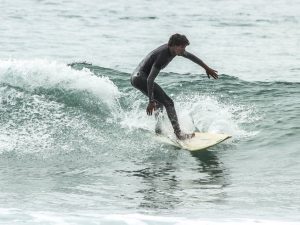
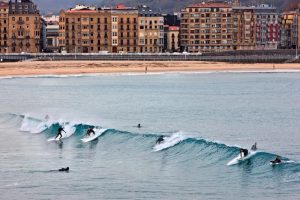
Biarritz is where it all began for European surfing. Back in the 1950s, this elegant Belle Epoque resort on the French Basque coast became the first place on the continent to catch the bug, and it has been a stylish surf town ever since. Spread across bays and headlands at the southern end of the Bay of Biscay, it catches the dominant west and northwest Atlantic swells and turns them into beach breaks for every level, headlined by the mellow longboard classic at the Cote des Basques and the ever-reliable Grande Plage in front of the grand hotels and casino. This is a landmark stop on our guide to surfing in France. Here’s every break, when to go, and how to set up your trip.
Quick surf guide to Biarritz
- Best season: autumn (September to November) for clean, consistent swell; summer for beginners
- Best for beginners: Cote des Basques (low tide), Grande Plage
- Best for advanced: Anglet (Les Cavaliers), Marbella on its day
- Wave type: sandy city beach breaks plus the jetty breaks of Anglet next door
- Water temp: 11 to 22°C, a 3/2 most of the year and a 4/3 in winter
- Crowds: very busy in summer, especially with surf schools
- Getting there: Biarritz (BIQ), 10 minutes; also easy by train
- Budget: €70 to €140 a day, a chic town
Where to surf in Biarritz
The town’s own beaches run from the sheltered Grande Plage to the tide-sensitive Cote des Basques, with the punchy jetty breaks of Anglet just to the north. Tap a marker to preview a break, then click its name to jump to my full rundown below.
The Biarritz beaches
The town’s own beaches offer something for everyone, from the reliable city break to the historic longboard wave, all within walking distance.
Grande Plage
Right in front of the casino and the grand hotels, Grande Plage is the reliable heart of Biarritz surf: a sandy beach break that works for all levels when the banks line up, partly sheltered by the headland to the north. It is the most convenient wave in town and consequently one of the most crowded, so a dawn patrol is well worth it, both for the empty peaks and because parking here is a nightmare later on. On a good bank it is a genuinely fun city session.
Cote des Basques
This is the historic one, the beach where European surfing took its first steps, and it remains the classic beginner and longboard wave: a long, gentle, forgiving roller beneath the cliffs. One crucial rule: it only works at low tide, and the swell reaches the cliffs at high, which is dangerous, so never paddle out on a pushing tide. It gets packed with surf schools in July and August, so surf it early. On a clean low tide, it is a lovely, easy wave with a lot of history under it.
Marbella
At the southern end of the Cote des Basques, Marbella is the more exposed, punchier option, catching more swell and offering steeper, more powerful peaks for improvers. It closes out easily, so it is best on a small, dropping tide, but it draws thinner crowds than the town beaches, which is a real plus in summer. A good step up when you want a bit more bite than Cote des Basques.
Anglet, just north
A few minutes north of Biarritz, the jetty-lined beaches of Anglet pack the highest concentration of quality beach breaks on the coast.
Anglet (Les Cavaliers)
At the northern end of Anglet, near the mouth of the Adour, Les Cavaliers is a punchy A-frame beach break that barrels off the jetties and stays consistent, which is why it hosts contests. It is a step up in power from the Biarritz beaches, a proper intermediate-and-up wave, and the nearby La Barre is the go-to when everywhere else is too big. Some of the best beach-break surf on this stretch of coast.
Anglet (VVF)
At the southern, Biarritz end of Anglet, near the Chambre d’Amour lighthouse, VVF is the versatile one: wedging lefts that work across most tides and a spot sheltered by the lighthouse when the swell gets big, which makes it the best refuge in Anglet on a large day. It suits all levels on the right size, so it gets very busy, but it is a hugely useful wave to have in your back pocket. Handy to know when the other spots are maxed or wrong-angled.
When to surf in Biarritz
Shoulder and summer (smaller, beginner)
Winter (big and powerful)
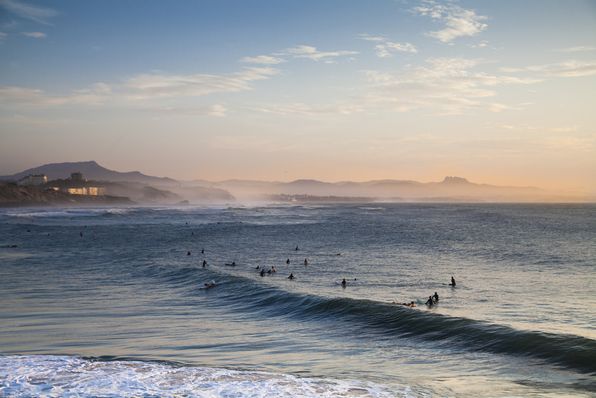
Autumn, September to November, is Biarritz at its best: clean, consistent Atlantic groundswell, water still warm from summer, and thinning crowds once the holidaymakers leave. This is the window to plan a trip around if you can, with punchy but manageable waves and the beaches at their most enjoyable. The nearby Anglet beach breaks come alive in these months too.
Summer, June to August, brings the smallest, warmest and most beginner-friendly waves, but also the biggest crowds, with surf schools dominating Grande Plage and Cote des Basques, so dawn is essential. Winter, December to February, is the biggest and most powerful season, when Anglet and Marbella throw barrels and the headlands shelter the town beaches, though it is cold and windier. Spring is a quieter shoulder with the odd good day.
Surf schools and where to stay in Biarritz
Biarritz has a deep, year-round surf-school scene, most of it based on Grande Plage and Cote des Basques, so a lesson and a board rental are easy to sort. Stay in town, ideally within walking distance of the two main beaches, to dodge the brutal summer parking, whether that is a chic palace hotel or a surfer-friendly guesthouse near the promenade. Learn on the Cote des Basques at low tide, then progress to Grande Plage and the punchier Anglet beaches, and use a car or the bus to spread out to Anglet, Bidart and the Landes when the town is packed. For a wider trip, see our guide to surfing in France.
Compare surf camps in Biarritz on BookSurfCamps
What to pack for Biarritz
Cool Atlantic water and tide-sensitive beaches are what to plan for. My Biarritz checklist:
- A wetsuit: a 3/2 for most of the year, a 4/3 with booties in mid-winter, and a springsuit at the height of summer
- The right board: a longboard or foamie for Cote des Basques, a shortboard for the punchier Anglet beaches; see our best beginner surfboards and check your board volume
- A surf watch for the tides, which really matter here, and a spare leash
- Reef-safe SPF and a surf hat, and patience for the summer parking
Getting to Biarritz
Biarritz is one of the easiest surf towns in Europe to reach: its own airport (BIQ) is about ten minutes from the beaches with budget flights from across the continent, and it is superbly connected by train, with direct high-speed services from Paris and easy connections from Bordeaux, about two hours away. You don’t need a car in town, since the beaches are walkable, but one helps for escaping to Anglet, Bidart, Hendaye and the Landes when the crowds build. If you’re planning a wider trip, pair this with surfing in France, and note the Spanish Basque coast is just over the border.
Frequently asked questions
Is Biarritz good for beginner surfers?
Yes, very. Cote des Basques is the classic beginner and longboard beach at low tide, and Grande Plage plus the mellower Anglet peaks and a big surf-school scene cater to all levels. Just remember Cote des Basques only works at low tide, and never paddle out there on a high tide.
When is the best time to surf in Biarritz?
Autumn, September to November, for clean, consistent swell, still-warm water and thinner crowds. Summer, June to August, is smaller and warmer and best for beginners, though very busy, while winter brings the biggest, most powerful waves at Anglet and Marbella.
What is the best surf spot in Biarritz?
Grande Plage is the most reliable, all-levels city beach, and Cote des Basques the historic beginner and longboard wave. For punchier, higher-quality surf, the Anglet beaches just north, especially Les Cavaliers and Les Sables d’Or, are the pick for intermediates and up.
Do I need a wetsuit to surf in Biarritz?
Yes. The water runs about 11 to 22 degrees Celsius, so you’ll want a 3/2 for most of the year, a 4/3 with booties in mid-winter, and a springsuit or shorty at the height of summer. It is not boardshort surfing except perhaps on the warmest August days.
How crowded is surfing in Biarritz?
Very, in summer. From June to August the town beaches, and especially Cote des Basques, are packed with surf schools and holidaymakers, so a dawn session is the move. Autumn and winter are far quieter, and heading north to the Anglet beaches spreads the crowd.
Can you surf in Biarritz year-round?
Yes, Biarritz is surfable all twelve months, with only rare flat spells in high summer. Autumn offers the best all-round conditions, winter the biggest waves for stronger surfers, and summer the smallest, warmest waves for beginners.
Biarritz is a surf trip with a sense of history and a lot of style: the birthplace of European surfing, where you can log a mellow wave at the Cote des Basques, chase punchy barrels a few minutes north in Anglet, and eat and stroll like Belle Epoque royalty in between. Come in autumn, bring a wetsuit, mind the tides, and enjoy one of the great surf towns of Europe. See you in the lineup.