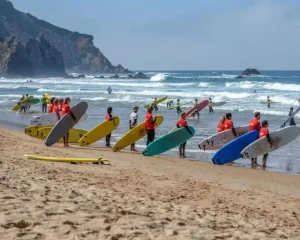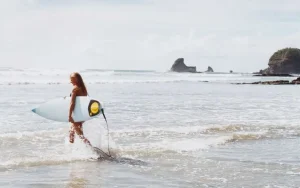

Morocco is Europe’s nearest long-haul surf destination — two to four hours’ flying time from most European cities, direct to Agadir, with one of the most concentrated surf coastlines in the world waiting on arrival. The stretch from Tamri south through Taghazout, Tamraght, and down to Imsouane contains more named surf breaks per kilometre than almost anywhere outside Indonesia: Anchor Point, Killer Point, Boilers, Hash Point, Banana Point, Devil’s Rock, Cathedral Point, and the Bay at Imsouane — one of the longest rideable waves in Africa. Add 300+ days of sunshine, water temperatures that sit comfortably in a 3/2mm for most of the year, surf camp prices that significantly undercut European equivalents, and traditional Moroccan hospitality that no European destination can replicate — and the question becomes not whether to go, but when.
This guide covers two zones with dedicated spoke pages and full camp reviews: Taghazout & Tamraght (Morocco’s surf capital) and Imsouane (its most extraordinary wave). For the waves themselves, see our full guide to surfing in Morocco.
Quick info — surf camps in Morocco
- Main zones: Taghazout & Tamraght (right-hand point breaks, surf town culture), Imsouane (Africa’s longest wave, quieter fishing village)
- Best season (intermediate/advanced): October–April — consistent North Atlantic swells, air temp 20–24°C (68–75°F)
- Best season (beginners): May–September — smaller waves, warmer water up to 23°C (73°F)
- Water temp: 20–23°C (68–73°F) July–September; 16–20°C (61–68°F) October–June
- Wetsuit: Boardshorts/rash guard July–August; 3/2mm September–June; 4/3mm December–February for longer sessions
- Airport: Agadir Al Massira (AGA) — 45 min to Taghazout, 1h15 to Imsouane. Direct flights from most European cities
- Budget: From ~€90/week (budget hostels) to €550+/week (premium) — Morocco consistently undercuts Europe on price
- Spoke guides: Taghazout & Tamraght · Imsouane
Pick your zone
🌊 Best for Africa’s longest wave, quiet fishing village: Imsouane
Find your spot on the map
Taghazout & Tamraght — Morocco’s surf capital
Taghazout is where Morocco’s surf culture was born — a small Berber fishing village 20km north of Agadir that Australian and European surfers discovered in the 1970s and that has since developed into one of the most concentrated surf destinations in the world. Anchor Point produces right-hand point break waves running over 300 metres. Killer Point, Boilers, Hash Point, and Crocro cover every level from first-timer to competition standard. Tamraght, 5km south, is quieter with Banana Point and Devil’s Rock as home breaks — where most camp operations actually base themselves. Both villages share the same surf infrastructure and the same extraordinary position on the Atlantic coast.
→ Full guide: Best surf camps in Taghazout & Tamraght
Zinzin Surf Maroc — coaching package, Taghazout village
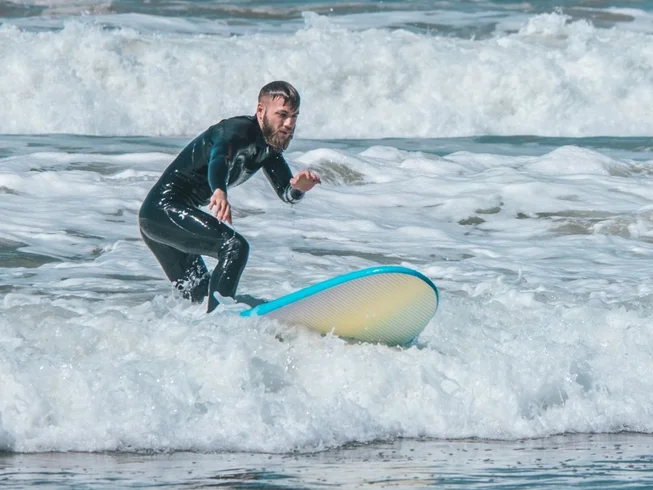
Based 50m from Hash Point in Taghazout village — the most coaching-specific programme in the zone, distinguishing between lessons, guiding, and structured technique coaching. For intermediates who want to progress on Taghazout’s long right-handers, not just log sessions. From €350 (~$378).
The vibe: Technical and village-centred — rooftop breakfasts, mint tea between sessions, genuine progression framework.
Best for: Intermediates and advanced surfers; those with a specific progression goal; surfers who’ve been to Morocco before.
Check availability at Zinzin Surf Maroc 👉
Azul Guesthouse — boutique coaching, video analysis
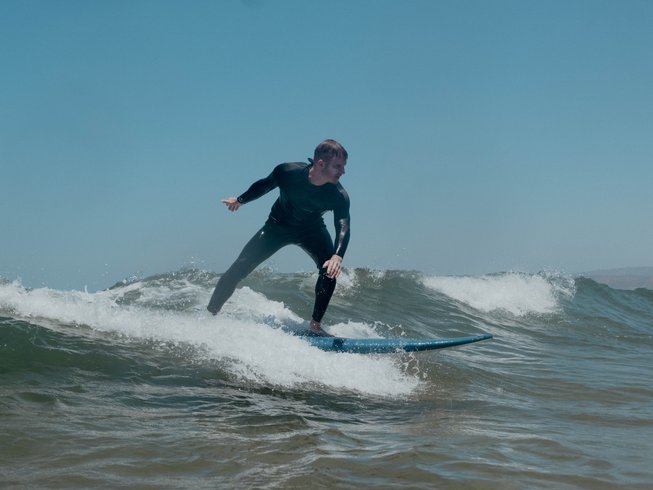
Premium boutique coaching operation in Taghazout Bay — daily video analysis, max 6 per group, ocean view guesthouse accommodation, and Anchor Point in the weekly guiding rotation for appropriate levels. The camp for surfers who want measurable progress in a quality setting. From €480 (~$518).
The vibe: Boutique and coaching-focused — expert daily guidance and genuinely Moroccan guesthouse experience.
Best for: Intermediate/advanced surfers wanting video analysis; Anchor Point access; quality guesthouse over hostel.
Check availability at Azul Guesthouse 👉
Taghazout Surf Villa — yoga + surf in the village
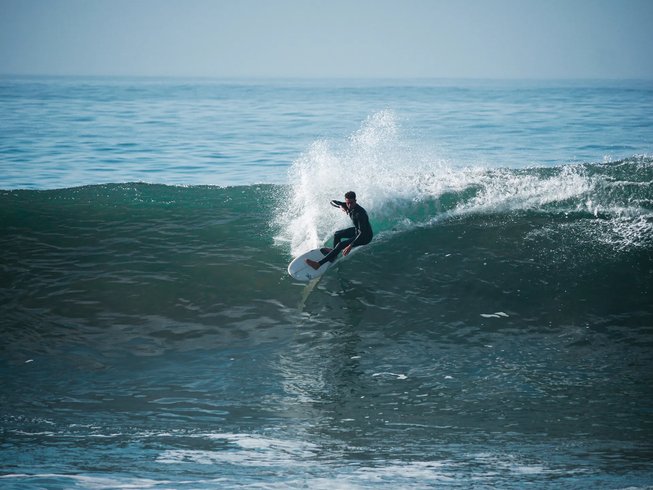
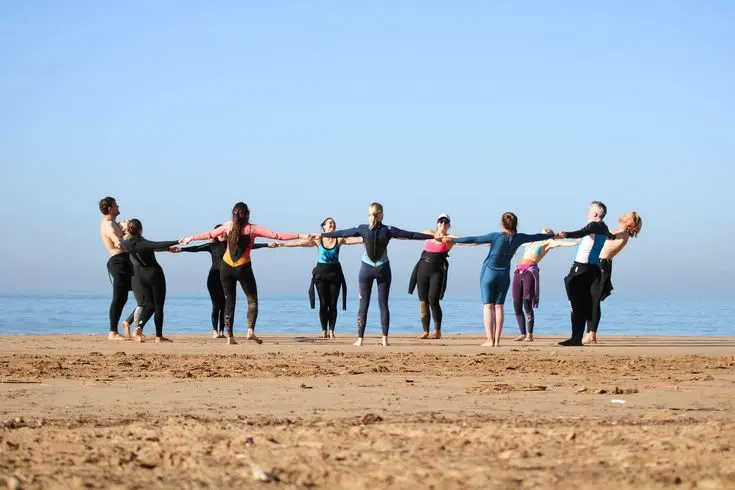
7-day surf and yoga retreat in Taghazout village — rooftop yoga with ocean views, daily surf guiding, traditional meals. The village location means you walk to Hash Point and Panoramas without transfers, and eat at local restaurants in the evening. All levels. From €420 (~$454).
The vibe: Village-immersive and yoga-integrated — the most culturally authentic Taghazout surf + yoga camp.
Best for: Yoga practitioners; those wanting authentic village immersion; all levels.
Check availability at Taghazout Surf Villa 👉
Yuba Surf Morocco — beginners/intermediate, Tamraght
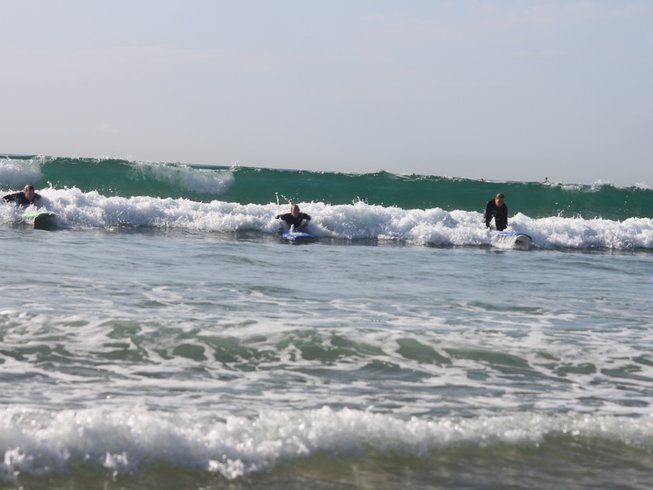
Full-board beginner and intermediate package in quieter Tamraght — all meals included, airport transfer, daily surf + yoga. The 5-day catch-your-first-wave format is ideal for complete beginners. Traditional Moroccan cooking consistently cited in reviews as a highlight. From €380 (~$410).
The vibe: Welcoming and full-board — removes every logistical friction from a first Morocco surf trip.
Best for: First-time Morocco visitors; complete beginners; all logistics handled format.
Check availability at Yuba Surf Morocco 👉
CLI Surf Morocco — best value, all levels
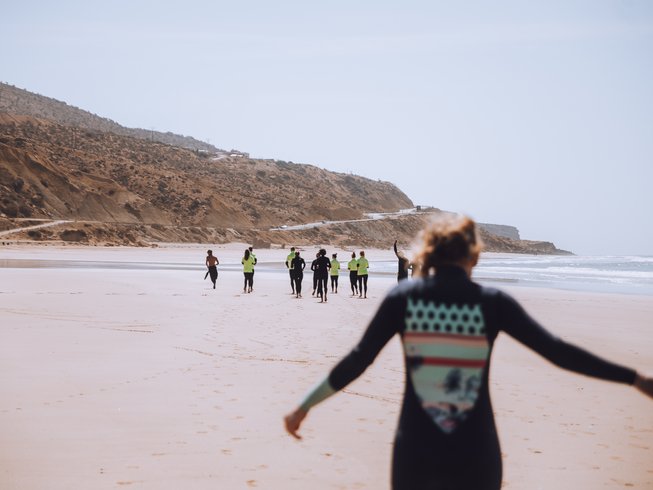
Clearest value proposition in the Taghazout Bay zone — 8-day all-levels camp with certified instructors, daily guiding, board and wetsuit rental, breakfast and lunch. Advanced guiding to Anchor Point available. The price benchmark for Morocco surf camps. From €320 (~$346).
The vibe: Solid and unpretentious — good instruction, good spot selection, genuine Morocco week at accessible price.
Best for: Budget-conscious surfers; all levels; advanced surfers wanting Anchor Point guiding at accessible cost.
Check availability at CLI Surf Morocco 👉
Imsouane — Africa’s longest wave
Imsouane is Morocco’s most extraordinary surf destination — a small Berber fishing village 70km north of Agadir, at the end of a natural bay that produces two of the longest rideable waves in Africa. The Bay runs 300–800 metres on a good swell, making it the benchmark beginner and longboard wave in the country. Cathedral Point at the tip of the headland delivers faster, more powerful waves for intermediate and advanced surfers. Imsouane is quieter, more authentic, and less developed than Taghazout — fewer camps, more fishing boats, and a village identity that surf tourism hasn’t yet overwhelmed. The Argan forest drive on the way from Agadir is itself one of Morocco’s great coastal experiences.
→ Full guide: Best surf camps in Imsouane
The Little Kasbah — boutique, yoga, local knowledge

The reference camp for Imsouane — a boutique kasbah-style house with ocean views, rooftop yoga, twice-daily surf guiding, and traditional meals. Max 10 guests keeps the atmosphere personal. The guides’ depth of local knowledge of the Bay and Cathedral tidal windows is the camp’s most valuable asset. From €420 (~$454).
The vibe: Boutique kasbah warmth — converts Imsouane sceptics. Guests come for the waves and leave for the village, the food, and the Bay at sunrise.
Best for: All levels; yoga practitioners; couples; intimate group format over large camp energy.
Check availability at The Little Kasbah 👉
Clapo Surf Morocco — families + Berber traditions
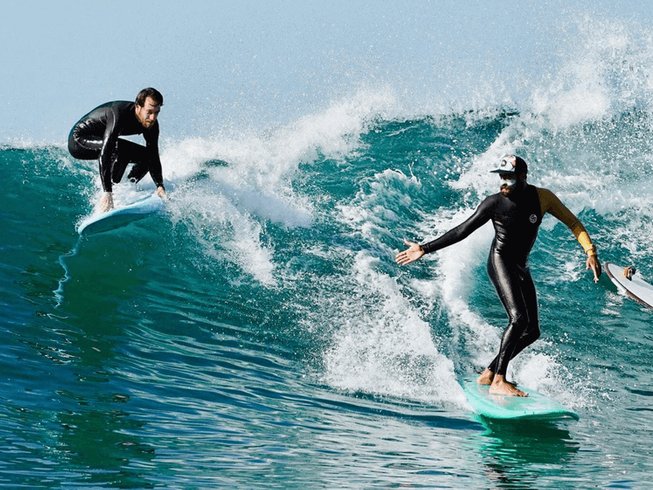
The only dedicated family surf camp in Imsouane — using the Bay’s extraordinary length and forgiving nature as the ideal learning environment for children and adults together. Moroccan traditions element: cooking classes, Argan oil cooperative visits, medina excursions. The Bay’s 800m potential ride is the best family wave in Morocco. From €450 (~$486).
The vibe: Family and tradition — authentic Berber hospitality and the world’s most forgiving long wave for beginners.
Best for: Families with children; multigenerational groups; those wanting cultural immersion alongside surf.
Check availability at Clapo Surf Morocco 👉
Dreamsea — international brand, social atmosphere
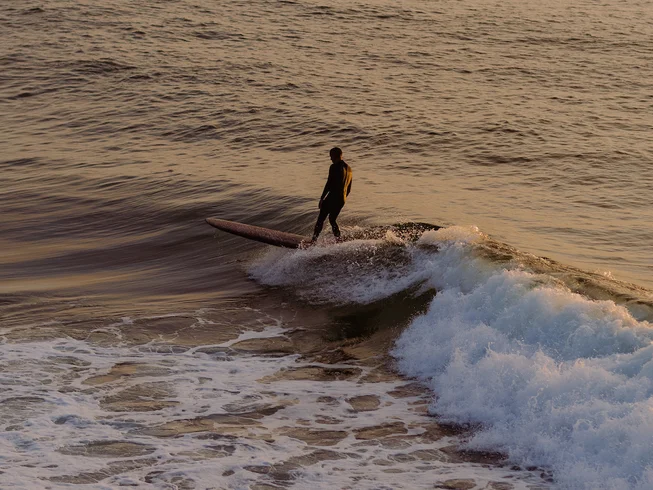
One of the largest international surf camp brands in Imsouane — consistent operational standards, international guest mix (UK, Germany, France, Netherlands, Australia regularly featured), and daily access to both the Bay and Cathedral Point. The go-to first Morocco visit option for those who want quality-assured without surprises. From €420 (~$454).
The vibe: International surf camp at professional scale — reliable, well-run, genuinely social.
Best for: First-time Morocco visitors; solo international travellers; beginners through intermediates wanting consistency.
Check availability at Dreamsea Imsouane 👉
Travel Surf Morocco — SUP on Africa’s longest wave

The most unique format in Morocco — 7-day SUP surf camp using the Bay’s 800m potential ride as a stand-up paddle training ground. A single ride from Cathedral Point to the harbour wall on a SUP is an experience available nowhere in Europe. Traditional surfing available alongside for those wanting both disciplines. From €380 (~$410).
The vibe: Unique and exploratory — the Bay on a SUP at dawn is one of those rare surf experiences with no European equivalent.
Best for: Experienced surfers wanting something genuinely different; longboarders; those who’ve done standard camps and want a new format.
Check availability at Travel Surf Morocco SUP 👉
Big Blue Taghazout — Taghazout base + Imsouane day trips
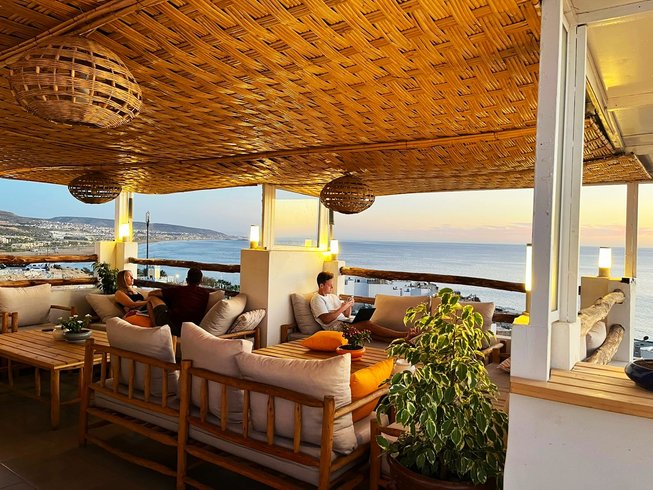
Based in Taghazout but includes Imsouane Cathedral day trips in the weekly programme — the option for surfers who want both Morocco’s most famous point breaks and its most spectacular bay in a single week. Intermediate and advanced. Taghazout social evenings, Cathedral mornings before the onshore. From €380 (~$410).
The vibe: Adventure-driven and varied — maximum wave variety across Morocco’s two best zones in one week.
Best for: Intermediate/advanced wanting Taghazout right-handers and Imsouane’s Cathedral; exploration-oriented surfers.
Check availability at Big Blue Taghazout 👉
What to bring to your Morocco surf camp
☑ Surf hat — 300+ days of Moroccan sunshine means intense UV even in winter. Essential for long sessions, particularly at Imsouane’s exposed Bay
☑ High-factor reef-safe sunscreen (SPF 50) — Moroccan sun intensity is consistently underestimated by European visitors, especially in spring and autumn
☑ Surf watch with tide tracker — point breaks like Anchor Point and Cathedral change character dramatically with the tide. Knowing your window is the difference between a great session and a wasted paddle-out
☑ Modest clothing for the villages — Taghazout, Tamraght, and Imsouane are conservative Berber Muslim fishing communities; covered shoulders and no beachwear in the medina is appreciated and expected
☑ Outfit from your favourite surf brand — rooftop café evenings and Agadir restaurant nights call for something beyond a wetsuit
☑ Bottled water — tap water is not drinkable; buy 5–10L bottles from local shops. All camps provide filtered water but your own supply is practical
☑ Cash (Moroccan dirhams) — exchange at Agadir airport on arrival. Most local restaurants and market stalls are cash-only. ATMs are now available in Taghazout village centre
☑ Travel insurance covering surfing — check that point breaks and ocean conditions are covered
Frequently asked questions
Taghazout or Imsouane — which should I choose?
Different priorities. Taghazout has more camps, more break variety, a developed surf town atmosphere with cafés and evening life, and world-class point breaks including Anchor Point and Killer Point for advanced surfers. Imsouane has fewer camps, a quieter fishing village identity, and one of the longest rideable waves in Africa — the Bay is arguably the best beginner and longboard wave in Morocco. For a first Morocco surf trip: Taghazout, where the infrastructure is most developed and the break variety is greatest. For a second trip or for those who specifically want the longest wave: Imsouane. The Big Blue Taghazout camp covers both in a single week.
When is the best time for a surf camp in Morocco?
October through April is prime season for intermediate and advanced surfers — consistent North Atlantic swells arrive throughout winter, Anchor Point and Killer Point fire regularly, and the air temperature stays around 20–22°C (68–72°F). October and March are the sweet spots: peak swell consistency with fewer people than the Christmas–New Year peak (the busiest, most expensive window). For beginners: May through September offers warm water up to 23°C (73°F), manageable waves at Panoramas, Banana Point, and the Imsouane Bay, and a more relaxed learning environment. Morocco surfs year-round — the question is which conditions suit your level.
How does Morocco compare to Portugal on price?
Morocco is significantly cheaper — typically 30–50% less than equivalent-quality camps in Portugal or France. An all-inclusive 8-day camp with instruction, accommodation, and meals runs €320–480 in Morocco versus €450–600+ in Portugal. The food budget outside camp is also far lower: tagine dinners at local restaurants cost €5–8. The flight from most European cities is €60–150 return to Agadir, comparable to or cheaper than flights to Lisbon for the Peniche or Ericeira zones. Morocco’s overall cost advantage makes it the strongest value proposition in European surf camp travel.
Is Morocco safe for solo surfers?
Yes — the Taghazout and Imsouane surf zones are well-established international surf destinations with decades of experience hosting international visitors. The local surf camp operators have strong reputations and the Berber coastal communities are genuinely welcoming to surf tourists. Standard travel precautions apply: don’t leave valuables on the beach, use camp-organised transfers rather than negotiating taxis independently, drink only bottled water. Female solo travellers do visit and are well-represented in camp guest reviews — modest dress in the village (not on the beach) is the main cultural consideration. The surf camp environment itself is international and safe.
Can I combine Morocco with a Portugal surf trip?
Yes — a Morocco + Portugal combination is a natural surf itinerary. Agadir to Lisbon is a 2h30 flight, making a Morocco week followed by a Portugal week (or Ericeira, Peniche, or Algarve) a very practical 2-week trip. Several camp operators run in both countries (CLI Surf operates in both Morocco and Portugal) with consistent standards. The contrast between Morocco’s point break character and Portugal’s beach break and reef break diversity covers a broad range of surfing experiences in a single trip. See our Portugal surf camps guide for the full picture.
What language do people speak in Taghazout?
The local population in Taghazout and Imsouane speaks Tachelhit (Berber) as their first language, with Moroccan Arabic (Darija) and French widely spoken. In the surf camp and tourist context, English is spoken by most camp staff and many local guides — the international surf camp scene has been established long enough that English is reliably functional. French is useful for navigating Agadir and talking to older Moroccans. Learning a few words of Darija (shukran for thank you, la bás for how are you) is genuinely appreciated by locals and goes a long way.