
Nicaragua is Central America’s most underrated surf destination — a Pacific coastline that receives the same South Pacific and North Pacific groundswells as Costa Rica and Panama, at prices that consistently undercut both. The country has two distinct surf zones worth knowing: Popoyo (the Tola/Emerald Coast) for quality waves in a remote, largely undeveloped setting; and San Juan del Sur for accessible beginner surf alongside the social infrastructure of a proper beach town. Between them they cover every surf profile from first-timer to experienced surfer, and a single trip can realistically include both. For the waves and spots region by region, see our guide to surfing in Nicaragua.
Nicaragua surf year-round, with the primary season running May through October when south Pacific swells arrive consistently at 1.5–3m faces. The dry season (November–April) brings smaller, cleaner waves — better for beginners, less spectacular for advanced surfers chasing size. Budget-wise, Nicaragua is the best-value quality surf destination in Central America: camp prices are typically 20–30% lower than equivalent Costa Rica operations at comparable wave quality.
Quick info — surf camps in Nicaragua
- Main zones: Popoyo / Tola coast (best waves, remote setting), San Juan del Sur (beginner-friendly, town infrastructure)
- Best season: May–October — consistent south Pacific groundswells, 1.5–3m. November–April smaller but cleaner
- Water temp: 26–29°C (79–84°F) year-round — no wetsuit needed
- Getting there: Fly to Managua (MGA) — served by American, United, Copa from Miami, Houston, and Panama City. Transfer 2.5–3h south by shuttle
- Budget: From ~€280/week — 20–30% cheaper than Costa Rica for comparable quality
- Spoke guides: Popoyo · San Juan del Sur
Pick your zone
🌊 Best for beginners, town life, Costa Rica connection: San Juan del Sur
Find your spot on the map
Popoyo — the Tola coast, Nicaragua’s best waves
Popoyo and the Tola coast deliver Nicaragua’s most consistent and varied surf — a 20km stretch of Pacific coastline with beach breaks, point breaks, and reef breaks covering every level. Guasacate is forgiving for beginners; Santana gives intermediates long left-hand walls; Popoyo’s main peak is punchy and fast for the intermediate-to-advanced bracket; El Gigante’s reef break is hollow and challenging for experienced surfers. The setting is deliberately remote — minimal development, largely unpaved access roads, mangroves and dry forest behind the beaches — which is exactly what attracts surfers who want to escape the developed resort circuits of Costa Rica.
→ Full guide: Best surf camps in Popoyo
Casa Manglar — all-inclusive, all levels
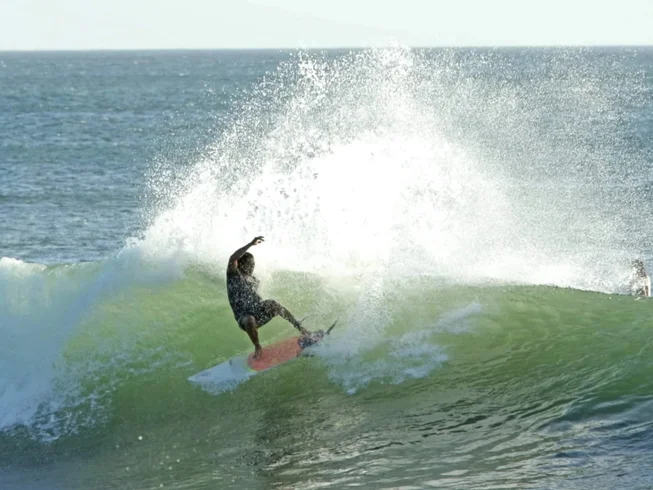
The most complete all-inclusive operation in Popoyo — 8-day standard and deluxe packs covering daily coaching, all breaks across the Tola coast, meals, and accommodation in a mangrove estuary setting. Pool, open-air restaurant, board storage. From €380 (~$411).
The vibe: Comfortable and well-organised in a genuinely wild setting — resort infrastructure without resort-strip atmosphere.
Best for: All levels; those wanting all-inclusive coverage of the Tola coast breaks; good food alongside good waves.
Check availability at Casa Manglar 👉
Hide & Seek Resort — guiding, advanced
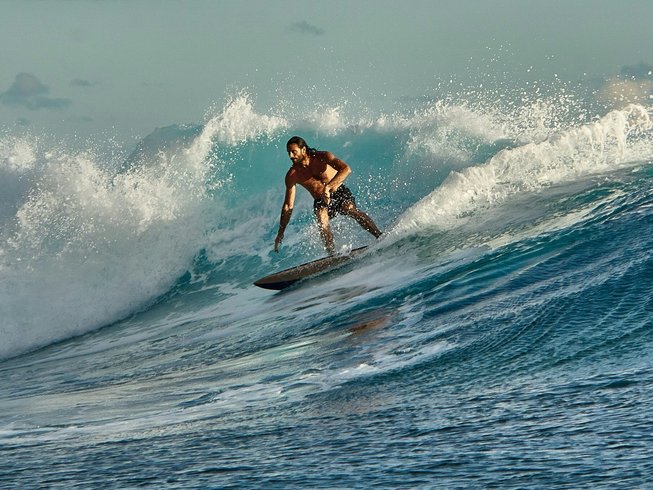
Boutique resort with daily expert surf guiding across the full Tola break network, including El Gigante’s reef break. Packages for couples, families, and advanced-only groups. Pool, sea-view terrace, quality accommodation. From €420 (~$454) for 7 days all-inclusive.
The vibe: Hidden-away resort — breaks most tourists never find, accessed through local knowledge and daily conditions intelligence.
Best for: Intermediate/advanced surfers; couples on a surf trip; El Gigante reef access.
Check availability at Hide & Seek Resort 👉
Wild Waves — best value, 7 or 14 days
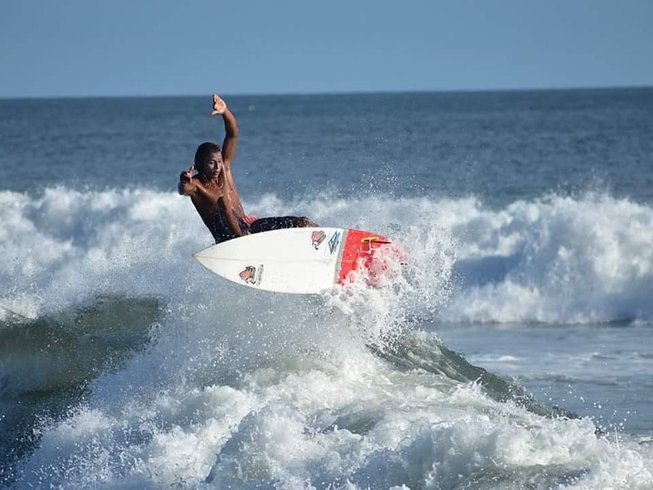
The most accessible Popoyo camp on price — 7-day and 14-day formats with daily coaching, equipment, meals, and accommodation. The 14-day option is particularly good value for real progression. From €280 (~$303).
The vibe: No-frills but genuine — surfers who came for the waves and the value, full stop.
Best for: Budget-conscious surfers; beginners; 14-day extended stays for real progression.
Check availability at Wild Waves 👉
Surf Yoga Nicaragua — surf + yoga, Tola
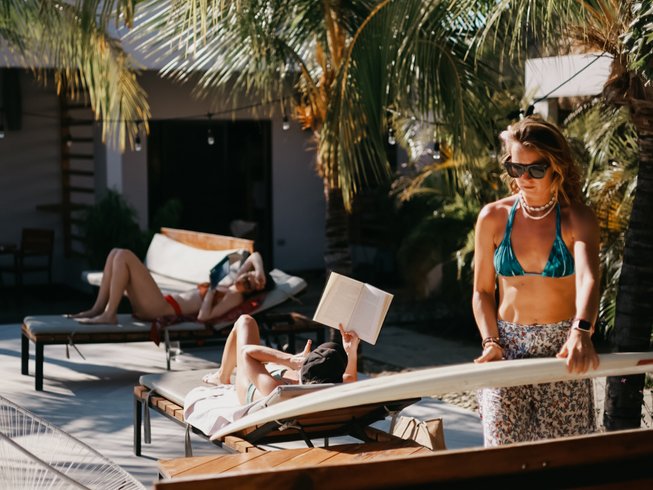
8-day surf and chill format on the Tola coast — daily Popoyo zone sessions with morning and evening yoga integrated for athletic recovery and mobility. All levels, relaxed approach. From €340 (~$368).
The vibe: Relaxed and intentional — the Tola coast’s remoteness is the backdrop, not the obstacle.
Best for: Yoga practitioners; solo travellers; those who want the Tola coast with wellness integrated.
Check availability at Surf Yoga Nicaragua 👉
San Juan del Sur — town life, Playa Maderas, Costa Rica gateway
San Juan del Sur sits in a sheltered crescent bay near the Costa Rica border — the most developed surf town in Nicaragua, with ATMs, restaurants, bars, and a social scene that the remote Tola coast entirely lacks. The waves are on the beaches to the north and south: Playa Maderas (15 minutes by boat) is the main surf beach, a consistent all-levels beach break. The town’s proximity to the Peñas Blancas border crossing makes SJDS the natural junction for surfers doing a Nicaragua–Costa Rica loop. Several camps here integrate co-working spaces for digital nomads, making longer stays financially and logistically practical.
→ Full guide: Best surf camps in San Juan del Sur
Dreamsea — international surf resort
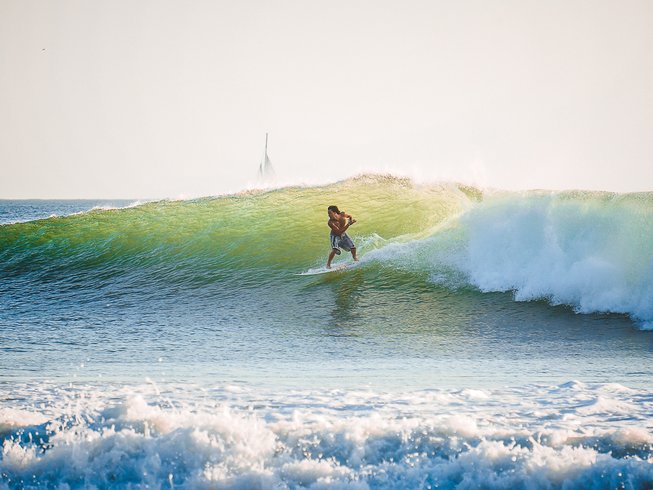
Dreamsea’s established international formula in SJDS — pool, quality accommodation, daily Maderas sessions, international social mix. Consistent coaching standards across all levels. From €520 (~$562).
The vibe: International surf resort — reliable, well-run, social energy that the Dreamsea brand reliably delivers.
Best for: First-time SJDS visitors; solo international travellers; those who’ve done Dreamsea elsewhere.
Check availability at Dreamsea SJDS 👉
Costa Dulce — luxury yoga + surf retreat
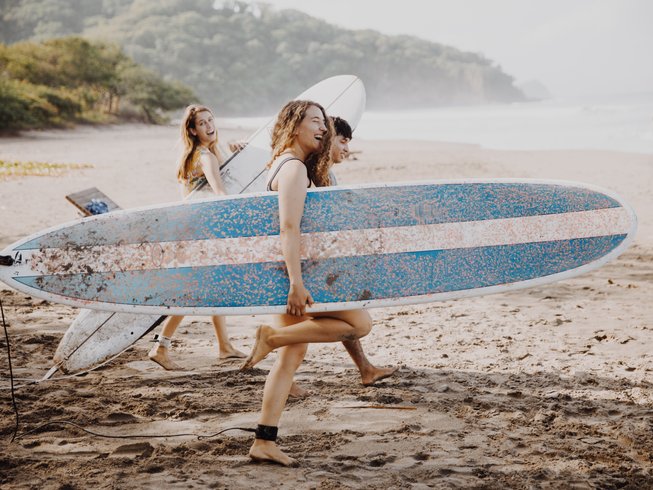
Premium eco-cabin retreat above the coast — twice-daily Alliance-certified yoga, morning Maderas sessions, high-quality local food. The best premium option in SJDS for adult surfers who won’t compromise on accommodation or food quality. From €590 (~$638).
The vibe: Luxury retreat in a jungle-coast setting — quality food, quality yoga, quality waves without the budget camp compromise.
Best for: Adults 28+; yoga practitioners who surf; couples; the full wellness experience alongside Maderas.
Check availability at Costa Dulce 👉
Verdad at Costa Dulce — co-working + surf

The most developed surf + co-working camp in Nicaragua — morning Maderas sessions, afternoon structured workspace with reliable internet. Practical for remote workers extending their Nicaragua stay. From €440 (~$476).
The vibe: Digital nomad surf camp — the workspace is genuinely functional, not an afterthought.
Best for: Remote workers who surf; longer 2–4 week stays; those combining productivity with Playa Maderas.
Check availability at Verdad Co-Working Surf Camp 👉
Casa Happy Life — beginner surf + yoga
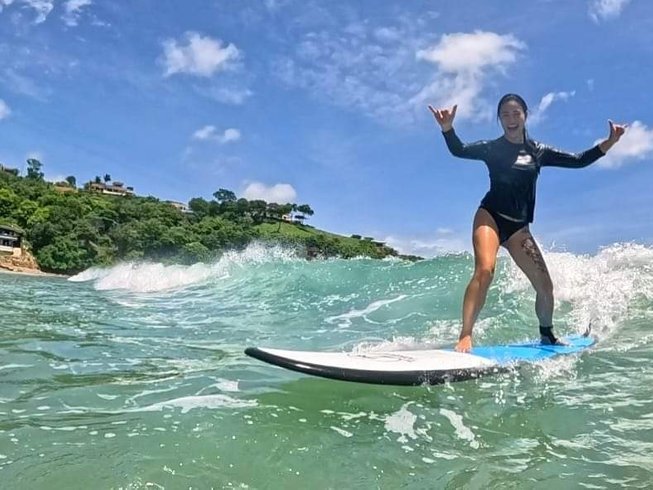
Beginner-centred surf and yoga retreat — 5 or 7-day formats, max 6 per group, daily boat transfer to Playa Maderas. Most beginners achieve independent green-wave riding by day 7. From €380 (~$411) for 5 days.
The vibe: Welcoming and beginner-centred — progression feels natural rather than effortful at Maderas.
Best for: Complete beginners; yoga practitioners starting to surf; 5-day stays within a Central America trip.
Check availability at Casa Happy Life 👉
Frequently asked questions
When is the best time to surf in Nicaragua?
The primary surf season runs May through October — consistent south Pacific groundswells produce 1.5–3m faces at Popoyo and SJDS with offshore morning winds. June, July, and August are peak quality. November through April the swell drops in size but the weather is drier and the conditions cleaner — excellent for beginners and intermediates, less exciting for advanced surfers chasing size. Nicaragua surfs year-round; the question is which conditions suit your level and tolerance for the rainy season’s afternoon downpours.
Is Nicaragua cheaper than Costa Rica for a surf camp?
Yes, significantly. Nicaragua camp prices typically run 20–30% lower than equivalent operations in Costa Rica at comparable wave quality. Local food and transport costs are also lower. The trade-off is infrastructure — Costa Rica’s surf tourism infrastructure (transport, medical care, tourist services) is more developed than Nicaragua’s, which is a practical consideration for longer trips. For a focused surf camp week where quality and value are the priorities, Nicaragua wins on price for the same level of wave quality.
Can I combine Nicaragua and Costa Rica in one trip?
Yes — San Juan del Sur is 45 minutes from the Peñas Blancas border crossing, making a combined trip straightforward. A practical route: fly into Managua, spend 5–7 days in Popoyo, 3–4 days in San Juan del Sur, then cross into Costa Rica and continue south to Nosara or Tamarindo. The reverse works equally well. The border crossing itself is straightforward for most passport holders — camps in SJDS can advise on current procedures and arrange shuttle transport to the border.
Popoyo or San Juan del Sur — which should I base myself?
For wave quality: Popoyo. The Tola coast’s variety — Guasacate, Santana, Popoyo main break, El Gigante — outperforms what’s available from SJDS in both consistency and power. For town infrastructure, social life, and ease of logistics: San Juan del Sur. Most visitors to Nicaragua who have a full week spend it in Popoyo; those with less time or who want town life alongside surf choose SJDS. The ideal itinerary covers both.