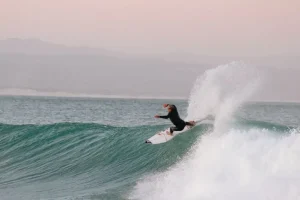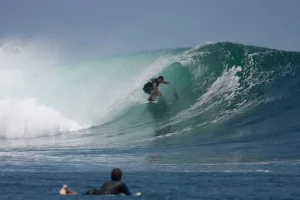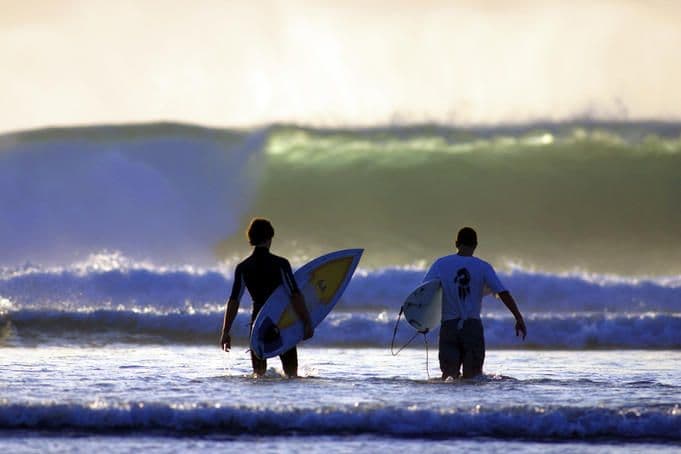

June is when the Southern Hemisphere winter hits its stride. The storm tracks circling Antarctica are firing on all cylinders, pushing long-period SW groundswells into every exposed coast across South Africa, Indonesia, Peru, and beyond. Jeffreys Bay reaches peak season. G-Land in Java switches fully on. Bali’s famous Bukit Peninsula breaks fire with world-class conditions all day, every day. The tropics, Mentawais, Maldives, Arugam Bay, are deep in their seasons. Meanwhile the Northern Hemisphere is waking up too: Portugal still has Atlantic swell, France’s beach breaks are warming, and the Pacific is starting to rumble ahead of the Northern Hemisphere summer. June rewards the surfer who knows where to point the nose of their board.
Ten destinations worth your attention this month: eight that have earned their reputations, and two your crew probably hasn’t talked about yet.
Quick Overview, Where to Surf in June
- Jeffreys Bay, South Africa, Peak season, Supertubes at full power, pre-WSL window in early June
- Bali, Indonesia, Dry season firing, Uluwatu and Padang Padang at their world-class best
- G-Land (Java), Indonesia, Season peaks, the legendary left-hand jungle barrel in full swing
- Chicama, Peru, Best month of the year for the world’s longest left-hand wave
- Mentawai Islands, Indonesia, Deep peak season, 90% consistency, world-class reefs going off
- Arugam Bay, Sri Lanka, East coast season fully established, warm points, genuine bargain travel
- The Maldives (North & Central Atolls), SW monsoon in full swing, consistent long-period swells, tropical perfection
- Portugal (Algarve & Peniche), Consistent Atlantic swell, warm weather, waves for all levels
- Lombok, Indonesia, Hidden gem: Less crowded than Bali, powerful dry-season peaks, Desert Point firing
- Ponta D’Ouro, Mozambique, Hidden gem: June swell season peak, perfect right-hand point, almost nobody out
Jeffreys Bay, South Africa
June is peak season at Jeffreys Bay. The Southern Ocean’s winter storms are tracking close enough to the Eastern Cape to generate consistent, powerful SW groundswells that wrap around Cape St Francis and peel down Supertubes with mechanical perfection. This is when the wave runs at its absolute best: 4-10 ft faces, long-period swell, the SE offshore winds grooming every section from Boneyards through Impossibles, Supers, and The Point into a seamless conveyor of right-hand barrels that can run for 200-300 metres. The WSL Championship Tour (Stop No. 10 for 2025) holds its competition window in mid-to-late July, meaning early and mid June gives you the legendary wave at peak conditions with only the dedicated local crew and international surf travellers, rather than the full circus of the CT event. The Surf Atlas reports June is statistically the most consistent month for clean surfable waves at J-Bay. Water temperature drops to around 16-18°C, which calls for a 4/3mm wetsuit, but the air is mild and the Garden Route scenery, dramatic cliffs, fynbos, roaming dolphins at the dawn patrol, makes even a between-swells flat spell feel worth the flight.
Peak season at the world’s best right point, before the WSL circus arrives in July.
Beg
Int
Adv
Dolphin Beach is J-Bay’s dedicated learn-to-surf spot, safe and gentle even when Supers is pumping. Kitchen Windows suits intermediates wanting fun, accessible waves a few hundred metres from the main event. Supertubes and Boneyards are strictly for experienced surfers, fast, shallow, unforgiving reef, with significant consequences for a badly-timed exit. Sharky waters (great whites patrol this coast) make local awareness essential. A 4/3mm wetsuit is needed for June. The Eastern Cape coast within an hour’s drive offers several dozen additional breaks for all levels.
Where to Stay
- African Perfection Guesthouse, Supertubes frontrow · ★ 4.9 · nine individually decorated luxury suites perched directly above Supertubes, private balconies with uninterrupted views of one of the world’s greatest waves, partnered with J-Bay Surf School for guided sessions and multi-day surfaris to other Eastern Cape breaks
- Jeffreys Bay Surf School & Retreats, J-Bay · ★ 4.8 · South Africa’s second oldest surf school (est. 2000), owner Etienne is an ISA Level 2 qualified coach and former South African national team coach, all levels from first-timers at Dolphin Beach to guided sessions at Supertubes, with expert in-water guidance through J-Bay’s sharky line-up
- JBay Surf Retreats, J-Bay · ★ 4.8 · boutique operation run by a J-Bay local with WQS competitive experience; specialises in personalised guided surfaris beyond the main Supers lineup, including lesser-known Eastern Cape breaks, ideal for intermediates wanting local knowledge and small-group access
Bali, Indonesia
June is the month Bali’s surf scene announces itself to the world. The SE trade winds, the key to everything, are now blowing consistently offshore across the Bukit Peninsula from morning until late afternoon, grooming the left-hand reef breaks of Uluwatu, Padang Padang, Bingin, Impossibles, and Dreamland into perfectly walled, fast, hollow conditions that have made this stretch of coast one of the most photographed in surfing. Uluwatu is a series of breaks at the southwest tip of the Bukit Peninsula, Racetrack, Peak, Temples, Outside Corner, The Bombie, each working at different tides and swell sizes, with 400-metre rides possible at Racetrack when the swell and tide align. Padang Padang, a short walk from Ulu via cliff path, is more intimate and more barrel-focused: a short, powerful left-hander that requires commitment and timing. Bingin and Impossibles are slightly more accessible for intermediates wanting to progress to reef breaks. Beyond the Bukit, Canggu on the west coast has beach breaks for all levels and a booming social scene. June is peak season, which means crowds are real at the main spots, particularly at Uluwatu’s Peak section, but the quality of the waves makes it worth it, and the Balinese water temp (29°C, boardshorts, all day) remains one of surfing’s great pleasures.
Dry season peak, Uluwatu and Padang Padang at world-class conditions, daily offshore winds.
Beg
Int
Adv
Beginners should avoid the Bukit Peninsula reef breaks in June and stay at Canggu beach breaks, Kuta, or Nusa Dua, all manageable in the dry season. Intermediates can progress at Bingin and the gentler sections of Padang Padang. Advanced surfers will find Uluwatu, Impossibles, and Outside Corner at their absolute best, but the sharp coral, access through a cave, and strong currents mean local knowledge or a guide is essential on first visit. Boardshorts all day; no wetsuit needed at 29°C.
Where to Stay
- Padang Padang Surf Camp, Bukit Peninsula, Uluwatu · ★ 4.8 · the original and best-known dedicated surf camp on the Bukit, steps from Padang Padang beach, guides surf all the surrounding breaks with you, daily video/photo review, yoga included, infinity pool, organic meals, consistently glowing reviews from all skill levels, from first-timers to advanced surfers chasing barrels at Ulu
- CARI Surf Camp, Padang Padang, Uluwatu · ★ 4.8 · boutique operation with private accommodation in traditional Balinese style, small groups with 2:1 instructor ratio, focuses on coaching progression from beginner to reef break level, particularly praised for making nervous first-timers comfortable at serious reef breaks safely
- Dreamsea Surf Camp Uluwatu, Padang Padang cliff · ★ 4.7 · cliffside setting above Padang Padang Beach with dramatic ocean views, strong social and community atmosphere, twice-daily surf sessions with small groups, excellent for solo travellers, the 100-step cliff staircase is the only catch but adds to the adventure
G-Land (Grajagan Bay), Java, Indonesia
Named by 1970s pioneers who flew into Bali and spotted perfect lines reeling along the East Java coast from the plane, G-Land, formally Grajagan Bay on the edge of Alas Purwo National Park, is one of the most storied and serious waves on the planet. A series of eight named sections string along a coral-studded lava reef at the southeastern tip of Java: Kongs (the workable outside entry), Money Trees (the main event, the section Gerry Lopez made famous, fast, hollow, running for hundreds of metres), Launching Pad (a critical steep take-off leading into Speedies), and Speedies itself (the heaviest and most consequential section, a near-bottomless barrel at mid-to-high tide that has produced some of surfing’s most incredible images and some of its worst injuries). The wave is 2-3 ft bigger than a similarly-exposed Uluwatu, thanks to an ocean canyon off the point that funnels uninterrupted Indian Ocean swell directly into the reef. June sits in the prime season: 70% probability of head-high or better waves, SE trade winds arriving offshore by 9:30am every morning with near-religious consistency, and the jungle-meets-ocean setting so remote and wild that you feel genuinely far from the world. Getting here requires a fast boat from Bali’s Sanur Beach (2-3 hours) or a long overland journey through East Java, the remoteness is part of the experience. Book well ahead: the surf camps have limited beds.
The legendary jungle barrel enters peak season, Money Trees and Speedies at full power.
Beg
Int
Adv
This is not a wave for beginners, the shallow coral reef, powerful swell, and remote location demand experience and solid fitness. Kongs and Tiger Tracks offer more forgiving options for capable intermediates to warm up. Money Trees and Speedies are advanced-only. The camp setting is genuinely remote: medical facilities are limited, mosquitoes are a real concern (malaria prevention recommended), and the nearest hospital is hours away. Bring reef booties, a full quiver, and all spare equipment, there is nothing resembling a surf shop anywhere near. Despite the demands, this is a bucket-list wave for a reason.
Where to Stay
- G-Land Bobby’s Surf Camp, Grajagan Bay · ★ 4.8 · the original, established by the Balinese surfer Bobby Radiasa in the 1970s alongside the wave’s pioneers, located directly in front of Money Trees, the most storied address in Indo surfing, with basic-but-functional accommodation, meals included, and direct paddling access to the main line-up
- G-Land Joyo’s Surf Camp, Grajagan Bay · ★ 4.7 · the second established camp, positioned closer to Speedies, similarly functional and genuine, packages from 3 nights upwards, the only other accommodation option in the jungle setting, and the choice if you want to be stationed near the wave’s heaviest section
- G-Land Liveaboard Charters, Grajagan Bay · ★ 4.7 · several charter operators run small-group boat-based trips from Bali during peak season, anchoring in the bay and surfing uncrowded early morning sessions before the camps wake up, the premium G-Land experience for those who want first pick of the peaks
Chicama, Peru
Ask any surf data source what June is like at Chicama and the answer is unambiguous: it’s the best month of the year. Average swell heights hit 6 ft in June, the level at which Chicama’s famous multi-section left starts to properly link up, turning what is normally a very long wave into an extraordinary one. Chicama sits on the Peruvian desert coast, 85 km north of Trujillo, in the driest place on earth. The headland at Puerto Malabrigo is positioned in an almost supernatural alignment with the South and SW swells generated by the Roaring Forties, bending long-period wave trains into the bay at an angle that allows them to peel for up to 4 kilometres without breaking down. Seven named sections run from La Isla at the far outside point all the way to El Malecón pier in town, and in June’s 6 ft conditions, the last three start to connect, creating leg-burning rides of over a kilometre that require local boat taxis to retrieve you to the top. The Humboldt Current keeps the water cold year-round (around 16-18°C, 3mm suit essential even in the Peruvian winter), but the reward is extraordinary: a consistent, long-period left that surfers of every level can ride, in one of the most atmospheric and unhurried surf towns on earth. June is peak season by every metric, swell consistency sits at 90%, offshore ENE winds are reliable, and the valley flanking the wave creates a natural wind funnel that keeps conditions clean day after day.
Best month of the year, peak swell links all seven sections of the world’s longest wave.
Beg
Int
Adv
Chicama is a sandy-bottomed point break and, despite its legendary status, is remarkably accessible for all levels, the wave is long and peeling rather than hollow and heavy. The main challenge is simply physical: the rides are so long that paddling back up the point is impossible, requiring either a long walk or a boat taxi ($1-2 USD). Bring a 3mm wetsuit for the cold Humboldt Current water. The town is small and unhurried, with a handful of surf hostels, excellent ceviche, and almost no tourist infrastructure beyond surfing, which is, for many regulars, exactly the appeal.
Where to Stay
- Chicama Surf Resort (Waterways Travel), Chicama · ★ 4.8 · the premium operation in town, perched directly above the point, with a Zodiac tow-back service that eliminates the long walk between waves and lets you maximise water time, infinity pool, full meals, guided trips to nearby Pacasmayo and Huanchaco included
- Surf House Chicama, Puerto Malabrigo · ★ 4.6 · the classic budget base in town, friendly and well-run, board and wetsuit rental available, local surf instructors on hand, easy walking access to the point, the spot most returning visitors end up recommending to first-timers as the authentic Chicama experience
- Chicama Boutique Hotel, Chicama · ★ 4.7 · comfortable mid-range hotel with pool, jacuzzi, sauna, and gym, all meals included, tow-back boat service, and knowledgeable local staff who run guided trips to regional breaks, June and September are their designated high season for good reason
Mentawai Islands, Indonesia
The Mentawais need little introduction to anyone who has watched a surf video in the past three decades. This remote archipelago off the coast of Sumatra is home to over 70 named world-class reef breaks, Rifles, Macaronis, Bank Vaults, HT’s, Lance’s Right, Pitstops, Telescopes, and June is deep inside the peak season that runs from May through October. The SW swell window is fully open: Indian Ocean groundswells arrive with 90% consistency, trade winds are offshore from the SE, and the water temperature is a constant 27-28°C. What makes the Mentawais different from everywhere else on this list is the sheer concentration of quality: you can drift from one world-class break to the next by boat in under 20 minutes, with breaks for every skill level within the same proximity. Macaronis is an approachable, long-period left for intermediate surfers who want their first Indo barrel. Rifles is a hollow, grinding right for advanced surfers wanting a genuine challenge. Lance’s Right (HT’s) is the machine, a perfectly symmetrical A-frame that fires relentlessly. The archipelago’s remoteness is preserved by the near-total boat-or-resort-only access model, and the crowd levels, while not zero, are far more manageable than comparably quality waves in Bali or the Maldives. Book 12-18 months ahead for June trips.
Deep in peak season, 70+ world-class breaks firing with 90% swell consistency.
Beg
Int
Adv
Not suitable for beginners in June, the peak season means powerful, fast waves over shallow coral reef that require a solid intermediate foundation at minimum. The best entry point is a resort or charter that matches you to appropriate breaks each day based on conditions and your level. Access is by speedboat from Padang, West Sumatra (6-8 hours) or charter flights to Siberut Island. Bring all your own wax, leashes, and fin keys, the islands are remote and replacement parts are scarce. June crowds are manageable compared to July-August peak, but still require patience at premier breaks like Macaronis.
Where to Stay
- Kingfisher Bay Resort, Mentawai Islands · ★ 4.8 · resort-based operation with daily guided boat trips to the best breaks relative to conditions, small groups (max 16 surfers), guided by experienced local crew with intimate knowledge of every tide and swell window, includes fishing and cultural village visits for non-surfing days
- Mentawai Charter (Liveaboard), Full archipelago · ★ 4.8 · the classic Mentawais experience: a week or two aboard a dedicated surf charter, anchoring overnight at the best forecast breaks, surfing from the back of the boat, the flexibility to follow the swell rather than being tied to a resort location is the key advantage
- Macaronis Resort, North Mentawai · ★ 4.9 · the most exclusive address in the archipelago, located directly in front of Macaronis wave, maximum 20 guests at any time, all-inclusive, with the guarantee of surfing one of the world’s great intermediate-to-advanced left-handers essentially to yourself, book 12-18 months ahead for peak season
Arugam Bay, Sri Lanka
Arugam Bay‘s east coast surf season is well established by June, the SW monsoon has pushed the swell season onto the island’s eastern shores, and the Main Point right-hander is doing what it always does from April to October: producing long, gentle, consistent waves that peel for hundreds of metres over a sandy bottom in 28°C water. It’s one of the most accessible quality point breaks in the world: the take-off is straightforward, the wave is forgiving even on bigger days, and the warm tropical water removes the wetsuit anxiety that plagues colder-water destinations. Beyond the Main Point, Pottuvil Point and Whiskey Point offer more challenging options for experienced surfers, faster, hollower, less crowded. Crocodile Rock, a short tuk-tuk ride north, is a growing favourite. The setting is genuinely extraordinary: Sri Lanka’s east coast in June is dry and sunny, the beach town is unhurried and charming, the food is outstanding (fresh seafood, rice and curry for virtually nothing, incredible smoothie bars), and the wildlife, elephants visible from the road, crocodiles in the lagoon, is a constant reminder that you’re somewhere genuinely special. June is established season but not yet the July-August peak: waves are consistent, the expat and surf camp community is fully up and running, and prices are still firmly in the budget travel bracket.
East coast season in full swing, warm points, elephants, rice and curry for nothing.
Beg
Int
Adv
The Main Point is one of the safest, most beginner-friendly point breaks in Asia, shallow enough to stand up in places, with a very forgiving take-off that builds confidence quickly. The Main Point gets crowded during peak months; intermediates should venture to Pottuvil Point for more space. Whiskey Point is the best option for experienced surfers wanting hollower, faster conditions. Tuk-tuks are the transport of choice, cheap and reliable. The town is compact enough to walk everywhere. Boards rent easily at every corner; no need to travel with equipment unless you’re particular about your setup.
Where to Stay
- Mambo’s Beach Cabanas, Arugam Bay · ★ 4.8 · the most celebrated budget address in A-Bay, beloved by returning surf travellers, wooden beachfront cabanas steps from the Main Point, excellent breakfast, a genuinely warm family atmosphere, books out fast for June, reserve ahead
- Uga Bay Resort, Arugam Bay · ★ 4.9 · the premium end of the A-Bay accommodation spectrum, boutique eco resort with pool overlooking the lagoon, elegant rooms at prices that still undercut comparable places in Bali or Sri Lanka’s west coast, the choice for couples or those wanting quality without giving up the local surf atmosphere
- Arugam Bay Surf School, Arugam Bay · ★ 4.7 · the long-established local surf school offering lessons, board rental, and guided sessions at the Main Point and surrounding breaks, the recommended starting point for first-timers, with instructors who know the idiosyncrasies of the local tide and swell patterns intimately
The Maldives (North & Central Atolls)
June is well inside the Maldives’ SW monsoon surf season, which runs from April through October, and the North Male and Central Atolls are at their most consistent. The SW swell window is fully open: long-period Indian Ocean groundswells are now arriving regularly, and breaks like Cokes (a steep, hollow right-hander that fires over a shallow reef in North Male Atoll), Ninjas, Chickens, Sultans, and Pasta Point are all operating. Cokes is Maldivian surfing at its most intense, shallow, fast, and unforgiving, best at mid-to-high tide with a clean SW swell, and is not for the faint-hearted. Sultans and Ninjas, a short boat ride from Hudhuranfushi or Niyama Resort, are more approachable A-frames that offer quality rights and lefts for intermediate surfers. The Maldives experience is defined by the water: 29-30°C, crystalline visibility, boardshorts only, surrounded by reef fish and the occasional turtle or reef shark in the line-up. Getting between breaks requires either a resort speedboat or a live-aboard charter; the infrastructure is entirely boat-dependent. June is busy but not peak, July and August are the most crowded months, and the combination of warm water, consistent swell, and one of the world’s most beautiful settings makes it one of surfing’s most compelling destinations in any month.
SW monsoon in full swing, Cokes and Sultans firing, 29°C crystal-clear water.
Beg
Int
Adv
Not suitable for beginners during peak swell, the Maldives’ reef breaks are shallow, powerful, and require solid surfing ability and reef awareness. Sultans and Ninjas offer more manageable conditions for capable intermediates; Cokes is advanced-only on any significant swell. Bring all your own equipment, finding the right board size at a Maldives resort is unreliable. The logistics are entirely resort or charter-based: there is no independent access to most breaks. Budget considerably for the experience, this is one of surfing’s more expensive destinations. The non-surfing aspects of the trip (snorkelling, diving, the island setting itself) are world-class.
Where to Stay
- Hudhuranfushi (Lohis) Surf Resort, North Male Atoll · ★ 4.9 · positioned directly at Lohis, one of the best left-handers in the Maldives, with fast boat access to Cokes, Sultans, Ninjas, and the broader North Male swell magnet, the benchmark surf resort in the country, consistently excellent, and genuinely close enough to the waves to run back to your room between sets
- Niyama Surf Resort, Central Atolls · ★ 4.8 · five-star resort with its own dedicated surf guide team, quick boat access to Pasta Point and the central atoll breaks, combining luxury resort facilities with serious wave access, the choice for couples or non-surfers who need world-class hotel amenities alongside the surfing
- Maldives Liveaboard Charter, Multi-atoll · ★ 4.8 · the purist approach to Maldives surfing: a dedicated surf charter with an expert captain who reads the swell forecast and moves the boat to the best-positioned breaks each day, access to breaks that no land-based resort can reach, with group sizes of 8-12 surfers
Portugal (Algarve & Peniche)
Portugal’s surf season is well into its stride by June, the Atlantic is still sending consistent swell, the weather has warmed to pleasant beach-afternoon temperatures (24-26°C air, 18-19°C water), and the summer crowds haven’t yet reached their late July-August peak. The Algarve’s west-facing coast, Arrifana, Amado, Cordoama, offers accessible and picturesque waves for beginners and intermediates, set against dramatic orange cliff scenery and some of the most photogenic coastline in Europe. Further north, Peniche remains consistent: Baleal Bay is a sheltered, graduated learn-to-surf environment that produces more confident surfers per square metre than anywhere else in Europe; and Supertubos, just outside town, is one of Europe’s heaviest beach barrels, hollow, fast, and shallow, available when the Atlantic cooperates. Ericeira, 30 minutes south of Peniche, is a World Surfing Reserve with six world-class breaks within 10 minutes of each other, including Ribeira d’Ilhas and Reef. The water requires a 3/2mm shorty or thin fullsuit, which is a mild inconvenience. Everything else, the food, the wine, the price of a surf camp week, the ease of reaching good waves by bus or scooter, makes Portugal one of Europe’s most compelling June surf destinations.
Atlantic still firing, summer weather arriving, and pre-peak-season crowds.
Beg
Int
Adv
Baleal Bay in Peniche and Selong Belanak-style beaches along the Algarve are among Europe’s finest learn-to-surf environments: consistent whitewater, knowledgeable schools, safe entry and exit. Intermediates will thrive at Ericeira’s Ribeira d’Ilhas and the Algarve cliff-backed points. Advanced surfers should watch the forecast for Supertubos: when it’s on, it’s on, and Portugal’s Atlantic coast has produced some of the heaviest European beach barrels ever photographed. A 3/2mm wetsuit is appropriate for June. Internal transport is easy, trains connect Lisbon with Peniche in 90 minutes; the Algarve is best with a rental car.
Where to Stay
- The Salty Pelican Yoga & Surf Retreat, Baleal, Peniche · ★ 4.9 · the best-reviewed surf camp in Portugal, built purpose-specifically for surf retreats, roof terrace with full ocean views over Baleal Bay, small groups, highly attentive coaching at all levels, the benchmark for what a European surf camp should feel like
- Rapture Surf Camp, Foz do Lizandro, Ericeira · ★ 4.8 · traditional Balinese-style camp transported to the Ericeira coast, ISA-licensed instructors, access to six quality breaks depending on conditions each day, excellent daily meals, strong community atmosphere, the go-to for intermediate surfers wanting serious progression in the Ericeira World Surfing Reserve
- Lapoint Surf Camp, Ericeira · ★ 4.8 · cliff-top setting, Levels 1-4 teaching structure, professional and organised, particularly suited to solo travellers and groups, with a strong social programme alongside the surf coaching, and Ericeira town itself a five-minute walk for outstanding seafood dinners
Hidden Gems for June
Lombok, Indonesia
Twenty-two miles across the Lombok Strait from Bali, Lombok is the version of Indonesian surfing that hasn’t been completely overrun yet. The island’s south coast runs for 20 miles and holds nearly two dozen quality breaks, and in June, the dry season is in full effect: SW swell is consistent, trade winds are offshore across the exposed south coast, and the water is 28°C. Kuta Lombok is the hub: a small, low-key surf town dramatically unlike Bali’s Canggu, with coconut rice, cheap accommodation, and a beach-first mentality. From here, a short boat ride reaches Gerupuk Bay, an extraordinary multi-peak setup with five named breaks covering every skill level, from gentle beginner peelers on the inside to powerful performance waves outside. Mawi, further west, is a powerful A-frame exposed directly to the full force of the Indian Ocean that fires when the swell hits 4 ft or more, potentially one of the most underrated intermediate-to-advanced waves in all of Indonesia. And for advanced surfers who’ve done their research: Desert Point, on Lombok’s remote northwest tip, produces one of the longest left-hand barrels in the world in June-September when the SW swell arrives, up to 20-second tube rides over a shallow, unforgiving reef, and remains significantly less crowded than G-Land or the Mentawais. The island’s transport logistics require planning (boats to most breaks, scooter-hire for the rest), but the surf camp infrastructure in Kuta Lombok is now genuinely excellent, and the overall experience, quality waves, warm water, no Bali prices, is hard to beat in June.
Bali’s better-kept secret, dry season peaks, Desert Point firing, half the crowds.
Beg
Int
Adv
Selong Belanak is Lombok’s finest beginner beach: long, sandy-bottomed, with soft consistent waves and more space than Bali’s comparable spots. Inside Gerupuk is the next step up for intermediates. Mawi and Outside Gerupuk for serious surfers. Desert Point is expert-only, extremely shallow reef, powerful barrels, and a very remote setting requiring its own boat trip. Most breaks require boat access from Kuta, which surf camps handle daily; independent surfers on scooters can reach some spots but will miss others. Fly into Lombok International Airport (LOP), 25 minutes from Kuta. Boardshorts all day, 28°C water.
Where to Stay
- Kura Kura Surf Camp, Kuta Lombok · ★ 4.9 · the current talk of Lombok’s surf scene, 2:1 guest-to-guide ratio, private bungalows with AC, 11 surf sessions per 6-day week, comprehensive drone and photo analysis, yoga and sauna facilities, boutique and intensely focused on coaching improvement for all levels
- Ekas Surf Resort, Ekas Peninsula · ★ 4.8 · the only camp positioned away from Kuta, above the Ekas Inside and Outside reef breaks on Lombok’s remote southeast peninsula, six nearby surf breaks within five minutes, small group sizes (max 14), three meals daily, excellent coaches, and significantly fewer people in the line-up than anywhere near Kuta
- LMBK Surf House, Kuta Lombok · ★ 4.7 · centrally located in Kuta, maximum two students per instructor, strict skill-level grouping, highly regarded for helping intermediates identify and break through plateau habits, and closest to the cafes and restaurants of Kuta for those who want town access after the morning session
Ponta D’Ouro, Mozambique
Ponta D’Ouro sits on the very southern tip of Mozambique, 120 km south of Maputo, so close to the South African border that you can see the KwaZulu-Natal coast from the headland. It has been producing one of the best right-hand point breaks in the Indian Ocean for decades, and June is when it comes alive. The same Southern Ocean storms generating the swells that make Jeffreys Bay famous send SW groundswells up the Mozambican coast, where they wrap into the bay in front of Ponta D’Ouro’s main point and produce long, peeling, turquoise right-handers over white sand, waves that look like something a graphic designer might render if asked to create the ideal surf destination, and that the surf travel world has been writing about in hushed tones for years. The rainy season is genuinely finished by June (unlike May, which can still be transitional), the swell consistency is in full swing, and the level of tourist infrastructure, while developing, remains low enough to give the place a raw, authentic quality that has all but vanished from the Indo destinations. Dolphin diving is the other main activity here: Ponta D’Ouro is one of the world’s most reliably dolphin-dense coastlines, and you can arrange a dive or snorkel trip between surf sessions. Access is easiest from Johannesburg or Maputo; the border crossing with South Africa is straightforward.
Turquoise right-handers over white sand, the Indian Ocean’s best-kept secret in peak season.
Beg
Int
Adv
The main point is suitable for all levels when the swell is in the 2-4 ft range: long, forgiving, and warm. Bigger SW swells push it to fast, hollower conditions that reward experienced surfers. Tofo Beach, a few hours north, has additional beginner-friendly beach breaks and is widely known as a dive and surf combination destination. The town of Ponta D’Ouro itself is small and simple; accommodation options are limited and should be booked ahead in June (peak swell season). The 4WD road from the Mozambique border is challenging, bring spares if driving yourself. The reward for the journey is consistent line-up solitude that Bali and Sri Lanka can no longer offer.
Where to Stay
- Motel do Mar, Ponta D’Ouro · ★ 4.8 · the most established and well-reviewed accommodation in town, ocean-facing rooms with straightforward access to the main point, knowledgeable local staff who track conditions and advise on peak swell timing, the natural base for a dedicated surf trip here
- Tartaruga Beach Camp, Ponta D’Ouro · ★ 4.7 · the budget-friendly and relaxed camp option, popular with South African overlanders and backpackers, close to the main break, board rental available, generator-powered in evenings, an authentic low-infrastructure Mozambique experience that the regulars prefer over anything more polished
- Ponta Surf Lodge, Ponta D’Ouro · ★ 4.7 · purpose-built surf lodge offering guided daily sessions at the main point and surrounding breaks, board rental, dolphin diving packages for between-swell days, and transfers from Maputo, the easiest way to arrive without logistics stress and spend the week entirely focused on the water
We publish a new monthly surf guide every month, updated destinations, honest conditions, and hidden gems. Check back next month for the July edition.