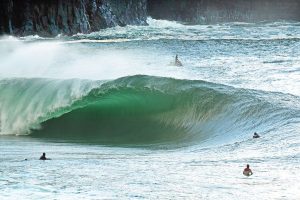
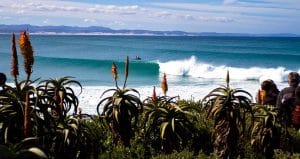
Arrifana is my pick when I want reliable Algarve surf without the fuss. Tucked into a sheltered, cliff-backed bay in the wild Costa Vicentina park near Aljezur, it is rated among the three most consistent spots in Portugal, thanks to a southwest-facing bay that magnets swell from almost any direction. It pairs a forgiving sandy beach break, one of the best places to learn in the Algarve, with a fast, hollow reef point at the north end for the confident, all framed by dramatic black cliffs and untouched reserve scenery. This is a favorite western Algarve stop on our guide to surfing in Portugal. Here’s every break, when to go, and how to set up your trip.
Quick surf guide to Arrifana
- Best season: autumn (September to November) and spring for clean swell; summer for beginners
- Best for beginners: Praia da Arrifana, Praia da Amoreira
- Best for advanced: the Arrifana reef point, Bordeira on size
- Wave type: a sheltered sandy beach break plus a right-hand reef point and open beaches nearby
- Water temp: 15 to 20°C, a 3/2 most of the year and a 4/3 in winter
- Crowds: busy in summer and on good days, but low localism at the beach
- Getting there: Faro (FAO), about 1.5 hours; a car helps a lot
- Budget: €50 to €95 a day
Where to surf in Arrifana
The sheltered bay of Arrifana is the heart of it, with a run of more exposed beaches a short drive north and south for when you want size or space. Tap a marker to preview a break, then click its name to jump to my full rundown below.
Arrifana bay
The sheltered bay holds two very different waves: a forgiving beach break for learners and a serious reef point for the confident.
Praia da Arrifana
The main beach break in the bay is the reason Arrifana is such a good place to learn: the high cliffs shelter it from the wind, and the sand offers forgiving lefts and rights, with the consistent northern end usually the pick. It has one of the best surf-school scenes on the west coast, and while it gets busy in summer, the vibe is friendly and free of the localism you find at some Portuguese spots. Avoid the center of the bay on bigger days, when it can close out, and it is a genuine joy for beginners and improvers.
The Arrifana reef point
At the northern end of the bay, a fast, hollow right-hand point wraps around the headland over rock. It needs a solid swell of around head-high and up to break at all, so it is fickle, but when it lines up it is the quality wave of the zone. The reef is shallow and unforgiving, so expect the odd cut and ding, and treat it as an advanced wave. Watch it from the clifftop restaurant first and pick your moment.
The beaches nearby
A short drive north and south, a string of more exposed beaches gives you gentler options and swell-magnet backups.
Praia do Monte Clerigo
About ten minutes north, Monte Clerigo is a pretty beach break with a reef left at its southern end, a good alternative when Arrifana is crowded. It is friendly for improvers and picks up a touch more swell than the sheltered bay, punching up nicely on a head-high day. A relaxed, scenic spot with room to spread out.
Praia da Amoreira
Just north again, Amoreira is a wide river-mouth beach with gentle A-frame peaks near the car park that suit beginners, and a longer left off the river mouth on a bigger day. It is quieter than Arrifana and a lovely, low-pressure place to practice, though you should watch the river-mouth undertow. A good bolt-hole when the main bay is packed.
Amado and Bordeira
About twenty-five to thirty minutes south, around Carrapateira, Praia do Amado and neighboring Bordeira are open, swell-magnet beaches with peaks for every level and plenty of parking. They are the go-to backup when Arrifana is flat or blown out, and Amado in particular is a surf-school favorite. Bordeira grabs swell from almost any angle, so it is often the biggest, punchiest option when you want size.
When to surf in Arrifana
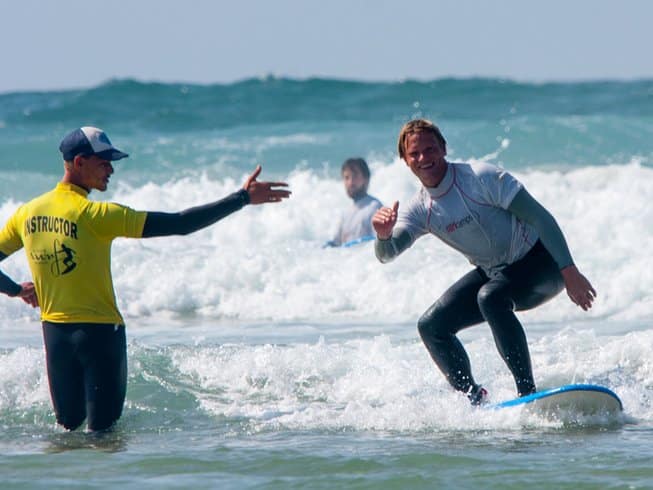
Summer (smaller, warmest, best for beginners)
Winter (big, often maxed out)
Arrifana surfs year-round, but it is at its best in autumn and spring. Autumn, roughly September to November, is my favorite window: clean, consistent Atlantic swell, glassy mornings, warm-ish water and thinner crowds than the summer peak. Spring, around April and May, is similar, with reliable swell and light winds. In both seasons the bay’s shelter and sand handle a good range of sizes, and the reef point can switch on when a bigger swell arrives.
Summer, June to August, is smaller, warmer and beginner-friendly, ideal for lessons on the mellow beach break, with the trade-off of crowds and the odd flat spell. Winter, December to February, brings big, powerful Atlantic storms that frequently max out the exposed Arrifana beach, so on the biggest days you’ll be heading to the more sheltered corners or down to Bordeira and Sagres. An easterly wind is what you want here, grooming the bay clean.
Surf camps, schools and where to stay in Arrifana
Arrifana has one of the strongest surf-school and surf-camp scenes on the west coast, most of it based around the beach and the Vale da Telha area just above the bay. Stay in Arrifana or Vale da Telha to be walking distance or a short drive from the wave, or in the pretty town of Aljezur, about ten minutes inland, for supermarkets, restaurants and its Moorish castle. Learn on the beach break, use a rented board, and let a guide show you the reef point and the nearby beaches as you progress. For my wider rundown of the region’s camps, see our guide to the best surf camps in the Algarve.
Compare surf camps in the Algarve on BookSurfCamps
What to pack for Arrifana
Cool Atlantic water and a sheltered but powerful coast are what to plan for. My Arrifana checklist:
- A wetsuit: a 3/2 for most of the year and a 4/3 in winter, with a shorty possible at the height of summer
- The right board: a longboard or foamie for the beach break, a shortboard for the reef point; see our best beginner surfboards and check your board volume
- Reef-safe SPF and a surf hat for the strong Algarve sun
- A surf watch for the tides, a spare leash, and a rental car to reach the nearby beaches
Getting to Arrifana
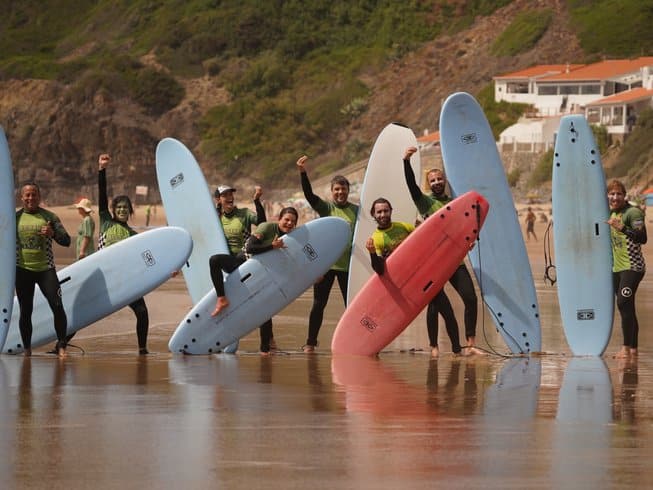
Arrifana is about an hour and a half by road from Faro airport (FAO), or two to two and a half hours from Lisbon (LIS), which has more flights and a scenic drive down through the Alentejo. It is a remote spot in a natural park, so a rental car is strongly recommended: public transport is limited and awkward with boards, and a car unlocks the nearby beaches at Monte Clerigo, Amoreira and Amado. If you’re car-free, some surf camps offer transfers from Lagos. For a wider trip, pair this with surfing in Portugal, and note that Sagres and its many beaches are only 40 minutes south.
Frequently asked questions
Is Arrifana good for beginner surfers?
Yes, it is one of the best places to learn in the Algarve. The main beach break is sheltered by cliffs, sandy and forgiving, with a strong surf-school scene, and nearby Amoreira and Monte Clerigo are gentle alternatives. Just leave the shallow reef point at the north end to advanced surfers.
When is the best time to surf in Arrifana?
Autumn (September to November) and spring are the sweet spots, with clean, consistent swell, lighter winds and thinner crowds. Summer is smaller and warmer, ideal for beginners, while winter brings big, powerful storms that often max out the exposed beach, sending you to more sheltered corners.
What is the best surf spot in Arrifana?
For learning and everyday fun, the Praia da Arrifana beach break is the most consistent wave. The reef point at the north end of the bay is the quality wave for advanced surfers when a bigger swell arrives, and Amado and Bordeira to the south are reliable swell-magnet backups.
Do I need a wetsuit to surf in Arrifana?
Yes. The Atlantic here runs about 15 to 20 degrees Celsius, so a 3/2 works for most of the year and a 4/3 in winter, with a shorty possible on the warmest summer days. The western Algarve needs a wetsuit almost year-round.
How crowded is surfing in Arrifana?
It gets busy in summer and on the best days, given how popular and consistent it is, but the beach break has little of the localism found elsewhere and the vibe is friendly. For more room, surf the shoulder seasons or head to quieter Amoreira and Monte Clerigo nearby.
Can you surf in Arrifana year-round?
Yes. Arrifana is one of the most consistent spots in Portugal and is surfable almost every month, thanks to its swell-catching, sheltered bay. Only the very biggest winter storms shut it down, and when they do, the more protected nearby beaches or Sagres will usually have a rideable wave.
Arrifana is the Algarve at its most reliable: a sheltered, scenic bay where beginners can learn in friendly beach-break peaks and better surfers can chase a hollow reef point, with a string of backup beaches a short drive away. Bring a wetsuit and a car, come in autumn or spring for the cleanest waves, and enjoy one of Portugal’s most consistent and welcoming surf towns. See you in the lineup.