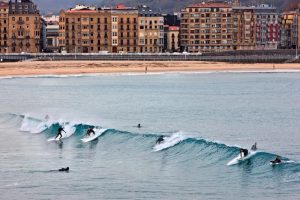
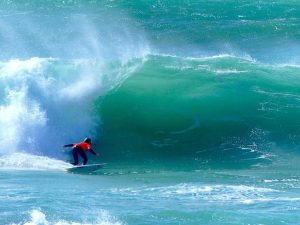
El Palmar is where most of southern Spain learns to surf. This long, sandy beach on the Costa de la Luz, tucked below Cadiz near the whitewashed towns of Conil and Vejer, is the most famous surf spot in Andalusia and about as friendly a learner wave as Europe offers: nearly three miles of forgiving beach-break peaks, the warmest water on the Spanish mainland, and a laid-back, boho beach village of surf shacks and chiringuitos. It needs a winter Atlantic swell to fire and the offshore Levante wind to clean it up, but when it’s on there’s a peak for everyone. This is a sunny stop on our guide to surfing in Spain. Here’s every break, when to go, and how to set up your trip.
Quick surf guide to El Palmar
- Best season: autumn to winter (October to March) for W and SW Atlantic swell; often small in summer
- Best for beginners: El Palmar beach, Conil
- Best for advanced: the El Palmar reef ends, Los Canos de Meca
- Wave type: a long sandy beach break, plus reef and point options on size
- Water temp: 15 to 24°C, a 3/2 most of the year and a 4/3 in winter
- Crowds: low for its fame, the long beach spreads everyone out
- Getting there: Jerez (XRY) 1 hour, Seville (SVQ) 1.5 hours; a car helps
- Budget: €40 to €80 a day
Where to surf in El Palmar
The main event is the long beach break, with a run of reef and beach options a short drive up and down the Costa de la Luz for when the wind swings or the swell gets big. Tap a marker to preview a break, then click its name to jump to my full rundown below.
El Palmar beach
The main beach is the reason people come to El Palmar: nearly three miles of sandy A-frame peaks that work up and down the strand, forgiving and beginner-friendly on the smaller days and surprisingly powerful when a solid winter swell arrives. Because it is so long, you can almost always walk away from the surf-school clusters near the village access and find your own peak, which keeps it feeling uncrowded for such a famous spot. It wants an offshore Levante easterly to groom it clean, and mind the rips on the bigger days. A genuinely lovely place to learn.
El Palmar reef ends
At the ends of the beach, outer reefs wake up only when the beach break is maxed out on a big winter swell, offering short, punchy rights into deep, boil-spotted channels. They are for advanced surfers only, with rocks, boils and rips to read, but they empty out precisely because so few people take them on. Worth knowing about for the days El Palmar is six foot and closing out, when the reef is the smarter option.
Los Canos de Meca (Trafalgar)
Down toward the lighthouse at Cape Trafalgar, Los Canos de Meca has reef breaks and, crucially, a bay that hides from the northwest wind, so it is the clever move when a NW blows El Palmar out. It works best around low tide and does not break at high, and it suits intermediates and up over reef. A quieter, characterful alternative when the main beach is unsurfable.
Conil
Just north, the pretty whitewashed town of Conil de la Frontera has its own sandy beach breaks, including some river-mouth peaks, that make an excellent beginner backup and a lovely place to base or spend a day. It is gentle and forgiving, especially in summer, and pairs perfectly with El Palmar by car. A charming addition to a Costa de la Luz trip.
When to surf in El Palmar
Shoulder
Summer (small, often flat, best for beginners)
El Palmar is at its best in the cool season, roughly October to March, when Atlantic depressions send W and SW swell into this deep corner of the coast and the offshore Levante easterly grooms it clean. December to February bring the biggest, most consistent surf, and this is the window to plan a trip around if you want proper waves; winter here is surfable most days. It is also when the reef ends and Los Canos come into play.
Summer, roughly May to August, is often small or flat for days at a time, which paradoxically makes it the ideal beginner season: small, warm whitewater, the surf schools in full swing and the water at its warmest. The trade-off is inconsistency and crowds on the beach. Spring and early autumn are the balanced sweet spots, with a good mix of swell, lighter winds and warm water. Whenever you come, watch the wind, it makes or breaks this beach.
Surf camps, schools and where to stay in El Palmar
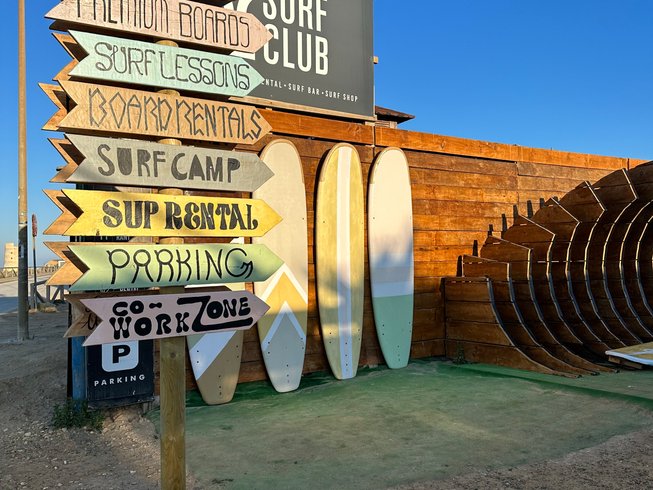
El Palmar has a growing cluster of surf camps and schools right on the sand, and its beginner-friendly beach makes it one of the best places to learn in Spain. Stay in the low-rise beach village itself to roll out of bed and into the water, or in the pretty nearby towns of Conil or hilltop Vejer de la Frontera for more to do off the sand. Learn on the main beach, rent a board, and use a car to duck round to Los Canos or Conil when the wind swings. This is a laid-back, affordable surf-and-sun trip. For a wider trip, see our guide to surfing in Spain.
Compare surf camps in Cadiz on BookSurfCamps
What to pack for El Palmar
Mild Atlantic water, strong wind and an inconsistent summer are what to plan for. My El Palmar checklist:
- A wetsuit: a 3/2 for most of the year, a 4/3 in winter, and a springsuit or boardshorts on the warmest summer days
- The right board: a longboard or foamie for learning on the beach break, a shortboard for the reef ends on size; see our best beginner surfboards and check your board volume
- Reef-safe SPF and a surf hat for the strong Andalusian sun
- A surf watch for the tides, a spare leash, and a rental car to chase the wind between beaches
Getting to El Palmar
El Palmar is about an hour by road from Jerez airport (XRY), which is also the nearest rail hub, and around an hour and a half from Seville (SVQ), with Gibraltar and Malaga a longer drive. A rental car is strongly recommended, since there is no train to the village and a car lets you chase Conil, Los Canos and Zahora as the wind and swell shift along the Costa de la Luz. If you’re planning a wider trip, pair this with surfing in Spain, and note that Tarifa and its wind-sports scene are only an hour or so south.
Frequently asked questions
Is El Palmar good for beginner surfers?
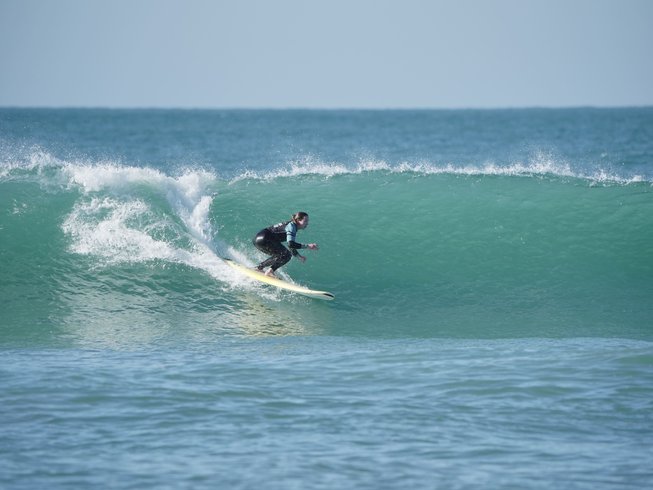
Yes, it is one of the best places to learn in Spain. It is a long, sandy beach break with miles of forgiving A-frame peaks and a big surf-school scene, and the water is the warmest on the Spanish mainland. Just be mindful of strong rips on the bigger winter days.
When is the best time to surf in El Palmar?
Autumn and winter, October to March, when Atlantic W and SW swells arrive and the offshore Levante wind cleans it up, with December to February the most consistent. Summer is often small or flat, which makes it the easiest, warmest time for total beginners, if you don’t mind waiting for waves.
What is the best surf spot in El Palmar?
The main El Palmar beach break is the pick for nearly everyone. When a northwest wind blows it out, duck round to the sheltered reef at Los Canos de Meca near Cape Trafalgar, and on the biggest days the outer reef ends offer advanced-only rights.
Do I need a wetsuit to surf in El Palmar?
Yes, most of the year. The water runs about 15 to 24 degrees Celsius, so a 3/2 covers spring, autumn and winter mornings, a 4/3 suits the coldest winter weeks, and a springsuit or even boardshorts work on the warmest summer days. It is mild for Spain.
How crowded is surfing in El Palmar?
Low for its fame. The beach is nearly three miles long, so it disperses everyone, and only the surf-school zones near the village access get busy. Walk along the sand and you can usually find your own peak, even on a good day.
Can you surf in El Palmar year-round?
Not reliably. El Palmar is surfable most days in the cool season, roughly October to March, but it frequently goes small or flat in summer. So while there can be waves in any month, plan a surf-focused trip for autumn or winter and treat summer as a beginner and sunshine season.
El Palmar is the Costa de la Luz at its most relaxed: miles of sandy peaks, warm-for-Spain water, a boho beach village and a wave that’s forgiving enough to learn on and fun enough to keep you coming back. Come in the cool season for the best surf, bring a wetsuit and a car, watch the Levante, and enjoy one of Andalusia’s great little surf towns. See you in the lineup.