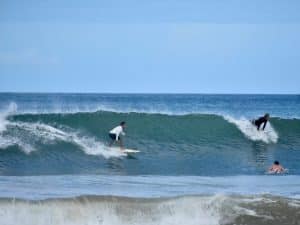
If you want to learn to surf in Costa Rica, Jaco is where I’d start you. This lively, slightly ramshackle town on the Central Pacific is the closest surf spot to San Jose, about ninety minutes away, and its wide, consistent beach break churns out forgiving whitewater and reforming peaks every single day of the year. It is not the prettiest or the best wave in the country, and good surfers detour a few minutes to heavier neighbors, but for first-timers and improvers it is easy-mode surfing with a school on every corner and a loud, fun town at your back. This is a classic first stop on our guide to surfing in Costa Rica. Here’s every break in the zone, when to go, and how to set up your trip.
Quick surf guide to Jaco
- Best season: green season (May to November) for bigger swell; dry season (December to April) for smaller, cleaner, beginner waves
- Best for beginners: the south end of Playa Jaco
- Best for advanced: Roca Loca, Playa Escondida
- Wave type: a long sand-bottom beach break, plus two nearby reefs
- Water temp: 26 to 31°C, boardshorts and a rashguard, no wetsuit
- Crowds: busy at the south end with schools and weekenders
- Getting there: San Jose (SJO), about 90 minutes by road
- Budget: $60 to $120 a day, mid-range by Costa Rican standards
Where to surf in Jaco
The main event is the beach break running the length of Playa Jaco, backed up by a couple of serious reefs on the headlands north and south of town. Tap a marker to preview a break, then click its name to jump to my full rundown below.
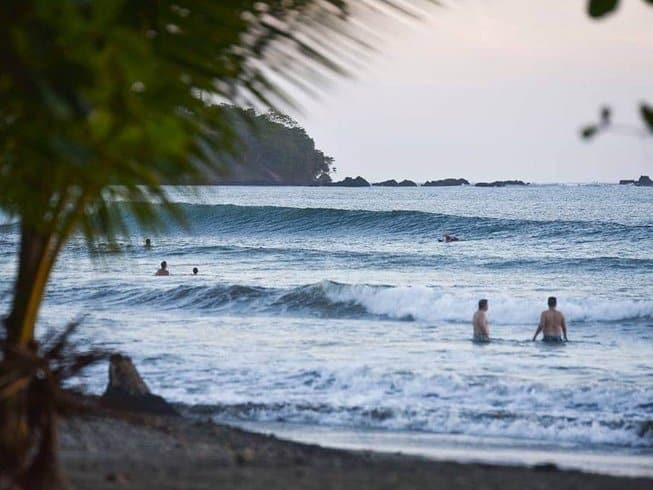
Playa Jaco itself
The town beach is a long, forgiving sand-bottom break that changes character end to end, and it is the whole reason Jaco is Costa Rica’s learn-to-surf capital.
Playa Jaco
Playa Jaco is a two-and-a-half mile crescent of dark sand that picks up swell year-round and reforms into endless learner-friendly peaks. The sheltered south end, tucked under the headland, is the glassiest and most forgiving, and it is where the schools teach and where I’d put any beginner, especially at mid to high tide. Move north and the beach gets more exposed, bigger and messier, which is fun for improvers on a clean day but not the place to take your first waves. Surf the dawn before the onshore wind gets up, and watch for rips, which run strong along the central and northern stretches.
The reefs nearby
On the headlands either side of the beach are two proper waves for experienced surfers, both a big step up from the sand.
Roca Loca
On the rocky headland between Jaco and Playa Hermosa, Roca Loca is the town’s serious wave: a fast, steep right that runs over a shallow rock reef and only really breaks when the swell is overhead or bigger. It is for experienced surfers only, and low tide is out of the question because the reef gets frighteningly shallow. When it is on, a small, capable local crew shows up, so turn up humble, mind the rock, and know your limits.
Playa Escondida
North of town, about twenty minutes away, Playa Escondida is a rock-reef A-frame that splits into a fast right and left and only shows itself on the bigger swells. It offers a quick, hollow drop over a rocky bottom, so it is strictly for advanced and expert surfers, and never at low tide when the reef is too shallow. Because it rarely breaks well, the lineup is friendly and shared on the days it does. A proper reward for reading the charts.
When to surf in Jaco
Dry season (smaller, cleaner, best for beginners)
Wettest (October to November)
The great thing about Jaco is that it works all year, so the season really depends on what you’re after. The green season, roughly May to November, is when the southern swell channel switches on and hits the bay head-on, bringing bigger, more consistent and more powerful surf, along with the fewest crowds and the best prices. The trade-off is rain, mostly at night from May to August, and the occasional closeout day. July to September is the sweet spot for size.
The dry season, December to April, brings smaller, cleaner waves, reliable offshore mornings and wall-to-wall sunshine, which makes it the ideal window for beginners and lessons. The whitewater in the bay is perfect for learning and the town is at its liveliest. Advanced surfers will find less to work with, but for a first surf trip the dry season is hard to beat. October and November are the wettest months and the quietest of all.
Surf camps, schools and where to stay in Jaco
Jaco runs on surf schools and camps, and for a first trip that is exactly what you want: you can roll out of your hostel, take a lesson on the sand at the south end, and be standing up by the afternoon. Stay in town to be walking distance from the waves, the schools and the nightlife, which is a big part of Jaco’s appeal, and use a rental car only if you want to explore quieter beaches north and south. Board and wetsuit-free rental is cheap and everywhere, and a rented soft-top plus a couple of lessons is the smart way to start. For my full rundown of where to base and book across the country, see our guide to the best surf camps in Costa Rica.
Compare surf camps in Jaco on BookSurfCamps
What to pack for Jaco
Warm water, strong sun and a beach full of learners are what to plan for. My Jaco checklist:
- Boardshorts and a rashguard: the water sits at 26 to 31 degrees, so you can leave the wetsuit at home and pack a UV top instead
- Serious sun protection: reef-safe SPF and a surf hat for the strong tropical sun
- The right board: a soft-top or longboard to learn on the beach break, a shortboard for the reefs; see our best beginner surfboards and check your board volume
- A surf watch for the tides, a spare leash, and booties if you plan to surf the reefs
Getting to Jaco
Jaco is the easiest surf town in Costa Rica to reach: it is about ninety minutes by road from San Jose airport (SJO), which makes it a popular first or last stop on any trip. Shared shuttles run from the airport and city for around forty to fifty dollars a person, and private transfers are easy to arrange. You don’t really need a car in Jaco itself, since the town is walkable and the beach is on the doorstep, but a rental, ideally with some clearance, is worth it if you want to reach quieter beaches and the reefs. Just ten minutes south is Playa Hermosa, a heavier, more serious black-sand beach break and World Surfing Reserve that is well worth a look once you’ve found your feet. If you’re planning a wider trip, pair this with surfing in Costa Rica.
Frequently asked questions
Is Jaco good for beginner surfers?
Yes, it is Costa Rica’s biggest and most convenient learn-to-surf town. The wide, consistent beach break, especially the sheltered south end, plus dozens of schools make it ideal for first-timers. Learn at the south end at mid to high tide and leave the reefs at Roca Loca and Escondida to experienced surfers.
When is the best time to surf in Jaco?
For bigger, more consistent swell, the green season from May to November, peaking July to September. For smaller, cleaner waves, sunshine and the best beginner conditions, the dry season from December to April. Jaco has rideable waves every month, so it comes down to what you want.
What is the best surf spot in Jaco?
For most people, the south end of Playa Jaco: a forgiving, consistent beach break perfect for learning and improving. Experienced surfers can step up to the fast right reef at Roca Loca on a solid swell, or the big-day A-frame at Playa Escondida, both of which are advanced only.
Do I need a wetsuit to surf in Jaco?
No. The water is a warm 26 to 31 degrees Celsius all year, so boardshorts and a rashguard are all you need. Bring reef-safe sunscreen and a surf hat for the strong sun, and booties if you plan to surf the rocky reefs.
How crowded is surfing in Jaco?
The south end of the main beach gets busy with surf schools and weekenders down from San Jose, especially in the dry season. The good news is the beach is long, so lineups spread out toward the north end, and the green season is noticeably quieter.
Can you surf in Jaco year-round?
Yes. Playa Jaco is one of Costa Rica’s most consistent beach breaks and has rideable waves every month of the year. Only the size and cleanliness change with the season, from the bigger green-season swells to the smaller, cleaner dry-season waves.
Jaco will never be Costa Rica’s best wave, but it might be its most useful: a warm, consistent, forgiving beach break ninety minutes from the airport, wrapped in a town that makes learning to surf easy and fun. Start on the sand at the south end, respect the rips and the reefs, and once you’re standing up confidently, point yourself down the coast to Playa Hermosa. See you in the lineup.