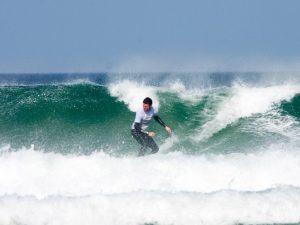
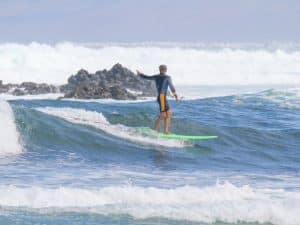
Jeffreys Bay is the wave every surfer should see at least once. On South Africa’s Eastern Cape, the point known as Supertubes is widely rated the best right-hand point break on the planet: a fast, hollow, impossibly long wall that races over rock for hundreds of meters when a clean winter swell lines up. It hosts a World Surf League contest each year, and on the right day its linked sections join into a single screaming right. It is a cold-water, high-performance wave that rewards fit, experienced surfers, but the town also has gentle beaches for learning. This is a bucket-list stop on our guide to surfing in South Africa. Here’s how the point breaks down, when it fires, and where beginners should go.
Quick surf guide to Jeffreys Bay
- Best season: winter (May to September) for clean SW groundswell and offshore winds; peaks June and July
- Best for beginners: the Point, Kitchen Windows and Main Beach
- Best for advanced: Supertubes, Boneyards, Impossibles
- Wave type: a long, fast, hollow right-hand point over rock reef, in linking sections
- Water temp: 14 to 21°C, a 3/2 in the warmer months and a 4/3 with booties in winter
- Crowds: Supertubes is crowded and localized; other sections are quieter
- Getting there: Port Elizabeth / Gqeberha (PLZ), about 1 hour; a car helps
- Budget: $40 to $90 a day, excellent value
Where to surf in Jeffreys Bay
J-Bay is really one long point split into named sections that link up on the best days, from the beginner-friendly ends to the world-class barrels in the middle. Tap a marker to preview a section, then click its name to jump to my full rundown below.
Kitchen Windows
At the northern end of the point, Kitchen Windows is the friendly one: a reef A-frame with softer shoulders that suits improvers and confident beginners, especially in the four-to-six-foot range. It is the natural step-up spot before you take on the heavier sections, and it draws the hostel and surf-camp crowd, so the vibe is relaxed. A great place to feel out how J-Bay’s reef works before you paddle up the point.
Boneyards
Just up from Supertubes, Boneyards is the steep, sucky take-off section that, on the right swell, feeds straight into the main event. Make the drop and the barrel here and you can link through to Supertubes for the ride of your life, which is exactly why it draws confident surfers jockeying for the connection. It is an advanced wave over shallow reef, so commit or step aside.
Supertubes
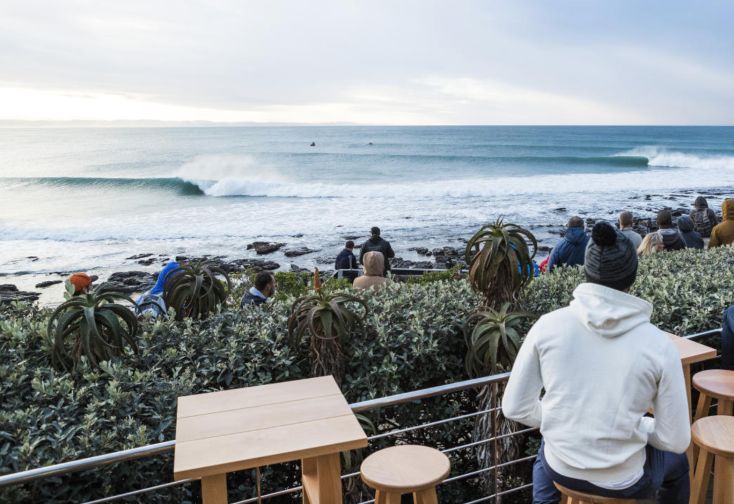
This is the one. Supertubes is the crown jewel of J-Bay and the WSL contest wave: a long, fast, mechanically perfect right that reels and barrels down the reef, with the Carparks section the ultimate prize when it all connects. It is also one of the most crowded and competitive lineups on earth, with a strong local pecking order, shallow reef and real speed, so it demands genuine ability and respect. Earn your place at the friendlier sections first, then, when you are ready, tuck into a Supers barrel and understand why people cross the world for it.
Impossibles
The section below Supertubes, Impossibles, is exactly what the name suggests: a blazing-fast, very shallow barrel that swerves close to the rocks and that very few surfers can actually make. It is expert-only territory, where broken boards and worse are common, so it is usually less crowded simply because so few will take it on. One to watch and admire unless you are genuinely at the top of your game.
The Point
At the southern end, the Point is where J-Bay surfing began back in the 1960s, and it is the most forgiving part of the wave: a longer, mellower right with workable walls that is ideal for improvers and longboarders looking to link turns without the intensity of Supertubes. It gets busy with learners and loggers, but the vibe is friendly. This, along with the sandy Main Beach in town, is where I’d send anyone still finding their feet.
When to surf Jeffreys Bay
Shoulder
Summer (smaller, warmer, best for beginners)
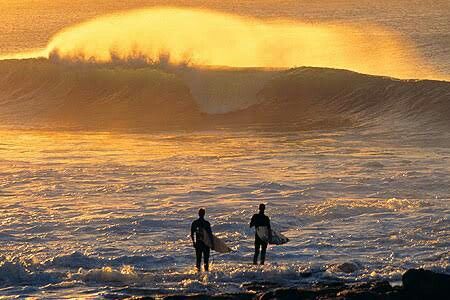
J-Bay is a winter wave. From roughly May to September, cold fronts in the Southern Ocean send clean southwest groundswell into the point, and the westerly winds blow offshore to groom it to perfection. June and July are the peak, when the biggest, most consistent barrels arrive and the WSL contest window sits, so if you are chasing Supertubes at its best, this is the time. Bring a good wetsuit, because the water is at its coldest then.
Summer, November to February, brings smaller, warmer and more manageable waves, which paradoxically makes it the better season for beginners on the Point and Main Beach, and the sunniest, busiest time in town. There is nearly always some wave at J-Bay, since the point is remarkably consistent, but the world-class days belong to winter. Whenever you come, an early session on an incoming tide with an offshore wind is the one to chase.
Surf schools and where to stay in Jeffreys Bay
J-Bay is a proper surf town, and where you stay matters: base yourself on the beachfront near Supertubes so you can check the point from your deck and walk to the water, which beats staying out toward Gqeberha and commuting. There are surf schools and board rentals for learners, who should start at the Point or Main Beach, and plenty of guesthouses, hostels and surf-camp options built around the wave. Learn on the sand, work up through Kitchen Windows and the Point, and treat Supertubes as the goal. For a wider trip, see our guide to surfing in South Africa, easily combined with the Garden Route and safari.
Compare surf camps in Jeffreys Bay on BookSurfCamps
What to pack for Jeffreys Bay
Cool water, shallow reef and long paddles are what to plan for. My J-Bay checklist:
- A wetsuit: a 3/2 in the warmer months and a 4/3 with booties for cold winter sessions on the reef
- The right board: a fast, drivey shortboard or step-up for the point, or a longboard for the Point and Main Beach; check your board volume
- A surf watch for the tides and a strong leash for the powerful, shallow sections
- Reef-safe SPF and a surf hat, and if you are learning, see our best beginner surfboards
Getting to Jeffreys Bay
Jeffreys Bay is about an hour by road from Port Elizabeth, now Gqeberha, whose airport (PLZ) has domestic connections; for long-haul, fly into Cape Town (CPT) and drive the Garden Route east. A hire car is well worth it, since the sections of the point are spread along the coast and you’ll want to check conditions and reach the town’s beaches. J-Bay is the natural highlight of a Garden Route road trip that can also take in safari and wine country. If you’re planning a wider trip, pair this with surfing in South Africa.
Frequently asked questions
Is Jeffreys Bay good for beginner surfers?
The famous point is not, but the town has beginner options. Learn on the sandy Main Beach or the gentler, longer wall at the Point, and step up to Kitchen Windows as you improve. Save Supertubes, Boneyards and Impossibles for when you are a confident, experienced surfer who can handle a fast, shallow reef.
When is the best time to surf Jeffreys Bay?
Winter, roughly May to September, when Southern Ocean fronts send clean southwest groundswell and offshore westerly winds groom the point. June and July are the peak, and the WSL contest window. Summer, November to February, is smaller and warmer and better suited to beginners.
What is the best section at Jeffreys Bay?
Supertubes, the world-class right that barrels down the reef and hosts the WSL contest, is the standout for advanced surfers. Boneyards feeds into it, Impossibles is the expert-only shallow section below, and the Point is the long, forgiving wall best for improvers and longboarders.
Do I need a wetsuit to surf Jeffreys Bay?
Yes. The Indian Ocean here is cool, around 14 to 21 degrees Celsius, so you’ll want a 3/2 in the warmer months and a 4/3 with booties for cold winter sessions on the reef. This is not tropical, boardshort surfing.
How crowded and localized is surfing at Jeffreys Bay?
Very, at Supertubes, which is one of the most crowded and competitive lineups in the world, with an established local pecking order. Respect it, wait your turn and don’t drop in. The quieter sections, like Albatross, Kitchen Windows and the Point, have a more relaxed feel.
Can you surf Jeffreys Bay year-round?
Yes, the point is remarkably consistent and rarely completely flat. Summer is smaller and warmer, best for beginners on the Point and Main Beach, while winter delivers the world-class southwest groundswells that make Supertubes the wave it is famous for.
Jeffreys Bay is a pilgrimage: the finest right point on earth, a cold, fast, perfect wall that has to be earned. Learn on the Point and Main Beach, work through Kitchen Windows, respect the reef and the locals, and time a winter swell for the ride of your life at Supertubes. See you in the lineup.