Fuerteventura is Europe’s answer to a warm-water winter surf trip, a two-hour flight from much of the continent yet a world away in climate. This wind-swept, desert island in the Canaries is the most consistent of the archipelago, fed by winter North Atlantic groundswell and near-constant trade-wind swell off Africa, so there is nearly always something to ride. The far north hides a string of serious volcanic reefs along the famous North Track for the experienced, while sheltered beaches around Corralejo and El Cotillo make it one of Europe’s best places to learn. This is a sunny stop on our guide to surfing in Spain. Here’s every break, when to go, and how to set up your trip.
Quick surf guide to Fuerteventura
- Best season: October to March for NW groundswell and the reefs; summer for the beginner beaches
- Best for beginners: El Cotillo, Grandes Playas, La Pared
- Best for advanced: El Hierro (The Bubble), Bristol, Generosa
- Wave type: shallow volcanic reefs plus sheltered sandy beach breaks
- Water temp: 18 to 23°C, a 3/2 or springsuit, boardshorts on the warmest days
- Crowds: busy at Corralejo and El Cotillo, quieter on the reefs and the west
- Getting there: Fuerteventura (FUE), then a car for the North Track
- Budget: €50 to €90 a day
Where to surf in Fuerteventura
Think of the island in three parts: the sheltered beginner beaches, the exposed North Track reefs for the experienced, and the quieter west coast. Tap a marker to preview a break, then click its name to jump to my full rundown below.
The beginner beaches
The sheltered sandy beaches of the north and west are where the schools teach and where I’d send anyone learning.
El Cotillo
On the northwest tip, El Cotillo and its Piedra Playa are the island’s classic learn-to-surf beaches: sandy A-frame peaks that are gentle and forgiving at three to five foot, with a huge surf-school scene and a relaxed town behind. It closes out and gets serious on the heavier winter swells, so keep an eye on the size, but on a mellow day it is as friendly as the Canaries get. For the full rundown, see our guide to surfing in El Cotillo.
Grandes Playas (Corralejo)
The long, dune-backed beaches south of Corralejo, including Playa del Moro, catch the trade-wind swell and reform it into gentle, sandy whitewater that is perfect for first-timers. It is a favorite of the surf schools, easy to reach and a lovely place to spend a warm morning learning. Get in early before the afternoon trade winds pick up and chop it out.
La Pared
Over on the west coast, La Pared is the go-to when you want a reliable, all-levels sand break away from the North Track crowds. Its southwest orientation picks up swell the north misses, and there is room to spread out on the sand. It is a good learner and improver wave, though it can get powerful and rippy on bigger days, so mind the conditions and surf with others.
The North Track reefs
Along the dirt road between Corralejo and El Cotillo sit a run of shallow volcanic reefs, some of the best and heaviest waves in the Canaries, strictly for the experienced.
Generosa
One of the more consistent North Track reefs, Generosa is a quality left that peels over lava with no beach to bail to, so you need to be comfortable in the water and mind the rocks in the lineup. It is a proper advanced wave, and one of the better performers when a clean north swell arrives. Booties are essential, as they are on every reef here.
Bristol
Bristol, also known as Spew Pits, is a fast, hollow reef that barrels over a shallow slab on the take-off, one for the weathered local and the very confident visitor only. When it is firing it draws a crowd of good surfers, and mistakes are punished by the lava below. Watch it, judge it honestly, and paddle out only if you know you can make the drop.
El Hierro (The Bubble)
The most famous wave on the North Track, El Hierro, better known as The Bubble, is a gliding, barreling A-frame that peels both ways over a very shallow reef in winter. It is a spectacular, photogenic and genuinely dangerous wave, expert-only territory when it is working. For most of us it is a wave to watch from the rocks with a camera, one of the great sights of Canarian surf.
When to surf in Fuerteventura
Shoulder
Summer (smaller, warmest, best for beginners)
Fuerteventura is a genuine year-round island, but it is at its best from October to March. In these months, North Atlantic depressions send powerful NW groundswell into the north-facing reefs, and with the trade winds easing you get the cleanest, biggest days on the North Track. December especially is often the most reliable window for the reefs, so this is the time to come if you’re chasing quality waves over the lava.
Summer, roughly May to August, is smaller and dominated by the trade-wind swell, which makes the sheltered beach breaks fun and friendly and the water at its warmest, ideal for beginners and improvers. The trade-off is those persistent winds, so dawn is your friend. Spring and autumn sit in between as reliable shoulders. Whatever the season, an early start beats the wind here.
Surf camps, schools and where to stay in Fuerteventura
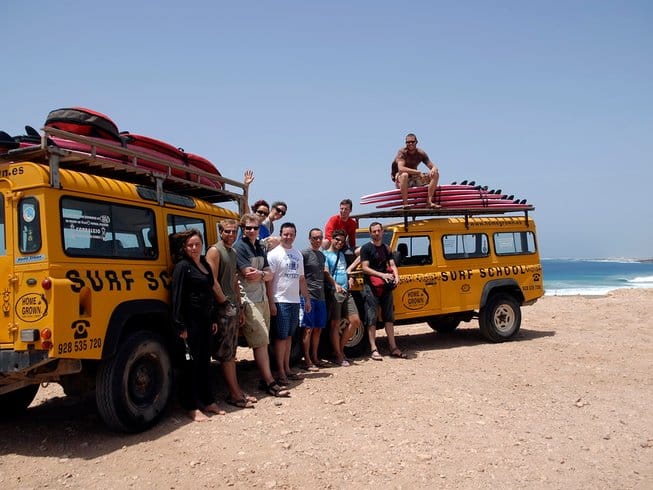
Fuerteventura has one of the deepest surf-camp scenes in Europe, most of it based in the north around Corralejo, El Cotillo and the inland village of Lajares. El Cotillo is my pick for an all-round surf base, with beach-break access, schools and a laid-back feel; Corralejo is livelier with more nightlife and budget options; and Lajares sits perfectly between the two coasts for chasing the North Track by car. Learn on the sheltered beaches, rent a board, and let a guide show you the reefs once you’re ready. A car is essential to reach the North Track and the west coast.
Compare surf camps in Fuerteventura on BookSurfCamps
What to pack for Fuerteventura
Warm-ish water, shallow lava reef and relentless wind are what to plan for. My Fuerteventura checklist:
- A wetsuit: a 3/2 or a springsuit covers most of the year, with boardshorts possible on the warmest late-summer days
- Reef booties for the volcanic reef and urchins on the North Track, plus a small first-aid kit
- Reef-safe SPF and a surf hat for the strong Canary sun, and the right board; check your board volume
- A surf watch for the tides, a spare leash, and a rental car with a rack for the reefs
Getting to Fuerteventura
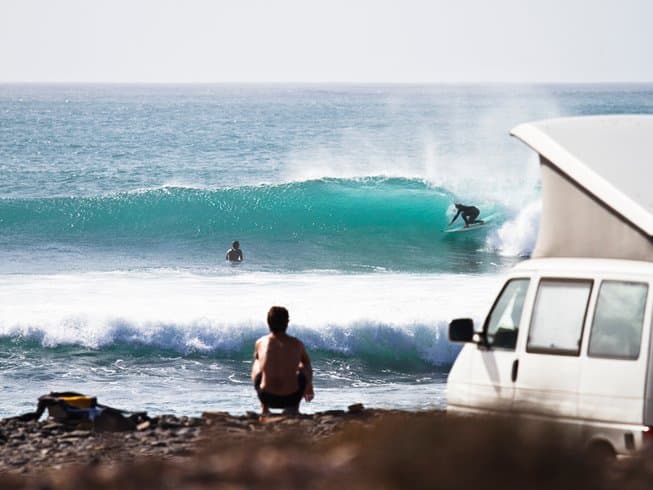
Fuerteventura has its own airport (FUE) on the east coast, with cheap, short flights from across the UK and Europe, about half an hour’s drive from the northern surf towns. A hire car is essential if you want to make the most of the island: the North Track reefs are reached by a dirt road, and the west coast spots like La Pared need wheels too. Ask for a roof rack for your boards. You can also arrive by ferry from Lanzarote. If you’re planning a wider trip, pair this with surfing in Spain, whose Canary Islands offer year-round warm-water waves.
Frequently asked questions
Is Fuerteventura good for beginner surfers?
Yes, it is one of the best places to learn in Europe. El Cotillo and the sheltered Corralejo beaches offer gentle, sandy waves and a huge surf-school scene, and La Pared on the west coast is a good all-levels option. Just leave the shallow North Track reefs to experienced surfers.
When is the best time to surf in Fuerteventura?
October to March is prime, when North Atlantic groundswell lights up the north-facing reefs and the trade winds ease, with December often the most reliable. Summer, May to August, is smaller and windier but warm and friendly, making it the best time for beginners on the beaches.
What is the best surf spot in Fuerteventura?
For experts, El Hierro, the Bubble, is the island’s most famous barrel, with Bristol and Generosa close behind on the North Track. For learners and improvers, El Cotillo is the standout beach break, and La Pared is the pick on the west coast.
Do I need a wetsuit to surf in Fuerteventura?
Mostly yes. The water runs about 18 to 23 degrees Celsius, so a 3/2 or a springsuit covers most of the year, with boardshorts possible on the warmest late-summer days. Reef booties are the key extra here, since almost every reef breaks over sharp volcanic rock.
How crowded is surfing in Fuerteventura?
Corralejo and El Cotillo get busy, especially in the high season, and the marquee reefs draw a crowd when they fire. That said, the island is big and exposed, so the North Track spread out and the west coast, like La Pared, stay much quieter, especially midweek.
Can you surf in Fuerteventura year-round?
Yes. Warm water and a steady mix of trade-wind and groundswell make Fuerteventura a genuine twelve-month surf island. Autumn and winter bring the biggest, cleanest reef days, while summer offers smaller, friendly beach-break waves ideal for learning.
Fuerteventura is the easy warm-water escape when the rest of Europe is cold: gentle beaches to learn on, world-class lava reefs to grow into, sunshine and cheap flights all year. Bring a springsuit and booties, come in winter for the reefs or summer to learn, respect the shallow rock, and enjoy one of Europe’s most reliable surf islands. See you in the lineup.