San Sebastian, or Donostia, is the surf trip you can sell to non-surfers. This stunning Basque city holds the world’s densest concentration of pintxos bars, three beautiful beaches and, right in the middle of it all, a genuine surf break at Zurriola, a five-minute walk from the tapas. I’ll be honest about the wave: the city beaches face north, so they need a wrap-around swell and can go flat in summer, which makes this more a city-and-surf destination than a pure wave-hunting mission. But when Zurriola is on and the pintxos are flowing, few places are more fun. This is a stylish stop on our guide to surfing in the Basque Country. Here’s every break, when to go, and how to set up your trip.
Quick surf guide to San Sebastian
- Best season: autumn (September to November) for NW swell; often flat in summer
- Best for beginners: Zurriola in summer, La Concha as a sheltered fallback
- Best for intermediates: Zurriola on a winter swell, Ondarreta
- Wave type: north-facing city beach breaks, plus a sheltered bay and a left point
- Water temp: 12 to 21°C, a 3/2 most of the year and a 4/3 in winter
- Crowds: Zurriola is busy and international; company year-round
- Getting there: San Sebastian (EAS), Biarritz (BIQ) 45 min, or Bilbao (BIO) 1 hour
- Budget: €60 to €110 a day
Where to surf in San Sebastian
The city has three beaches, but really only one reliable surf break, backed up by a sheltered bay and a left point that need the right conditions. Tap a marker to preview a break, then click its name to jump to my full rundown below.
Zurriola
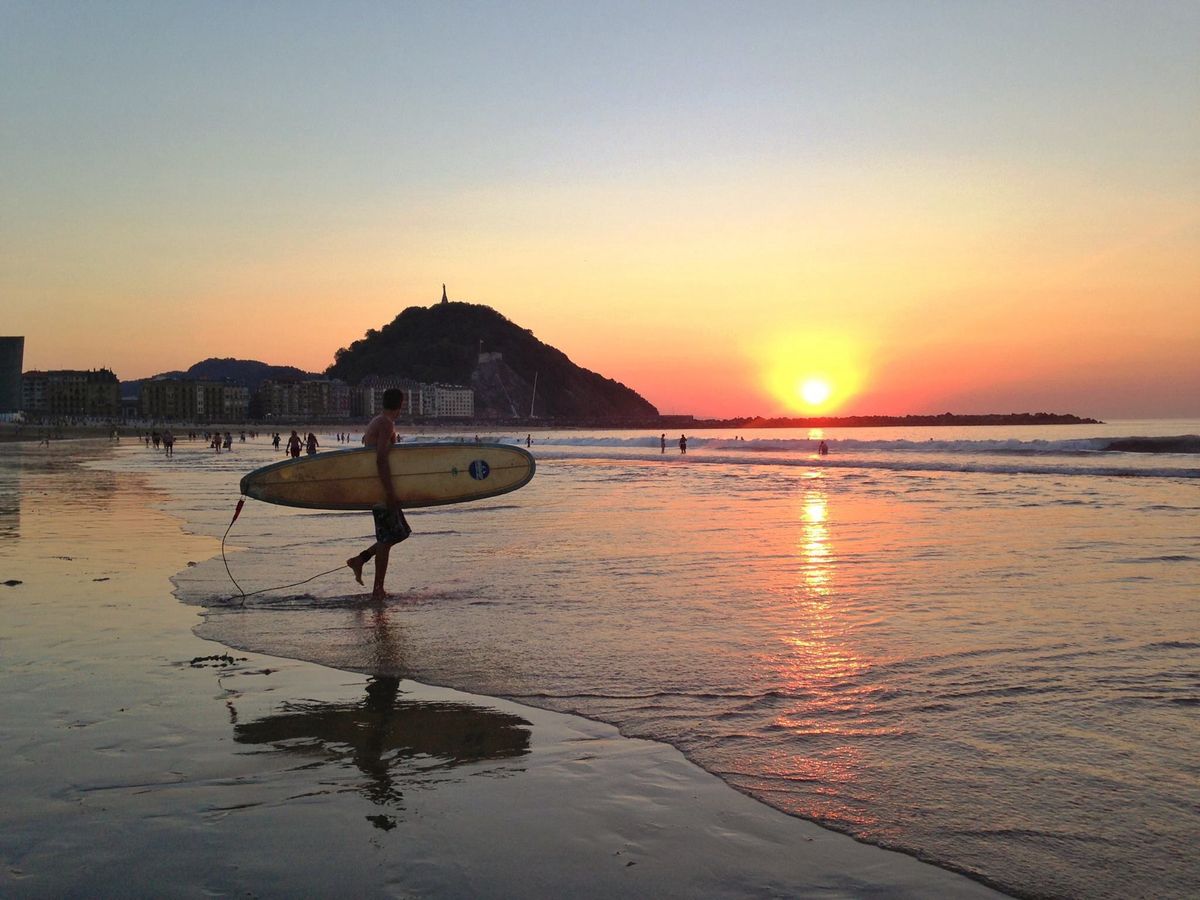
Zurriola, in the buzzy Gros district, is the city’s surf beach and really the only reliable wave in town: a sandy beach break with A-frame peaks, quick lefts and a longer right off the eastern sandbank. It is gentle and beginner-friendly on the smaller summer days, and heavier and more of an intermediate wave when a winter swell pushes in. It is the most-surfed and most international spot in the Basque Country, so expect company, but there is no better feeling than a session followed by a pintxos crawl five minutes away.
La Concha
La Concha is the postcard bay below the old town, one of the most beautiful city beaches in Europe, but it is a swimming beach far more than a surf spot. Santa Clara island blocks most of the swell, so it is usually flat, and only wakes up on a rare big winter NW pushing in at the right angle. When it does, it is a gentle, sheltered wave, which makes it a useful beginner refuge on the days Zurriola is too big. Come for the scenery, and take a wave here as a bonus.
Ondarreta
At the western end of La Concha, Ondarreta hides a shapely left point that only wakes up when a bigger swell wraps far enough into the bay. When it does, it is a quality wave for intermediates and up, and because it works so rarely it draws a protective local crew, so turn up humble and take your turn. A nice one to know about for the days a solid swell fills the bay.
When to surf in San Sebastian
Shoulder and summer (small, often flat)
Winter (big and powerful)
Autumn, September to November, is the prime window: Atlantic NW groundswells kick in, Zurriola is at its most consistent, and the lines are cleaner before the winter storms, with a good balance of quality and crowds. If you want a proper surf-and-city trip, this is the time to come. Winter, December to March, is the most consistent and heaviest season, when Zurriola gets bigger and La Concha becomes a sheltered beginner option, though the water is cold.
Summer, June to August, is the honest weak spot: the city beaches face north, so they often go flat, with only around one day in five offering a rideable wave, and northeast winds through France frequently kill it. The upside is the smallest, warmest, most beginner-friendly waves when it does work, and a glorious city to enjoy while you wait. If waves are your priority, base yourself in nearby Zarautz instead, which is far more consistent.
Surf schools and where to stay in San Sebastian
San Sebastian has a good surf-school scene based on Zurriola, and it makes an easy, sociable place to take a lesson, with several camps combining surfing with Spanish classes. Stay in the Gros district, right behind Zurriola, to be steps from the peak and a short walk over the river to the old town’s pintxos bars, which is the whole appeal of the place. That said, if you have come mainly for waves rather than the city, base yourself twenty minutes west in the more consistent surf town of Zarautz. For a wider trip, see our guide to surfing in the Basque Country.
Compare surf camps in San Sebastian on BookSurfCamps
What to pack for San Sebastian
Cool water and an inconsistent, city-beach wave are what to plan for. My San Sebastian checklist:
- A wetsuit: a 3/2 for most of the year and a 4/3 with boots, gloves and a hood in the cold of winter
- A board with float for often-small, weak waves: a longboard, mid-length or groveler works well; see our best beginner surfboards and check your board volume
- A surf watch for the tides and a spare leash
- A changing robe for cool days, and an appetite: the pintxos here are the best in Spain
Getting to San Sebastian
San Sebastian has its own small airport (EAS) at Hondarribia, about twenty to thirty minutes from the center, though with limited routes; nearby Biarritz (BIQ) in France, around forty-five minutes away, and Bilbao (BIO), about an hour, offer far more connections. It is also well served by high-speed and regional trains. Best of all, the city is compact and walkable, so you don’t need a car for the city breaks, just stroll or bus to Zurriola. A car only helps if you want to chase the more consistent waves at Zarautz and the points to the west. If you’re planning a wider trip, pair this with surfing in the Basque Country.
Frequently asked questions
Is San Sebastian good for beginner surfers?
Yes, when there are waves. Zurriola is a sandy, beginner-friendly beach break, especially on the smaller summer days, and it has a good surf-school scene, with La Concha as a sheltered fallback when it is big. The catch is consistency: the city beaches face north and often go flat, particularly in summer.
When is the best time to surf in San Sebastian?
Autumn, September to November, is the prime window, with the most consistent NW swell and the cleanest conditions. Winter is bigger and heavier but cold, and summer is often flat, though it offers the smallest, warmest waves for beginners when it does work.
What is the best surf spot in San Sebastian?
Zurriola, in the Gros district, is comfortably the best and most reliable wave, a sandy city beach break for all levels depending on the size. La Concha only breaks on a rare big swell, and Ondarreta’s left point needs a solid swell to wrap into the bay.
Do I need a wetsuit to surf in San Sebastian?
Yes. The water runs roughly 12 to 21 degrees Celsius, so a 3/2 covers most of the year and a 4/3 with boots, gloves and a hood is needed in winter. It is cold-water surfing, especially outside the summer months.
Is San Sebastian consistent for surfing?
Not especially. The city beaches face north, so they need a wrap-around NW swell and are surfable maybe sixty to eighty percent of winter days but only around twenty percent of summer days. For reliable waves, the nearby town of Zarautz is a better bet; treat San Sebastian as a city-plus-surf destination.
Can you surf in San Sebastian year-round?
You can surf Zurriola in any season when a swell arrives, but it is far more consistent from autumn to spring than in summer, when the north-facing beaches frequently go flat. Plan a surf-focused trip for autumn, and treat summer as a bonus around the city.
San Sebastian is proof that the best surf trip is not always about the best wave: come for one of the world’s great cities, surf Zurriola when it turns on, and refuel on the finest pintxos in Spain. Keep your expectations honest, aim for autumn, and if waves are the priority, keep Zarautz up your sleeve. See you in the lineup.