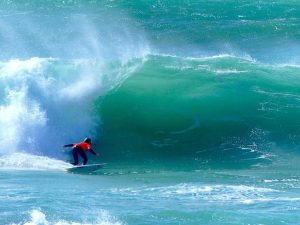
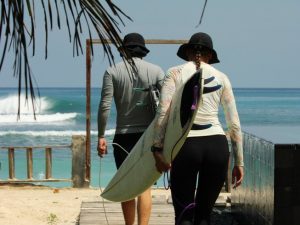
Krui is what a lot of surfers imagine Indonesia used to be: empty lineups, jungle-backed beaches and quality waves with barely a soul out. On the remote southwest coast of Sumatra, this frontier region faces straight into the Indian Ocean and packs an unusual range into one stretch of coast, from the long, hollow left point of Ujung Bocur to the heavy barrel of Way Jambu, the Sumatran Pipeline, and the forgiving beach break at Mandiri where beginners can catch their first waves over sand. It is warm, cheap and gloriously uncrowded. This is a proper adventure stop on our guide to surfing in Indonesia. Here’s every break, when to go, and how to reach it.
Quick surf guide to Krui
- Best season: dry season (May to October) for SW Indian Ocean groundswell; peaks June to August
- Best for beginners: Mandiri Beach
- Best for advanced: Way Jambu, Jimmy’s, Ujung Bocur on size
- Wave type: long left points, a heavy pipeline, and a beginner beach break, over reef and sand
- Water temp: 26 to 30°C, boardshorts and reef booties, no wetsuit
- Crowds: very low, one of Indonesia’s least crowded quality zones
- Getting there: fly to Bandar Lampung, then a long drive, or a small flight to Krui
- Budget: $30 to $70 a day, cheap losmen and homestays
Where to surf in Krui
The zone strings out along a long stretch of coast, from the marquee left at Ujung Bocur and the beginner beach at Mandiri to a run of reefs north and south. Tap a marker to preview a break, then click its name to jump to my full rundown below.
Ujung Bocur
Ujung Bocur, at Tanjung Setia, is the star of the region: a long left-hand reef point that reels for a couple of hundred meters with a hollow top section and speedy walls, often called a mini G-Land. It is the most consistent and most-surfed wave here, which by Krui standards still means a friendly, uncrowded lineup, and its forgiving drops make it accessible to confident intermediates on the smaller days. Ride the fatter outside wall to stay off the shallow inside reef, and wear booties on the lower tides. On its day, one of the great lefts in Sumatra.
Mandiri Beach
Mandiri is the sleeper of the zone and, crucially, its beginner wave: a clean sand-bottom beach break that tapers into makeable lefts and rights and, unusually for Sumatra, offers your first barrels over forgiving sand rather than sharp reef. It is mellow and safe on the smaller days and steps up to overhead in the dry season for improvers. Most reef-hungry travelers skip it, so it is often deserted, which makes it the perfect place to learn or ease into the trip.
Way Jambu
Way Jambu is the heavy one, the wave they call the Sumatran Pipeline: a thick, mechanical left that barrels over an exposed reef and demands total commitment. Many of its barrels shut down onto dry reef, so wave selection is everything, and getting it wrong puts you straight onto the coral. It is expert-only territory, usually empty because so few can ride it, and a wave to watch and respect from the beach unless you genuinely charge heavy reef.
Jimmy’s (Karang Nyimbor)
An hour or so north of Krui town, Jimmy’s, or Karang Nyimbor, is a fast, technical right that barrels over sharp reef with a heavy end section, a rare quality right in a region of lefts. It needs a bigger swell and a higher tide to break properly, or it shuts down, and the reef is unforgiving, so it is firmly for advanced surfers. The upside is you’ll likely have this world-class right almost to yourself.
Honey Smacks
At the northern end of the zone, Honey Smacks is a wedgy, thick left that offers late, sling-shot take-offs into meaty tube sections, a favorite of experienced surfers and bodyboarders. Like everything up this way it breaks over reef, so respect the bottom and pick your waves. A quality, uncrowded left for the confident, and a good one to have on the list when the swell is up.

When to surf in Krui
Shoulder
Wet season (smaller, learner-friendly)
Krui runs on the classic Indian Ocean rhythm. The dry season, roughly May to October, is prime: consistent SW groundswell from the Southern Ocean, the biggest and cleanest surf of the year, and the best barrels at Ujung Bocur, Way Jambu and the reefs up north. June to August is the peak, when the swells are most reliable, and thanks to how empty the region is you can score world-class waves with hardly anyone out.
The wet season, roughly November to March, sees smaller, mellower surf, which suits beginners and improvers looking for gentler waves and their first small barrels, especially at Mandiri. Because the coast faces south and west, something is usually working year-round, but the dry season is when Krui really shines. The water is warm every month, so it is always boardshorts, with reef booties the key extra.
Surf camps and where to stay in Krui
Krui is simple, rustic surf travel: a scatter of losmen, bungalows and small surf camps strung along the coast near Mandiri Beach and the Ujung Bocur point, many of them a short walk from the wave. It is cheap, friendly and low-key, and the camps typically bundle guiding, food and the all-important airport transfers, which take the pain out of the long journey. This is not really a place for a first surf lesson, bar the gentle days at Mandiri, so come able to handle reef and lean on local knowledge for the tides and the boats. For a wider trip, see our guide to surfing in Indonesia.
Compare surf camps in Krui on BookSurfCamps
What to pack for Krui
Warm water, sharp reef and deep remoteness are what to plan for. My Krui checklist:
- Boardshorts and a rashguard, no wetsuit in 26 to 30 degree water, plus reef booties for the sharp, shallow reef
- A first-aid kit for reef cuts and everything you might need, since surf shops are scarce: spare leashes, fins and ding repair
- Reef-safe SPF, a surf hat and strong mosquito protection, and take advice on malaria precautions for the region
- The right boards for reef: a step-up for the bigger days, and check your board volume
Getting to Krui
Reaching Krui is part of the deal. The usual route is an international flight to Jakarta, then a short hop to Bandar Lampung in southern Sumatra, and finally a long five to six hour drive through the jungle to the coast. The faster option is a small Wings Air flight into Krui’s own airstrip, though it can be hard to book online, so check locally. Many surf camps arrange the transfers, which is the simplest way to do it. It is genuinely remote, so bring what you need and factor the travel time in. If you’re planning a wider trip, pair this with surfing in Indonesia.
Frequently asked questions
Is Krui good for beginner surfers?
Yes, unusually for Indonesia. Mandiri Beach is a sand-bottom beach break that is gentle and forgiving on the smaller days, ideal for learning and even for first small barrels over sand rather than reef. The points and reefs like Ujung Bocur, Way Jambu and Jimmy’s are for intermediate and advanced surfers.
When is the best time to surf in Krui?
The dry season, May to October, is prime, when consistent southwest Indian Ocean groundswell delivers the biggest and cleanest surf, peaking June to August. The wet season, November to March, is smaller and mellower and better for beginners and improvers. Something usually works year-round.
What is the best wave in Krui?
Ujung Bocur, a long, hollow left reef point often likened to a mini G-Land, is the standout and the most consistent. Mandiri is the best beach break for learners, while Way Jambu, the Sumatran Pipeline, and the right at Jimmy’s are heavy, expert-only reef waves.
Do I need a wetsuit to surf in Krui?
No. The water is a warm 26 to 30 degrees Celsius year-round, so boardshorts and a rashguard are all you need. The key extra is reef booties, since most of the quality waves break over sharp, shallow reef, along with a good first-aid kit for cuts.
Is surfing in Krui crowded?
No, it is one of the least crowded quality surf zones in Indonesia, which is the main reason to make the journey. Only Ujung Bocur gets moderately busy, and even then it is mellow by Bali standards. The reefs to the north are often near empty.
Can you surf in Krui year-round?
Yes. Because the coast faces south and west, there is usually a rideable wave in any season, but the dry season from May to October, with its clean SW swells, is vastly better than the smaller, mellower wet-season months.
Krui is for surfers chasing the Indonesia of a couple of decades ago: long empty lefts, a heavy pipeline for the brave, a friendly beach break to learn on, and jungle all the way to the sand. Come able to surf a reef, pack booties and patience, go in the dry season, and enjoy one of Sumatra’s last quiet frontiers. See you in the lineup.