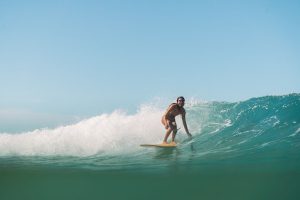
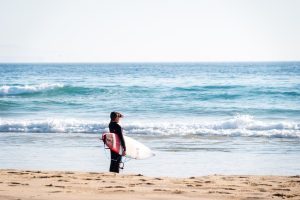
Piha is Auckland’s wild side. Just 45 minutes west of the city, but a world away, this dramatic black-sand beach sits beneath the brooding hulk of Lion Rock, hemmed in by the rainforest of the Waitakere Ranges and pounded by consistent Tasman Sea swell. It is the most famous surf beach in the country, the birthplace of New Zealand surf culture, and a powerful, shifty, rip-riddled stretch of coast that demands respect. There are punchy peaks for every intermediate and up, patrolled zones for learners in summer, and a run of equally wild beaches just up and down the coast. This is a raw, atmospheric stop on our guide to surfing in New Zealand. Here’s every break, when to go, and how to surf it safely.
Quick surf guide to Piha
- Best season: autumn (March to May) for the cleanest, most consistent surf; swell year-round, biggest in winter
- Best for beginners: the patrolled flags in summer, and gentler Bethells on a small day
- Best for advanced: South Piha, the Bar, Karekare
- Wave type: powerful black-sand beach breaks and a shifting rivermouth bar
- Water temp: 13 to 22°C, a 3/2 in summer, a 4/3 and boots in winter
- Crowds: busy on good days, being Auckland’s home beach
- Getting there: Auckland (AKL), about 45 minutes’ drive west; a car is essential
- Budget: NZ$90 to $280 (about US$55 to $170) a day
Where to surf in Piha
The beach splits north and south around Lion Rock, with a shifting bar at the stream mouth and two more wild beaches a short drive away. Tap a marker to preview a break, then click its name to jump to my full rundown below.
Piha beach
Lion Rock splits the beach in two, with a shifting bar at the stream mouth. All of it is powerful and rip-prone, so read the water before you paddle out.
North Piha
The stretch north of Lion Rock faces slightly northwest, so it catches Tasman swell well and often works when everywhere else is flat, making it the most consistent peak on the beach. It throws punchy lefts and rights over the black sand, with strong rips near the stream mouth and whenever it gets bigger. A solid intermediate wave on its day, and usually the first place to check when you roll into Piha.
South Piha
South of Lion Rock is the most popular zone, with good lefts off Camel Rock and heavy peaks either side of the headland that can double up on the backwash. It is powerful, shifty and rip-prone, and the summer patrolled flags are usually set along here, so it is where beginners are steered under supervision even as experienced surfers hunt the better peaks. Read the currents carefully, because they run hard around the rocks.
The Bar
Where the Piha stream meets the sea, a shifting sandbar can throw hollow, quality lefts when it lines up, the pick of the beach on its day. The catch is the current: a very strong rip runs through the bar and channel, making this a serious hazard zone and a wave for confident surfers only. When the sand is right and the tide is pushing off low, though, it is the best barrel in the area.
The wild beaches nearby
A short drive north or south lie two more dramatic black-sand beaches, one heavier, one gentler, both worth knowing.
Karekare
Five to ten minutes south, Karekare is punchy, hollow and can barrel when it is on, mostly flat through summer and more consistent the rest of the year. It is wild and isolated, and notorious for unpredictable rips that shift without warning and have caused multiple drownings, so it is strictly for experienced, careful surfers. The reward is a powerful wave and, often, an empty lineup beneath cinematic cliffs.
Bethells (Te Henga)
Fifteen to twenty minutes north, Bethells, or Te Henga, is the most forgiving of the group: a long, open black-sand beach with peaky, shallow-breaking waves that form clean lefts and rights, most consistent in autumn. It is the pick when you want something a touch gentler than Piha proper, though it is still exposed with strong rips, and less patrolled, so keep reading the current. A beautiful, moody spot to spread out.
When to surf in Piha
Winter (biggest, coldest)
Summer (smaller, warmest, patrolled)
Piha faces the open Tasman Sea, so it picks up consistent SW swell year-round, which is a big part of its appeal. Autumn, roughly March to May, is the local pick: a reliable mix of clean, consistent surf and lighter winds, with the water still holding summer’s relative warmth. Winter, June to August, brings the biggest, most powerful and most consistent swell, along with the coldest water and stormier conditions, for experienced surfers in thicker rubber.
Summer, December to February, is smaller and can go flat for stretches, but it brings the warmest water, the lifeguard patrols and the flagged learner zones, which makes it the safest window for beginners. Spring builds the swell back up. Whatever the season, the wind is everything on this exposed coast, so aim for a light offshore easterly, usually early, and always factor the tide and the rips into where and when you paddle out.
Surf schools and where to stay at Piha
Piha is a small village rather than a resort strip, with baches (Kiwi holiday homes), a campground and holiday-park cabins, plus a limited, pricey local store, so most surfers either day-trip from Auckland or book a bach well ahead and bring supplies. Surf schools run lessons in the patrolled zones over summer, which is the sensible way for beginners to experience such a powerful beach safely. Because there is no petrol station or ATM in Piha, fuel up and get cash before you leave the city, and use central Auckland or the nearer western suburbs as a comfortable base if you would rather not stay out at the coast. For the wider country, see our guide to surfing in New Zealand.
Compare surf camps in New Zealand on BookSurfCamps
What to pack for Piha
Cool water, powerful surf, strong rips and a remote setting are what to plan for. My Piha checklist:
- A wetsuit: a 3/2 in summer, and a 4/3 with 3mm boots for winter, when the water drops toward 13 degrees
- A board with a bit of paddle and drive for punchy beach breaks, plus a reliable leash given the power and current; check your board volume
- Knowledge of how to spot and escape a rip current, the single most important thing to bring to Piha, and a habit of never surfing alone here
- A full tank of fuel, cash and any snacks and water, since Piha has no petrol station or ATM and a limited store
Getting to Piha
Piha is about 40 kilometers west of central Auckland, and fly-in visitors land at Auckland Airport (AKL). From the city it is roughly a 45 minute drive west via Scenic Drive and Piha Road, climbing over the winding, hilly Piha Road through the Waitakere Ranges, and from the airport allow an hour to an hour and a half. A car is essential: there is no train and only very limited, irregular public transport, and no petrol station or ATM in the village, so fill up and get cash first. Karekare and Bethells are further along narrow side roads off the same route. If you’re planning a wider trip, see our guide to surfing in New Zealand.
Frequently asked questions
Is Piha good for beginner surfers?
Only with real care. Piha’s beach breaks are powerful, shifty and heavily rip-affected, so it is not a casual learner spot. Beginners should surf only near the summer lifeguard-patrolled flags, ideally on smaller days or with a surf school, and treat the rips as the main hazard. Bethells is the most forgiving of the local beaches.
When is the best time to surf in Piha?
Autumn, March to May, is often the best mix of clean, consistent swell and lighter winds. Piha works year-round thanks to constant Tasman swell: winter is the biggest and most powerful but coldest, and summer is smaller and warmest, with lifeguard patrols and flagged learner zones.
How dangerous are the rips at Piha?
Very. Piha is one of New Zealand’s most drowning-prone beaches. Rips form near Lion Rock, the stream mouth and the bar, shift constantly, and strengthen with bigger swell and outgoing tide. Learn to spot and escape a rip, surf near the patrolled flags if you are not confident, and never surf alone.
Do I need a wetsuit to surf in Piha?
Yes. The water ranges from about 13 degrees Celsius in winter to 22 in summer. A 3/2 covers the warmer months, and a 4/3 with 3mm boots is right for winter. It is a cool-water beach, so pack rubber to match the season.
What is the best surf spot at Piha?
It depends on the day and your level. North Piha is the most consistent swell-catcher, South Piha holds the heavier peaks by Lion Rock, and the Bar at the rivermouth offers the best hollow lefts when the sand lines up, though with the strongest current. Bethells nearby is the gentler option.
Can you surf Piha year-round?
Yes. Facing the open Tasman Sea, Piha picks up consistent SW swell in every season, so there is nearly always something to ride. Winter is the biggest and coldest, autumn the cleanest and most consistent, and summer the smallest and warmest, with the added safety of lifeguard patrols.
Piha is New Zealand surfing at its rawest: black sand, brooding cliffs, powerful Tasman peaks and the constant pulse of the rips, all 45 minutes from a major city. Come in autumn for the cleanest waves, respect the current above all else, stick to the flags if you are learning, and you’ll understand why this wild beach sits at the heart of Kiwi surf culture. See you in the lineup.