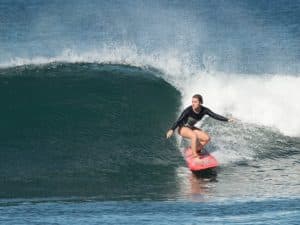
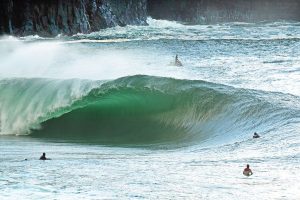
Santa Catalina is Panama’s answer to the remote Costa Rican dream, without the crowds. This former fishing village on the wild Pacific coast of Veraguas has become the country’s surf capital on the strength of one wave: La Punta, a long, consistent right that peels over a rock and reef point and holds up beautifully as it grows. Around it sits a friendly beginner beach, a scatter of quieter reefs, and boat access to the world-class waters of Coiba and Isla Cebaco. It takes a real drive to get here, which is exactly why it stays so uncrowded. This is a genuine off-the-map stop on our guide to surfing in Panama. Here’s every break, when to go, and how to set up your trip.
Quick surf guide to Santa Catalina
- Best season: green season (April to October) for the biggest, most consistent S and SW swells
- Best for beginners: Playa Estero
- Best for advanced: La Punta, Punta Roca
- Wave type: a world-class right-hand rock point plus a sandy beach break and quieter reefs
- Water temp: 26 to 29°C, boardshorts and reef booties, no wetsuit
- Crowds: Panama’s most-surfed wave, but still uncrowded by regional standards
- Getting there: Panama City (PTY), then a long 6 to 7 hour drive
- Budget: $40 to $90 a day
Where to surf in Santa Catalina
The village sits between its two main waves: the sandy beach at Playa Estero for learning, and the rock point of La Punta for everyone else, with a couple of quieter reefs nearby. Tap a marker to preview a break, then click its name to jump to my full rundown below.
La Punta
La Punta is the reason Santa Catalina is on the map: a long, consistent right that reels over a rock and reef point, with a shorter left on the other side. It has a forgiving enough shoulder that careful improvers can pick off waves, but it grows powerful and occasionally hollow as the swell builds, so it earns its intermediate-to-advanced billing. The key local knowledge is the tide: at low water you use the two paddle channels between the reefs, or it becomes, as the locals say, ding central. Mind the rock and you’ll have some of the longest rights of your trip.
Playa Estero
A short walk from the point, Playa Estero is the sandy beach break where the schools teach and where I’d put any beginner. It offers forgiving lefts and rights over sand, with the long, curling rights at the western end the pick for practicing your turns. It is a gentle, low-pressure wave a world away from the rocks of La Punta, and the ideal place to find your feet before you step up to the point.
Punta Brava
Just east of town, Punta Brava is a short, punchy left that breaks over reef and works best in the hour either side of low tide. It rarely draws a crowd, so it is a good place to get some quality lefts to balance out La Punta’s rights, provided you have a bit of reef experience. Sit right on the take-off peak, because too deep puts you on the reef and too wide and you’ll miss it.
Punta Roca
West of town, Punta Roca is a shallow, rocky left that comes to life as the water draws off the reef on the lower tides. It is reached by a thirty-minute walk over shoals and mud or a quick boat hop, which keeps it about as empty as a quality wave gets. Shallow and unforgiving, it is one for advanced surfers who can pick a clean line, but the reward is your own wave in a beautiful, remote setting.
When to surf in Santa Catalina
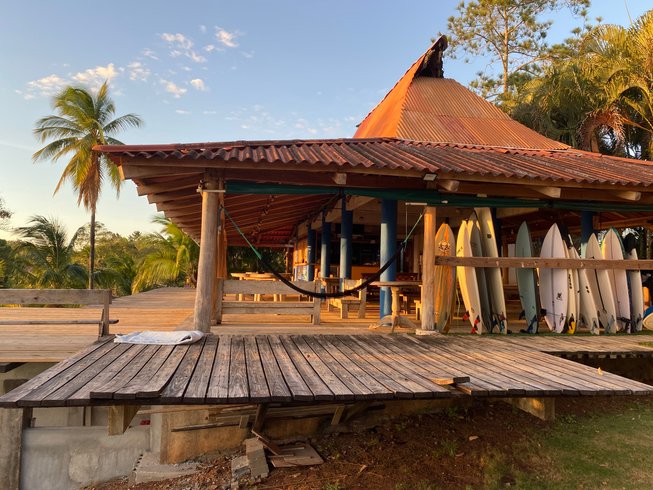
Dry season (smaller, cleaner offshore mornings)
Santa Catalina has waves all year, but it is at its most powerful and consistent in the green season, roughly April to October, when big south and southwest groundswells from the Southern Hemisphere march into the point. La Punta works on the large majority of days in this window, and the peak months of May to September deliver the biggest, hollowest surf. It is the rainy season, so surf the offshore mornings before the afternoon storms roll through.
The dry season, December to March, is smaller and less predictable, fed more by north and northwest pulses, but it brings the cleanest, sunniest offshore mornings and the rights still work. The water stays warm year-round, so it is always a boardshorts trip. Whatever the month, an early start is rewarded here, both for the wind and the light.
Surf camps and where to stay in Santa Catalina
Santa Catalina is small and laid-back, with a cluster of surf camps, yoga lodges and boutique hotels split between the town headland and the Playa Estero beach. Base yourself near Estero if you want to walk to the beginner wave and take lessons, or up on the headland to be close to La Punta for the dawn sessions. Learn on the sand, then step up to the point as you improve, and consider chartering a boat to the empty reefs off Coiba and Cebaco for a real adventure. Board rental and guiding are easy to arrange through the camps.
Compare surf camps in Santa Catalina on BookSurfCamps
What to pack for Santa Catalina
Warm water, sharp rock and deep remoteness are what to plan for. My Santa Catalina checklist:
- Boardshorts and a rashguard, no wetsuit in 26 to 29 degree water, plus reef booties for the rock points
- Spares of everything, because there are no surf shops out here: leashes, fins, ding repair and a first-aid kit
- Reef-safe SPF and a surf hat for the strong tropical sun
- A surf watch for the big tides, which really matter here, and the right board for a reef point; check your board volume
Getting to Santa Catalina
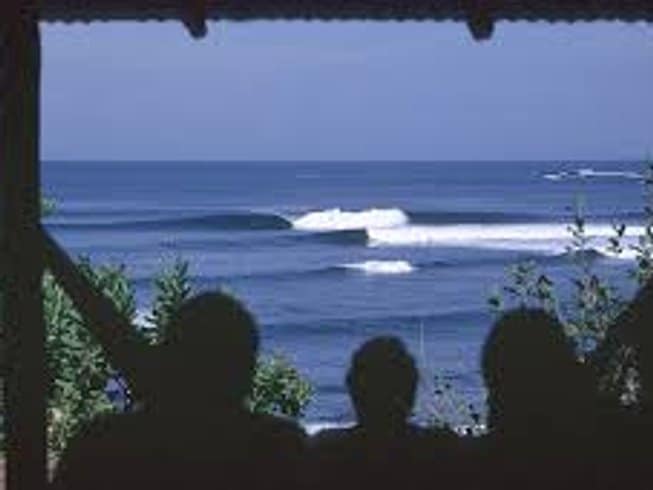
Getting to Santa Catalina
is a commitment. You fly into Panama City (PTY), then it is a long haul by road: roughly three and a half hours to Santiago, an hour on to Sona, and around two more hours to the village, six to seven hours in all. The roads are mostly paved but rough near town, so a car helps you shuttle between the breaks, and a four-by-four is handy in the rainy season; a direct airport transfer is the easy alternative. It is genuinely remote, with limited services, so come prepared. If you’re planning a wider trip, pair this with surfing in Panama.
Frequently asked questions
Is Santa Catalina good for beginner surfers?
Yes, at the right spot. Playa Estero is a forgiving sandy beach break, ideal for learning, with surf schools on hand. La Punta and the reef points at Punta Brava and Punta Roca break over rock and suit intermediate and advanced surfers, so save those until you can confidently ride a green wave.
When is the best time to surf in Santa Catalina?
The green season, April to October, is prime, when big south and southwest groundswells make La Punta fire, peaking May to September. The dry season, December to March, is smaller but brings cleaner, sunnier offshore mornings. There are rideable waves every month.
What is the best surf spot in Santa Catalina?
La Punta, comfortably: a long, consistent, world-class right that peels over the rock and reef point. Playa Estero is the beginner beach, Punta Brava offers quality lefts for the confident, and boat trips reach the empty reefs off Coiba and Isla Cebaco.
Do I need a wetsuit to surf in Santa Catalina?
No. The water is a warm 26 to 29 degrees Celsius year-round, so boardshorts and a rashguard are all you need. The useful extra here is a pair of reef booties, since La Punta and the other points break over sharp rock.
Is surfing in Santa Catalina crowded?
Not by regional standards. La Punta is Panama’s most-surfed wave, so it is the busiest in the area, but it stays mellow compared with the popular spots in Costa Rica, and the reef points nearby are almost always quiet. Peak green season is the busiest window.
Can you surf in Santa Catalina year-round?
Yes. There are rideable waves every month, with the green season from April to October delivering the biggest and most consistent surf and the dry season offering smaller, cleaner conditions. Only the size and power change with the season.
Is Santa Catalina good for beginner surfers?
Yes, at the right spot. Playa Estero is a forgiving sandy beach break, ideal for learning, with surf schools on hand. La Punta and the reef points at Punta Brava and Punta Roca break over rock and suit intermediate and advanced surfers, so save those until you can confidently ride a green wave.
When is the best time to surf in Santa Catalina?
The green season, April to October, is prime, when big south and southwest groundswells make La Punta fire, peaking May to September. The dry season, December to March, is smaller but brings cleaner, sunnier offshore mornings. There are rideable waves every month.
What is the best surf spot in Santa Catalina?
La Punta, comfortably: a long, consistent, world-class right that peels over the rock and reef point. Playa Estero is the beginner beach, Punta Brava offers quality lefts for the confident, and boat trips reach the empty reefs off Coiba and Isla Cebaco.
Do I need a wetsuit to surf in Santa Catalina?
No. The water is a warm 26 to 29 degrees Celsius year-round, so boardshorts and a rashguard are all you need. The useful extra here is a pair of reef booties, since La Punta and the other points break over sharp rock.
Is surfing in Santa Catalina crowded?
Not by regional standards. La Punta is Panama’s most-surfed wave, so it is the busiest in the area, but it stays mellow compared with the popular spots in Costa Rica, and the reef points nearby are almost always quiet. Peak green season is the busiest window.
Can you surf in Santa Catalina year-round?
Yes. There are rideable waves every month, with the green season from April to October delivering the biggest and most consistent surf and the dry season offering smaller, cleaner conditions. Only the size and power change with the season.
Santa Catalina rewards the effort of getting there with one of Central America’s great rights and a genuine end-of-the-road feel: no crowds, warm water, and empty reefs a boat ride away. Learn on the sand at Estero, respect the tides and the rock at La Punta, and take the time to explore the coast. See you in the lineup.