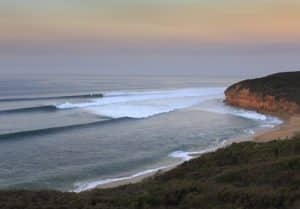
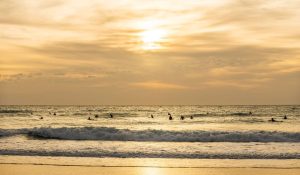
Pavones is a name goofy-footers say with a certain reverence. Tucked into the remote Golfo Dulce in Costa Rica’s far south, a stone’s throw from the Panama border, it is one of the longest left-hand point breaks on the planet, a wave that on the right swell links section after section for the better part of a mile. It is famously fickle, needing a big, long-period south swell to truly connect, and it is a long, committed journey to reach, but when it turns on there are only a handful of waves on earth to compare. This is a pilgrimage stop on our guide to surfing in Costa Rica. Here’s how the point works, when it fires, and how to get there.
Quick surf guide to Pavones
- Best season: green season (May to November) on a big south or southwest groundswell; peaks May to September
- Best for improvers: the inside sections on smaller days
- Best for advanced: the top of the point, Punta Banco on size
- Wave type: a very long left-hand point over rock and cobblestone
- Water temp: 27 to 31°C, boardshorts and a rashguard, no wetsuit
- Crowds: busy at the top on a swell, with a firm local priority system
- Getting there: Golfito by small plane, then a 1.5 hour drive; remote
- Budget: $50 to $120 a day, rustic cabinas
Where to surf at Pavones
Pavones is really one enormous left made of linked sections, plus a quieter point a few kilometers south at Punta Banco. Tap a marker to preview a break, then click its name to jump to my full rundown below.
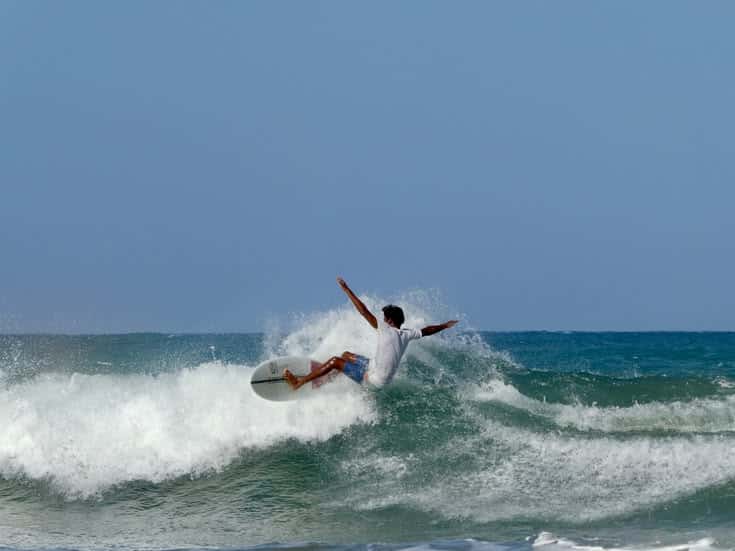
Pavones Point (the top)
The top of the point, out by the Rio Claro rivermouth, is where the magic starts: a bowly, powerful take-off that, on a big long-period south swell, links three or four carve-able sections and just keeps going. This is the most competitive part of the wave, where the local crew sits and a firm priority system applies, so earn your place, wait your turn and do not burn the regulars. When it all connects, a single ride can last minutes and cover hundreds of meters, which is exactly why people travel so far to be here.
The inside and Backwash
As the wave runs down the point it mellows into the inside, a slower, more forgiving stretch that steepens again near the sand and is a great place for a confident intermediate to grab a long, less-crowded left. Where the swell rebounds off the beach you get the Backwash, a punchy little wall that comes alive on solid swells. Sitting down here, away from the pecking order at the top, is often the smarter play, and the ride is still absurdly long.
Punta Banco
About four kilometers south, Punta Banco is the local escape valve: a point and reef with lefts and rights over rock and cobble that works on the same south swells as Pavones. When the main point is pumping and packed, this is where I would head for a bit of space, and there are gentler cobblestone sections nearby that suit improvers. Quieter, scenic and a good backup, it rounds out the zone nicely.
When to surf Pavones
Dry season (smaller, mellow inside days)
Wettest (October to November)
Pavones is entirely dependent on Southern Hemisphere swell, so the green season, roughly May to November, is the time to come. This is when big, long-period south and southwest groundswells fired by distant storms wrap into the Golfo Dulce and connect the full length of the point, with May to September the most reliable window. The wave genuinely needs size and period to link up, so serious surfers watch the charts and travel on the swell rather than the calendar.
The dry season, December to April, is smaller and more mellow, when the point breaks into shorter, disconnected sections and the inside becomes a fun, longboard-friendly wave rather than the mile-long screamer of legend. October and November are the wettest months, when the roads and rivers make the remote access harder. Whenever you come, the water is warm and the mornings, with an offshore easterly, are the ones to chase.
Surf lodges and where to stay at Pavones
Pavones is a small, rustic village that lives and breathes the wave, with a scatter of cabinas and simple lodges, several of them just a stone’s throw from the point so you can watch it over your morning coffee. It is cheap, friendly and gloriously low-key, with more upscale jungle lodges up the hill toward Punta Banco. This is not a learn-to-surf destination, so come already able to ride a long point and handle a crowd with a priority system, and be self-sufficient given the remoteness. For where to base and book across the country, see our guide to the best surf camps in Costa Rica.
Compare surf camps in Costa Rica on BookSurfCamps
What to pack for Pavones
Warm water, a long paddle and deep remoteness are what to plan for. My Pavones checklist:
- Boardshorts and a rashguard, no wetsuit needed in 27 to 31 degree water
- A board that paddles and holds a long wall, plus spare leashes and fins, since there are no surf shops out here; check your board volume
- Reef-safe SPF, a surf hat and strong insect repellent for the jungle
- A surf watch for the tides and some patience: the smart move is to walk the beach back to the top rather than paddle
Getting to Pavones
Pavones is one of the more remote surf spots in Costa Rica. The quickest way in is a small-plane flight from San Jose (SJO) to Golfito, then a drive and, at times, a short boat or ferry of around an hour and a half to reach the village. The alternative is a long seven to eight hour drive from San Jose, ideally in a four-by-four, especially in the green-season rains. Tides and swell timing really matter here, so build in flexibility. The remote right points of Matapalo sit just across the Golfo Dulce for the adventurous, and for a wider trip, pair this with surfing in Costa Rica.
Frequently asked questions
Is Pavones good for beginner surfers?
No. Pavones is a long, fast, powerful left point over rock, with a crowded top section and a firm local priority system, so it suits intermediate and advanced surfers. Beginners should learn elsewhere and only come once they can ride a long point wave confidently; the mellow inside on a small day is the friendliest part.
When is the best time to surf Pavones?
The green season, May to November, on a big, long-period south or southwest groundswell, which is what the wave needs to link its full length, with May to September the most reliable window. The dry season is smaller and breaks into shorter sections, better for mellow inside days than the famous mile-long ride.
How long is the wave at Pavones?
On the best days, a ride at Pavones can last well over a minute and cover most of a mile as the sections link up, making it one of the longest left-hand point breaks on earth. It only connects like that on a big, long-period south swell, and most days it breaks into shorter, disconnected sections.
Do I need a wetsuit to surf Pavones?
No. The water is a warm 27 to 31 degrees Celsius year-round, so boardshorts and a rashguard are all you need. Bring reef-safe sunscreen and a surf hat for the strong sun, and everything else you might need, since the village is remote with no surf shops.
Is surfing Pavones crowded?
The top of the point gets busy on a good swell and has an established local priority system, so you need to be patient and respect the pecking order. The trick is to sit down the line on the inside, or head to Punta Banco a few kilometers south, both of which are much quieter.
Can you surf Pavones year-round?
You can surf it year-round, but it is fickle and very much a green-season wave. It needs a serious south swell to work well, which arrives mainly from May to November; the dry season is smaller and mellower, offering fun inside sections rather than the legendary long ride.
Pavones is a wave worth planning a whole trip around, but only if you go when it counts: a big south swell, a green-season week, and the patience to earn your place at the top of one of the longest lefts on the planet. Come able to surf a point, respect the locals and the priority, sit down the line for the long ones, and enjoy the ride of your life. See you in the lineup.