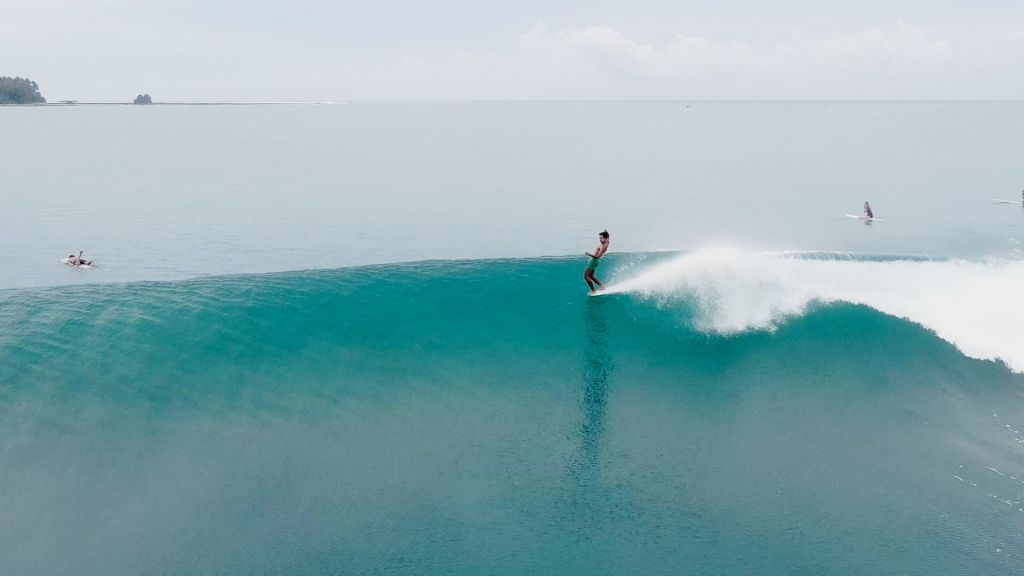
Nias is one of those names that makes surfers go quiet for a second. This jungle-covered island off the west coast of Sumatra is home to The Point at Lagundri Bay, a right-hand reef so consistent and so perfectly shaped it is on any serious surfer’s list of the best waves on earth. It catches the same big Indian Ocean groundswells as the Mentawais next door but sees fewer crowds, and just offshore the remote Hinako Islands hide a world-class long left at Asu and a heavy big-wave right at Bawa. It takes real effort to get here, and the reef is sharp and shallow, but the reward is a wave you will remember forever. This is a bucket-list stop on our guide to surfing in Indonesia. Here’s what breaks, when to go, and how to reach it.
Quick surf guide to Nias
- Best season: dry season (May to October) for SW Indian Ocean groundswell; peaks June to August
- Best for improvers: Kiddieland and the smaller days at The Point
- Best for advanced: The Point, Indicators, Bawa
- Wave type: world-class right-hand reef points plus a long left in the Hinakos
- Water temp: 28 to 30°C, boardshorts and reef booties, no wetsuit
- Crowds: The Point is the island’s busy wave, the Hinakos near empty
- Getting there: fly to Gunungsitoli via Medan, then road to Lagundri
- Budget: $30 to $70 a day, cheap losmen and homestays
Where to surf in Nias
The famous waves cluster at Lagundri Bay on the south of the island, with the Hinako Islands a boat ride offshore. Tap a marker to preview a break, then click its name to jump to my full rundown below.
Lagundri Bay
The horseshoe bay of Lagundri, in the Sorake area on the south coast, holds the wave Nias is famous for, plus a couple of neighbors on the same reef.
The Point
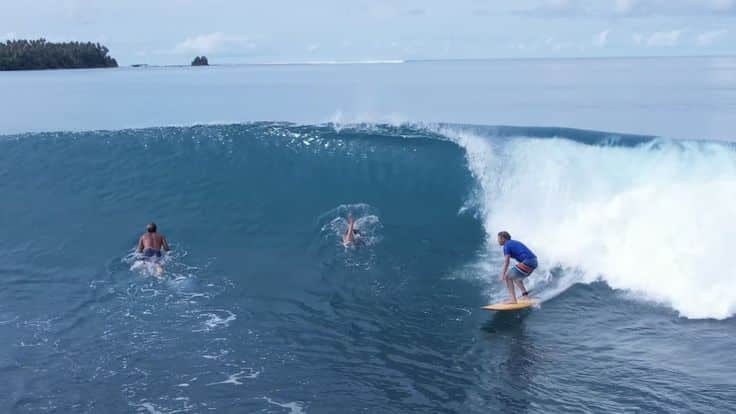
The Point is the star: a flawless right-hand reef that peels off the headland at Lagundri with a steep, thick take-off into an almond-shaped barrel and a workable wall. What makes it special, beyond the shape, is how forgiving the paddle-out is, an easy keyhole channel rather than a technical mission, which is why it is often called the perfect introduction to a world-class reef right. It is genuinely consistent through the dry season, holds size beautifully, and while it draws the island’s biggest crowd, that is still modest by Indo standards. Respect the local pecking order and the shallow reef, and it is the ride of the trip.
Indicators
Just up the reef from The Point, Indicators is the short, steep, hollow section that, as the name suggests, shows you what the swell is doing. It is a fast, shallow right for advanced surfers only, where getting the timing wrong puts you straight onto the sharpest, shallowest part of the reef. Because most people are focused on The Point, it can be a touch less crowded, but it is a step up in consequence, so pick your waves carefully.
Kiddieland
Kiddieland is the mellow corner inside the bay, historically the spot where improvers found their feet before taking on The Point. Since the 2005 earthquake lifted the reef, it barely breaks on anything but the smallest swells, and much of that energy now reforms on The Point instead, so treat it as a fair-weather, small-day option rather than a reliable learner wave. When it does work, it is the gentlest thing going at Lagundri, and a good place to build reef confidence.
The Hinako Islands
A boat ride off the west coast of Nias, the Hinakos hide two very different world-class waves for those willing to make the journey.
Asu
Asu is the goofy-footer’s dream out in the Hinakos: a long, world-class left that reels down the reef for two to three hundred meters in workable walls and the odd barrel. There is one small camp on the island, so you can often surf it with only a handful of others, or even alone. The catch is the journey, a boat ride of several hours from Nias, which is exactly what keeps it so empty. For a left this good, it is worth every minute.
Bawa
Bawa is the heavy one, a big-wave right reef in the Hinakos that has drawn comparisons to Sunset and Cloudbreak when it turns on. It needs real size to break properly, and since the 2005 quake shifted the reef it has become even more daunting and shallow, so it is strictly a big-day, expert-only wave. Remote, exposed and serious, it is the kind of place you go with local knowledge, a good boatman and a lot of experience behind you.
When to surf in Nias
Shoulder
Wet season (onshore, smaller)
Nias runs on the classic Indian Ocean rhythm. The dry season, roughly May to October, is prime: consistent southwest groundswell marches up from the Southern Ocean and the winds blow offshore, so The Point works with remarkable reliability, often chest-high to well overhead. June to August is the peak of the season, when the biggest, cleanest swells arrive and the whole reef comes alive. If you can pick your window, this is it.
The wet season, roughly November to March, still sees swell but the winds swing onshore more often and the surf is generally smaller and less clean, which can actually suit less-confident intermediates looking for a mellower version of The Point. The water is warm year-round, so it is always boardshorts, but reef booties are worth having whenever you go. Whatever the month, the reef is sharp and shallow, so treat it with care.
Surf camps and where to stay in Nias
Accommodation at Nias is refreshingly simple: a cluster of family-run losmen and homestays lining Sorake and Lagundri Bay, many with balconies looking straight at The Point so you can check it over breakfast. It is cheap, friendly and about as close to the wave as you can get, and the local families who run the surf lodges are the heart of the place. Out in the Hinakos, Asu has a single dedicated resort fronting the left if you want to score it in solitude. This is not a beginner learn-to-surf destination, so come already able to ride a reef, and lean on the local knowledge for the tides and the boats.
Compare surf camps in Nias on BookSurfCamps
What to pack for Nias
Warm water, sharp reef and deep remoteness are what to plan for. My Nias checklist:
- Boardshorts and a rashguard, no wetsuit in 28 to 30 degree water, plus reef booties for the sharp, shallow reef
- A proper first-aid kit for reef cuts, plus everything you might need, since there are no surf shops: spare leashes, fins and ding repair
- Reef-safe SPF, a surf hat and strong mosquito protection, and take advice on malaria precautions for the region
- The right boards for a reef point: a step-up for the bigger days, and check your board volume
Getting to Nias
Reaching Nias is part of the adventure. From an international hub like Jakarta or Bali, you fly to Medan in northern Sumatra, then take a short local flight to Binaka airport at Gunungsitoli, the main town on Nias, and finish with a road transfer of around three hours south to Lagundri and Sorake. There is also a longer route by ferry from Sibolga, which is cheaper but less reliable. To reach the Hinako Islands and waves like Asu and Bawa, you take a boat charter or a camp transfer from Nias, a ride of several hours. If you are planning a wider trip, pair this with surfing in Indonesia.
Frequently asked questions
Is Nias good for beginner surfers?
Mostly no. The Point and Indicators are reef breaks best suited to intermediate and advanced surfers, and Bawa is expert-only. The mellow inside corner at Kiddieland barely breaks since the 2005 earthquake, so beginners are better off learning elsewhere and coming to Nias once they can confidently ride a reef.
When is the best time to surf in Nias?
The dry season, May to October, is prime, when consistent southwest Indian Ocean groundswell meets offshore winds, peaking June to August. The wet season, November to March, is smaller and more onshore, which can suit less-confident intermediates wanting a mellower version of The Point.
What is the best wave in Nias?
The Point at Lagundri Bay: a world-class right-hand reef with a thick take-off, an almond barrel and a forgiving keyhole paddle-out, remarkably consistent through the dry season. Out in the Hinako Islands, Asu is a world-class long left and Bawa a heavy big-wave right for experts.
Do I need a wetsuit to surf in Nias?
No. The water is a warm 28 to 30 degrees Celsius year-round, so boardshorts and a rashguard are all you need. The key extra is reef booties, because the reef at Lagundri and the Hinakos is sharp and shallow, along with a good first-aid kit for cuts.
How crowded is surfing in Nias?
The Point is the busiest wave on the island, with a local pecking order to respect, though it is still quieter than the marquee Bali or Mentawai spots and the consistency spreads the pack. The Hinako Islands, Asu and Bawa, are near empty thanks to their remoteness.
Can you surf in Nias year-round?
Yes, Nias is surfable all year and is very consistent, but the dry season from May to October, with its clean southwest swells and offshore winds, is vastly better than the smaller, more onshore wet-season months from November to March.
Nias is a proper surf pilgrimage: a long, hot journey to a jungle island, rewarded with one of the most perfect right-hand reefs on earth and, if you push on to the Hinakos, a world-class left almost to yourself. Come able to surf a reef, pack booties and patience, respect the locals and the shallow bottom, and go in the dry season. See you in the lineup.